
Gut Microbiome Science: VOC Analysis and Digestive Health Research
Explore breakthrough VOC analysis technology transforming IBS diagnosis and personalized digestive health monitoring.

The human gut microbiome produces more than 1,000 different volatile organic compounds (VOCs), generating a rich chemical signature that reflects trillions of microorganisms at work. VOC analysis is revolutionizing how we understand digestive health—especially in chronic disorders like irritable bowel syndrome (IBS)—by providing a non-invasive, real-time window into the invisible processes that drive digestive wellness.
Understanding VOC Analysis in Gut Microbiome Research
The Science Behind Gut Microbiome VOC Technology
VOCs are metabolic byproducts produced when gut bacteria break down food and interact within the digestive ecosystem. Each compound tells a story about the health, activity, and balance of the microbiome. For individuals with IBS, VOCs present unique potential:
- Bacterial diversity & balance: VOC profiles reveal which bacterial species dominate in the digestive tract. IBS patients often show altered VOC signatures linked to their microbiome imbalance.
- Metabolic activity levels: Higher or lower VOC levels reflect whether beneficial or harmful microbes are more active, influencing symptoms like bloating or diarrhea.
- Dietary & lifestyle impacts: VOC output changes in response to specific foods, stress, medications, and environmental factors—critical for understanding IBS trigger patterns.
- Inflammation & gut barrier assessment: VOC patterns offer clues to gut permeability, a hallmark of “leaky gut,” frequently found in IBS.
- Digestive wellness insight: By tracking these metrics over time, VOC analysis provides ongoing feedback for optimizing digestion and healing.
Key VOC Biomarkers for Digestive Health & IBS
Research identifies unique VOC groups that correlate with gut health and IBS symptom severity:
- Short-chain fatty acids (SCFAs): Indicate beneficial bacterial activity, microbiome balance, and anti-inflammatory potential; lower levels often found in IBS-D (diarrhea-predominant).
- Phenolic compounds: Reflect protein fermentation and diversity; shifts may indicate food intolerance or maladaptive digestion, common in IBS.
- Sulfur compounds: Show bacterial composition and digestive function; excess may signal microbial imbalance in IBS cases.
- Aldehyde patterns: Reveal oxidative stress and inflammation, which contribute to gut lining breakdown in many IBS sufferers.
- Ester profiles: Demonstrate how efficiently the digestive system processes nutrients—a key concern for chronic IBS.
Clinical Applications: How VOC Analysis Powers IBS Research
Current Research in Digestive Health VOC Analysis
Innovative studies are leveraging VOC technology to advance IBS care:
- Correlation studies: Map relationships between VOC profiles and symptom severity; helping clinicians pinpoint microbial causes of IBS flares.
- Diet intervention trials: VOC monitoring tracks real-time microbiome changes as patients follow protocols like low-FODMAP or elimination diets.
- Biomarker development: VOCs are being validated as non-invasive indicators for IBS, SIBO, IBD, and other digestive disorders.
- Gut-brain axis investigations: Scientists use VOCs to profile molecular signals connecting the digestive tract and central nervous system—critical for IBS symptom management.
- Personalized nutrition research: Tailored recommendations emerge from individual VOC patterns, moving IBS care beyond one-size-fits-all diets.
Validation Studies in Gut Microbiome Science
To ensure scientific accuracy and clinical utility, researchers are building robust VOC databases:
- Healthy reference ranges: Determine what VOC levels define good digestive health.
- Disease-specific VOCs: Identify distinct chemical fingerprints for IBS subtypes (IBS-D, IBS-C, IBS-M), supporting earlier and more accurate diagnoses.
- Treatment response profiles: VOC changes reveal real-time effects of probiotics, dietary shifts, medication, or herbal remedies.
- Longitudinal stability: Tracking patients over time verifies the impact of sustained lifestyle and therapy adjustments for IBS.
- Population diversity: Large-scale studies increase precision across age, gender, ethnicity, and digestive health status.
Advanced Digestive Health Technology for IBS
VOC Sensor Innovation & Home Monitoring
Breakthroughs in VOC sensor technology are making digestive health assessment practical and precise—ideal for IBS management:
- Parts-per-billion sensitivity: Detects trace metabolites with clinical accuracy, offering insight before symptoms escalate.
- Molecular specificity: Identifies subtle differences among structurally similar compounds, crucial for decoding IBS drivers.
- Real-time analysis: Continuous feedback helps track flares, monitor interventions, and adapt treatments quickly.
- Home-based convenience: Accurate enough for clinic-grade monitoring, but simple for home use—empowering IBS patients daily.
- Comprehensive profiling: Combines multiple compound readings to create personalized digestive health signatures.
Gut Microbiome Data Analytics & Machine Learning
Integrating VOC data with advanced analytics enables smarter IBS solutions:
- Pattern recognition: AI algorithms connect VOC changes to symptom logs, revealing hidden IBS triggers.
- Personalized baselines: Each patient’s unique VOC profile supports custom care plans and communicates progress.
- Trend analysis: Visualizes shifts over weeks and months, guiding intervention strategies for long-term IBS relief.
- Cross-biomarker correlation: Merges VOC, microbiome, and stool tracker data to improve diagnostic precision.
- Predictive modeling: Anticipates flares, treatment successes, and digestive improvements for proactive IBS management.
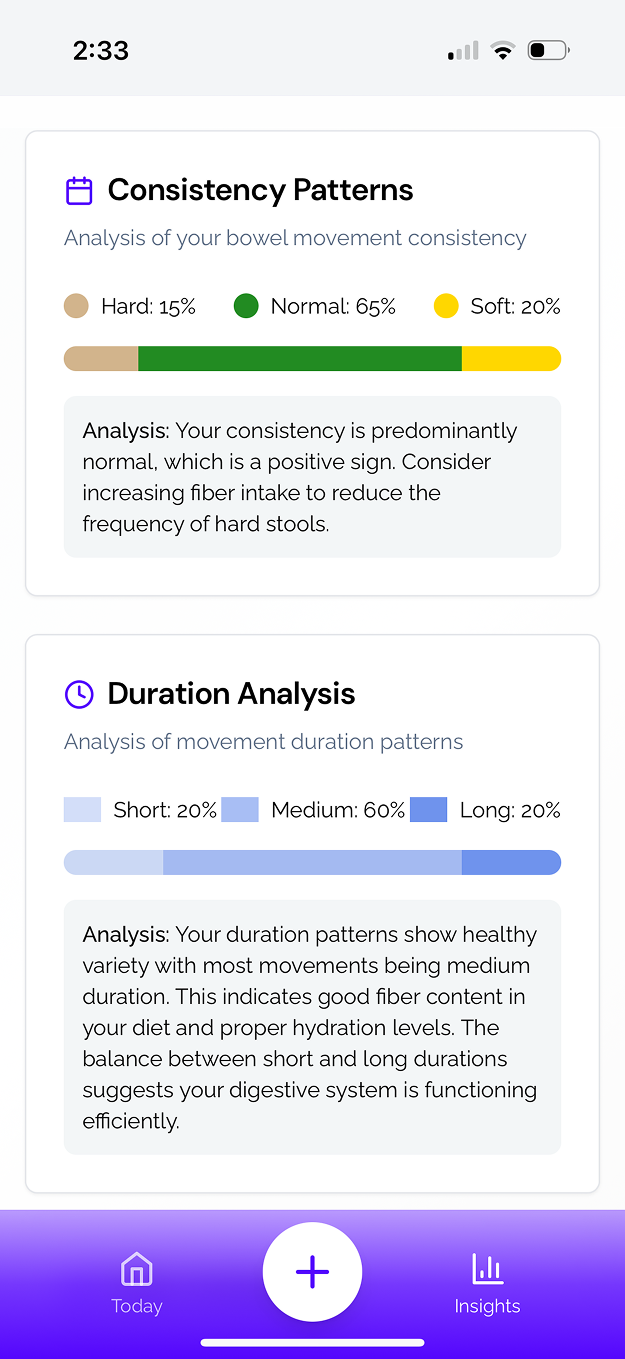
VOC Analysis Meets the Bristol Stool Scale: Comprehensive Digestive Tracking
The Bristol Stool Scale remains a trusted tool for visual stool assessment, but VOC analysis offers molecular depth especially valuable for IBS:
- Microbial activity linkage: VOCs reveal how microbial shifts translate to stool form and consistency—helping interpret changes beyond the surface.
- Early detection: VOC shifts can indicate brewing gut issues before bowel habits visibly change.
- Personalized interpretation: Tailored VOC profiles put IBS symptoms in a broader clinical context, enabling targeted therapy.
- Optimized interventions: Clinicians use combined molecular and visual data to fine-tune protocols for digestive wellness and symptom resolution.
The Future: IBS-Specific Applications in Gut Microbiome VOC Analysis
VOC analysis is opening new doors for IBS care:
- Individualized nutrition: Recommendations become truly personal, guided by patient VOC and microbiome responses.
- Early disorder detection: Subtle VOC changes provide an early warning system for approaching IBS flares or new sensitivities.
- Treatment monitoring: Track progress as patients implement probiotic, botanical, or pharmaceutical interventions.
- Healing protocols: Follow recovery through molecular signatures, validating real improvements in gut function.
- Preventive monitoring: Supports proactive care—reducing unpredictable flares, enhancing quality of life, and enabling sustainable IBS remission.
Conclusion
VOC analysis is transforming gut microbiome research, making digestive health data accessible and actionable for IBS sufferers. Through cutting-edge sensor technology, AI-powered analytics, and holistic tracking, IBS management becomes truly personalized—helping patients and clinicians achieve lasting digestive wellness together.
Other Posts



Be first to try SNIFR. Beta coming soon.
Join our waitlist to get notified when the app launches. Start understanding your gut health sooner.