
Microbiome Diversity and Weight Loss: More Species, Better Results
Microbiome diversity may matter more for weight loss than any single strain. How it is measured, what the research shows, and what genuinely rebuilds it.

Here is a question I ask clients who have spent years chasing the right supplement: how many different bacterial species do you think are living in your gut right now?
Most people guess a handful. The honest answer is likely several hundred, possibly more than a thousand, and the number is not the same as it was five years ago. What matters for your metabolism is not just which species you have. It is how many, and how evenly they share the space.
After eight years working at the intersection of microbiome science and sustainable weight management, I have come to think of diversity as the single most underrated marker in this entire field. Not one hero bacterium. Not one miracle strain. The breadth of the whole community.
Let's talk about what that actually means, why the research keeps pointing back to it, and what genuinely moves the number.
What Microbiome Diversity Means, and How It Is Measured
Diversity sounds like a soft concept. In practice, researchers measure it fairly precisely, and it breaks into two components worth understanding.
Richness is simply how many different bacterial species are present. A gut with 900 species is richer than one with 400.
Evenness describes how the population is distributed. If one species accounts for half your total bacterial load and everything else is scraping by, that is low evenness even if the species count looks respectable.
Researchers combine these into what is called alpha diversity, meaning the variety within one person's gut. Beta diversity, by contrast, describes how different two people's communities are from each other. When you read that low diversity is associated with metabolic problems, alpha diversity is usually what is being discussed.
Different metrics weight richness and evenness differently, which is why two reports can disagree about whether your diversity improved. Here is what the common ones actually capture.
| Metric | Type | What it weights | Reads as | Where you see it |
|---|---|---|---|---|
| Observed species or ASVs | Alpha | Richness only. A rare species counts the same as a dominant one. | A raw count | Most consumer reports |
| Chao1 | Alpha | Richness, with an estimate of species present but not detected | An estimated count, usually higher than observed | Sequencing studies |
| Shannon index | Alpha | Richness and evenness together, sensitive to rare species | Typically 2 to 5 in adult gut samples; higher is more diverse | The most commonly reported index |
| Simpson index | Alpha | Evenness, weighted toward dominant species | 0 to 1; higher means less dominance by any one species | Often reported alongside Shannon |
| Faith's phylogenetic diversity | Alpha | How evolutionarily distinct the species are, not just how many | A branch-length total | Research settings |
| Gene richness (metagenomic species count) | Alpha | Functional capacity rather than taxonomy | Le Chatelier 2013 split adults into low and high gene count groups | Shotgun metagenomics |
| Bray-Curtis dissimilarity | Beta | How different two communities are by abundance | 0 (identical) to 1 (no overlap) | Comparing samples or timepoints |
| UniFrac distance | Beta | Difference weighted by evolutionary relatedness | 0 to 1 | Research settings |
The practical takeaway from that table: if you are tracking your own diversity over time, make sure you are comparing the same metric measured the same way. A Shannon index from one platform and an observed-species count from another are not comparable numbers.
The analogy I use with clients is a workforce. A company with 900 employees across every department can absorb a bad quarter and take on unfamiliar work. A company with 400, half of whom do the same job, functions until the day it does not.
Your gut works similarly. Diversity is redundancy, and redundancy is resilience.
The Evidence Linking Low Diversity to Weight Gain
The connection between bacterial diversity and weight management is one of the more consistent findings in this literature, which is not something I say lightly about microbiome research.
In 1,632 healthy twins from the TwinsUK cohort followed over roughly nine years, higher gut microbiome diversity was independently correlated with lower long term weight gain, after adjusting for calorie intake and other confounders (Menni et al., International Journal of Obesity, 2017). Higher fibre intake showed the same independent association.
A 2013 Nature analysis of 292 Danish adults found that roughly 23 percent of the population carried a low bacterial gene count. Those individuals showed more marked overall adiposity, more insulin resistance, worse lipid profiles and a more pronounced inflammatory phenotype than high richness individuals, and the low richness group gained more weight over the observation period (Le Chatelier et al., Nature, 2013).
Studies of twins where one has obesity and the other does not are the closest thing this field has to a controlled experiment in humans. An analysis of 154 individuals including monozygotic and dizygotic twin pairs found obesity associated with reduced bacterial diversity and altered representation of metabolic genes (Turnbaugh et al., Nature, 2009). When researchers then transplanted faecal microbiota from twin pairs discordant for obesity into germ free mice, the recipients of the obese twin's microbiota gained significantly more adiposity on identical diets (Ridaura et al., Science, 2013). Co-housing the mice allowed the lean-associated community to invade the obese-associated one and prevent the adiposity gain, but only when the diet was low in saturated fat and high in fruit and vegetables.
That last detail matters more than the headline. Diversity was protective, but only when the diet supported it.
One important caveat, because I want to be straight with you. Association is not causation in the human cohorts, and it remains genuinely unclear how much low diversity drives weight gain versus how much weight gain and its associated dietary patterns drive low diversity. The mouse transplant work supports a causal arrow, but mice are not people. What is clear is that the two travel together consistently enough to be worth acting on.
Why Diversity Affects Weight Regulation: Four Mechanisms
The correlation is interesting. The mechanisms are what make it actionable.
1. Short Chain Fatty Acid Production
When bacteria ferment dietary fiber, they produce short chain fatty acids: butyrate, propionate, and acetate. These compounds fuel the cells lining your colon, help regulate inflammation, and influence insulin sensitivity.
Here is why diversity matters specifically. Different bacterial species ferment different fibers, and they produce different combinations of these compounds. A narrow community can only work with a narrow range of substrates. A diverse one extracts value from far more of what you eat.
The causal human evidence for SCFAs affecting body composition comes from targeted delivery: 10 g per day of inulin propionate ester over 24 weeks significantly reduced weight gain and intra abdominal adipose tissue in 60 adults compared with an equal dose of inulin alone (Chambers et al., Gut, 2015).
2. Energy Harvest Efficiency
Your bacteria determine how much usable energy you extract from food that your own enzymes cannot break down. In a supervised feeding study using bomb calorimetry on stool, a 20 percent increase in Firmicutes with a corresponding decrease in Bacteroidetes was associated with roughly 150 kcal per day of additional energy harvest in lean participants (Jumpertz et al., American Journal of Clinical Nutrition, 2011).
A separate metabolic ward crossover found a fibre rich diet caused participants to lose an additional 116 plus or minus 56 kcal per day in their feces compared with a matched Western diet of identical calculated metabolizable energy, with the variability explained partly by fecal short chain fatty acids and biomass (Corbin et al., Nature Communications, 2023).
It is not a large difference on any single day. Over a year of days, it adds up.
3. Appetite and Satiety Signaling
Bacterial metabolites influence the hormones that govern hunger and fullness. A single 10 g dose of colonic propionate raised postprandial PYY and GLP-1 and reduced energy intake at a subsequent meal (Chambers et al., 2015), and gut microbiota derived metabolites regulate appetite through several parallel routes (Han et al., Microbiome, 2021).
I keep this brief here deliberately, because the hormonal machinery deserves its own treatment. I cover the full appetite pathway in a separate article on how healthy gut bacteria control appetite and cravings.
4. Inflammation and Gut Barrier Integrity
A diverse community supports the mucus layer and the intestinal barrier that keeps bacterial components out of your bloodstream. When diversity falls, that barrier tends to weaken. Low bacterial richness travels with a more pronounced inflammatory phenotype (Le Chatelier et al., 2013).
The consequence is not hypothetical. Continuous low dose lipopolysaccharide infusion in mice, at concentrations reachable through a high fat diet, was by itself sufficient to induce weight gain, fasting hyperglycaemia and insulin resistance (Cani et al., Diabetes, 2007). This is the mechanism I most often see explaining a client who is doing everything right and getting nowhere.
What Actually Builds Bacterial Diversity
Now for the part you can act on this week. None of these are exotic.
Plant Variety, and the 30 Plants a Week Idea
If you take one thing from this article, take this. Aim for 30 or more different plant foods across a week.
Population level research supports variety as a separate lever from volume. In the TwinsUK cohort, diversity and fibre intake were each independently associated with lower long term weight gain (Menni et al., 2017), and in the 1,106 person Flemish Gut Flora Project, diet related variables ranked among the strongest correlates of microbiome composition (Falony et al., Science, 2016).
Counting is more forgiving than people expect. Vegetables, fruits, whole grains, legumes, nuts, seeds, herbs, and spices all count, and different varieties count separately, so red and green cabbage are two. Most people land between 10 and 15 when they first count honestly. Getting to 30 is usually a matter of buying differently rather than eating more.
Different Types of Fiber, Not Just More Fiber
Because different bacteria specialize in different substrates, fiber type matters as much as fiber grams. A useful spread includes:
- Soluble fiber from oats, beans, apples, and citrus
- Insoluble fiber from whole grains, nuts, and the skins of vegetables
- Resistant starch from cooked and cooled potatoes, rice, and pasta, plus slightly green bananas
- Prebiotic fibers such as inulin from onions, garlic, leeks, asparagus, and chicory root
Increase in roughly 5 g weekly increments toward 25 to 35 g daily, with adequate water. Increasing fiber too fast is the most common reason people conclude fiber does not agree with them, when the real problem was pace.
A six week trial of an energy restricted, high protein, high fibre diet increased gut microbial gene richness specifically in the individuals who started with low richness (Cotillard et al., Nature, 2013). If your diversity is already high, expect less movement. If it is low, this is where the leverage is.
Fermented Foods
In a 17 week randomized trial at Stanford, 36 healthy adults were assigned to either a high fermented food diet or a high fibre diet. The fermented food arm showed steadily increasing microbiota diversity and decreases in 19 inflammatory proteins including interleukin-6. The high fibre arm did not show the same diversity increase over the same period (Wastyk et al., Cell, 2021).
That is the cleanest head to head we have, and it is a genuine surprise given how much of the field emphasizes fibre. The sensible reading is that they do different jobs: fibre drives SCFA output, fermented foods drive diversity.
Practically: unpasteurized sauerkraut or kimchi, kefir, plain yogurt with live cultures, miso, tempeh. Participants in the trial worked up to roughly six servings daily, which is more than most people will sustain. One serving daily, rotating between types, is a realistic starting point.
Avoiding Unnecessary Antibiotics
Antibiotics reduce bacterial diversity, sometimes substantially, and recovery can be slow. In a controlled human study, taking an 11 strain probiotic after antibiotics produced a markedly delayed and persistently incomplete return of the indigenous microbiome compared with spontaneous recovery, while autologous faecal transplant restored it within days (Suez et al., Cell, 2018). That is worth knowing before you reach for a probiotic as your post antibiotic strategy.
When antibiotics are genuinely needed, they are worth every bit of the cost. The point is to avoid unnecessary courses and support recovery deliberately with prebiotic and fermented foods.
Sleep and Movement
These matter more than most people expect. A 2023 review concluded that sleep deprivation reduces alpha diversity and shifts the Firmicutes to Bacteroidetes ratio (Sun et al., International Journal of Molecular Sciences, 2023). Roughly 20 percent of commensal taxa run their own daily oscillations, which fragmented sleep disrupts (Thaiss et al., Cell, 2014). Regular moderate exercise is associated with increased diversity independent of dietary change, with particular benefit to butyrate producing species.
Neither requires heroics. Consistent sleep timing and 150 minutes of moderate weekly movement covers most of the available benefit.
Why One Probiotic Supplement Will Not Build Diversity
This is where a lot of money goes to die, so let me be direct.
A typical probiotic contains somewhere between one and fifteen strains. Your gut contains hundreds of species. Adding a handful of newcomers to an established ecosystem of trillions is not a diversity intervention, whatever the label suggests.
There is also the colonization problem, and it has now been measured directly. In a study using colonoscopy and endoscopy rather than stool alone, an 11 strain probiotic showed person specific, region specific and strain specific mucosal colonization: some people were permissive and some resistant, and crucially, the presence of probiotic strains in stool did not reflect whether they had colonized the gut mucosa at all (Zmora et al., Cell, 2018).
Diversity is built by expanding the range of what you feed the community you already have. Probiotics have legitimate targeted uses, and I go into where they do and do not earn their place in a separate article on the probiotic paradox. But treating a capsule as a diversity strategy is a category error.
What This Looks Like in Practice
Hypothetical scenario. As an illustrative scenario, imagine someone who counts her plants honestly for one week and lands at 12. She finished a course of antibiotics two months earlier. She eats a lot of fibre, but almost all of it from oats and one brand of wholemeal bread, so her substrate range is narrow even though her fibre grams look adequate. On the evidence above, the highest leverage moves for her are not more fibre but wider fibre plus fermented foods: the Cotillard 2013 trial found gene richness rose specifically in low richness individuals given a high fibre, high protein diet, and the Wastyk 2021 trial found fermented foods raised diversity where the high fibre arm did not. She adds five new plant types weekly and one daily serving of unpasteurized kraut or kefir. What the literature suggests she should expect is diversity movement over months rather than weeks, and a wide individual range around that. No specific outcome is being predicted here.
Seeing Your Own Diversity Trend Instead of Guessing
Here is the practical difficulty with everything above. Diversity is invisible. You cannot feel it. You will not notice the week your community starts recovering.
Traditional testing gives you a snapshot: a single point in time, often expensive enough that most people take one and never repeat it. A snapshot tells you where you are. It does not tell you which direction you are moving, and direction is the useful part.
There is a measurement wrinkle here worth knowing about. Stool consistency was the strongest single covariate of gut microbiota composition in the Flemish Gut Flora Project, correlating with richness, enterotype and estimated bacterial growth rates (Vandeputte et al., Gut, 2016). That means a diversity reading taken on a day when your transit is unusually fast is not directly comparable with one taken on a normal day. Repeated sampling is the only way around it.
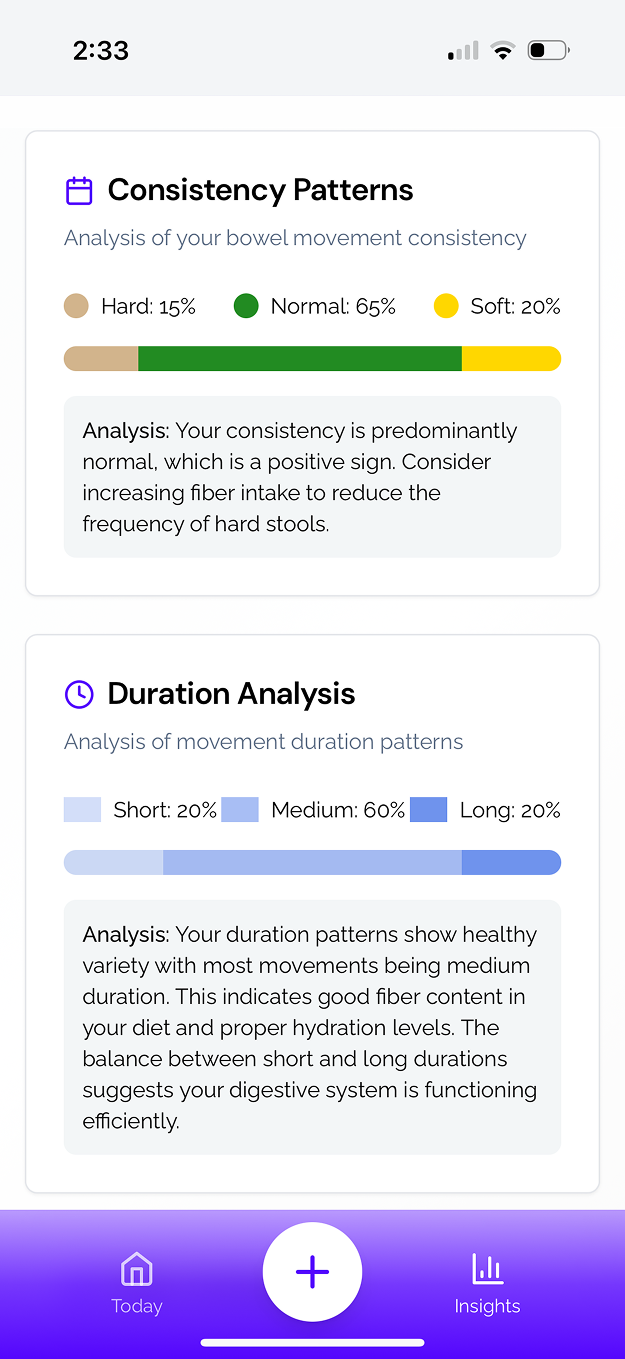
This is the gap that continuous at-home monitoring is being built to close. Passive biome tracking captures data over time rather than in a single sitting, which turns diversity from an abstract concept into a trend line you can read against the changes you are making. If you want the broader framework this fits into, see my guide to gut microbiome optimization for weight loss and digestive wellness.
Where to Start
Count your plants for one week. Just count, change nothing. Most people find the number lower than expected, and that number is your baseline.
Then add five new plant foods the following week. Not five servings. Five kinds you have not eaten recently. Add one fermented food daily. Give it six weeks.
Diversity does not rebuild in a fortnight, and anyone promising otherwise is selling something. But it does rebuild, and unlike most things affecting your metabolism, it responds directly to decisions you make in the produce aisle.
Frequently Asked Questions
What is microbiome diversity and why does it matter for weight loss?
Microbiome diversity describes how many different bacterial species live in your gut (richness) and how evenly they are distributed (evenness), usually combined into an alpha diversity index. In 1,632 twins followed over roughly nine years, higher diversity was independently correlated with lower long term weight gain after adjusting for calorie intake. Diversity also underpins short chain fatty acid production and gut barrier integrity.
How do I know if my gut bacteria diversity is low?
There is no reliable way to know from symptoms alone, which is the central difficulty. Suggestive signs include a narrow diet, recent antibiotic courses, persistent digestive discomfort, and poor fiber tolerance. Objective measurement requires testing, and continuous at-home monitoring is more useful than a single snapshot because it shows direction rather than one data point.
What is the difference between Shannon diversity and species richness?
Species richness is a raw count of how many taxa are present and treats a rare species the same as a dominant one. The Shannon index combines richness with evenness, so a community dominated by one species scores lower than an evenly balanced community with the same count. If you are tracking over time, compare the same metric from the same platform, since the two are not interchangeable.
Does eating 30 plants a week really improve bacterial diversity?
Population research supports variety as a lever distinct from total fibre, and a six week trial found that a high fibre, high protein diet increased microbial gene richness specifically in people who started with low richness. The 30 figure is a practical target rather than a precise threshold. The underlying principle is that different bacteria specialize in different plant substrates.
Can probiotics increase gut microbiome diversity?
Generally no, not meaningfully. A typical supplement contains a handful of strains against the hundreds already in your gut. A 2018 Cell study using endoscopy found colonization was person, region and strain specific, with some people resistant entirely, and that stool presence did not reflect mucosal colonization at all. Building diversity comes from expanding what you feed your existing community.
How long does it take to improve bacterial diversity and weight management outcomes?
Digestive comfort often shifts within two to four weeks of dietary change. Gene richness rose measurably over six weeks in low richness individuals in the Cotillard 2013 trial, and diversity rose progressively across ten weeks in the Stanford fermented food trial. Recovery after antibiotics can be slower still. Individual variation is substantial.
Does exercise affect gut bacteria balance?
Yes. Regular moderate exercise is associated with increased microbial diversity independent of dietary change, with particular benefit to butyrate producing species. Around 150 minutes of moderate weekly activity captures most of the observed benefit, and consistency appears to matter more than intensity.
References
- Menni C, Jackson MA, Pallister T, et al. Gut microbiome diversity and high-fibre intake are related to lower long-term weight gain. International Journal of Obesity. 2017;41(7):1099-1105. doi:10.1038/ijo.2017.66
- Le Chatelier E, Nielsen T, Qin J, et al. Richness of human gut microbiome correlates with metabolic markers. Nature. 2013;500(7464):541-546. doi:10.1038/nature12506
- Turnbaugh PJ, et al. A core gut microbiome in obese and lean twins. Nature. 2009;457(7228):480-484. doi:10.1038/nature07540
- Ridaura VK, Faith JJ, Rey FE, et al. Gut microbiota from twins discordant for obesity modulate metabolism in mice. Science. 2013;341(6150):1241214. doi:10.1126/science.1241214
- Cotillard A, Kennedy SP, Kong LC, et al. Dietary intervention impact on gut microbial gene richness. Nature. 2013;500(7464):585-588. doi:10.1038/nature12480
- Wastyk HC, Fragiadakis GK, Perelman D, et al. Gut-microbiota-targeted diets modulate human immune status. Cell. 2021;184(16):4137-4153.e14. doi:10.1016/j.cell.2021.06.019
- Falony G, Joossens M, Vieira-Silva S, et al. Population-level analysis of gut microbiome variation. Science. 2016;352(6285):560-564. doi:10.1126/science.aad3503
- Vandeputte D, et al. Stool consistency is strongly associated with gut microbiota richness and composition, enterotypes and bacterial growth rates. Gut. 2016;65(1):57-62. doi:10.1136/gutjnl-2015-309618
- Chambers ES, Viardot A, Psichas A, et al. Effects of targeted delivery of propionate to the human colon on appetite regulation, body weight maintenance and adiposity in overweight adults. Gut. 2015;64(11):1744-1754. doi:10.1136/gutjnl-2014-307913
- Jumpertz R, Le DS, Turnbaugh PJ, et al. Energy-balance studies reveal associations between gut microbes, caloric load, and nutrient absorption in humans. The American Journal of Clinical Nutrition. 2011;94(1):58-65. doi:10.3945/ajcn.110.010132
- Corbin KD, et al. Host-diet-gut microbiome interactions influence human energy balance: a randomized clinical trial. Nature Communications. 2023;14:3161. doi:10.1038/s41467-023-38778-x
- Han H, et al. From gut microbiota to host appetite: gut microbiota-derived metabolites as key regulators. Microbiome. 2021;9:162. doi:10.1186/s40168-021-01093-y
- Cani PD, et al. Metabolic Endotoxemia Initiates Obesity and Insulin Resistance. Diabetes. 2007;56(7):1761-1772. doi:10.2337/db06-1491
- Suez J, Zmora N, Zilberman-Schapira G, et al. Post-Antibiotic Gut Mucosal Microbiome Reconstitution Is Impaired by Probiotics and Improved by Autologous FMT. Cell. 2018;174(6):1406-1423.e16. doi:10.1016/j.cell.2018.08.047
- Zmora N, Zilberman-Schapira G, Suez J, et al. Personalized Gut Mucosal Colonization Resistance to Empiric Probiotics Is Associated with Unique Host and Microbiome Features. Cell. 2018;174(6):1388-1405.e21. doi:10.1016/j.cell.2018.08.041
- Sun J, et al. Sleep Deprivation and Gut Microbiota Dysbiosis: Current Understandings and Implications. International Journal of Molecular Sciences. 2023;24(11):9603. doi:10.3390/ijms24119603
- Thaiss CA, Zeevi D, Levy M, et al. Transkingdom Control of Microbiota Diurnal Oscillations Promotes Metabolic Homeostasis. Cell. 2014;159(3):514-529. doi:10.1016/j.cell.2014.09.048
SNIFR is designed to provide insights about gut health patterns, not to diagnose or treat medical conditions. Individual results may vary as gut health is influenced by numerous factors including diet, stress, sleep, and genetics. SNIFR is currently in development, and features described may evolve before commercial release.
Other Posts



Be first to try SNIFR. Beta coming soon.
Join our waitlist to get notified when the app launches. Start understanding your gut health sooner.