
Microbiome Biomarkers vs. Traditional Performance Tracking
An evidence-based comparison of microbiome biomarkers against HRV, CGM, and blood panels, ranking each on feedback speed, actionability, and cost per insight.
The biohacking community has a data problem, and it is not scarcity. We are collecting more physiological data than ever: continuous glucose, heart rate variability, sleep architecture, cortisol panels. Performance gains remain inconsistent anyway.
The useful question is not whether to track biomarkers. It is which biomarkers produce actionable insight rather than data noise. This analysis compares microbiome biomarkers against established tracking modalities on four dimensions that actually determine value: measurement reliability, actionability, feedback speed, and cost per useful decision.
The Current Biomarker Tracking Landscape
Metabolic biomarkers
Continuous glucose monitoring is the strongest consumer tracking modality available. Sensors sample every one to five minutes and show how food, exercise, stress, and sleep move glucose regulation in real time. Costs range roughly from tens of dollars monthly through insurance-covered prescription systems up to several hundred monthly for consumer platforms bundling interpretation and coaching. Over-the-counter options have narrowed that gap considerably.
Cardiovascular biomarkers
HRV tracking is now ubiquitous through wrist and ring wearables. It reflects autonomic function and serves as a proxy for recovery status, stress resilience, and training readiness, and it is collected passively during sleep with no active effort.
The HRV and cortisol relationship is more specific than it is usually described. In a data-driven analysis of 386 mid-life adults, latent growth mixture modelling identified three cortisol response trajectories to an acute stressor: a prototypical group with the expected rise and fall (n = 309), a decline group (n = 28), and a rise group (n = 49). Within the prototypical group only, greater HRV during stress was associated with cortisol returning toward baseline afterward (r = 0.18, p = 0.001). The relationship did not appear in the decline group (p = 0.914) or the rise group (p = 0.493) (Bennett et al., Stress and Health, 2024). The correlation is real, modest, and conditional on which responder subgroup you fall into, which is a useful caution against treating any single HRV reading as a cortisol proxy.
HRV also shows relationships with microbiome composition. A community sample study examining HRV, daily cortisol indices, psychometric characteristics, and gut microbiota composition together reported associations between autonomic indices and specific taxa (Ravenda et al., Scientific Reports, 2025), consistent with the wider literature associating lower HRV with reduced abundance of taxa such as Faecalibacterium and Alistipes.
Stress and hormonal biomarkers
Cortisol measurement has historically required blood draws or salivary collection. Wearable biosensor research is changing that, with published work describing sensor arrays capable of detecting cortisol in sweat at very low concentrations. In practice today, salivary testing and quarterly hormone panels remain the accessible options, and both provide snapshots rather than continuous data.
Sleep architecture biomarkers
Consumer wearables infer sleep stages, efficiency, and recovery from movement, heart rate, respiratory rate, and skin temperature. Sleep and gut function are bidirectionally related: microbiome diversity influences the neurotransmitter production that supports melatonin synthesis, and sleep disruption alters bacterial populations in return.
What Microbiome Testing Actually Delivers
Current methodologies
Commercial microbiome testing uses either 16S rRNA sequencing, which identifies bacterial taxa, or metagenomic sequencing, which analyzes all genetic material including functional genes. Metagenomic approaches produce richer data at higher cost. Consumer tests generally sit in the low-to-mid hundreds of dollars, and conventional stool testing takes two to four weeks to return results.
What the reports measure
- Bacterial diversity. Higher diversity generally correlates with better outcomes, though the optimal range varies individually.
- Relative abundance of specific species. Proportions of taxa such as Faecalibacterium prausnitzii, Akkermansia muciniphila, and Bifidobacterium against potentially problematic species.
- Functional capacity. Genes encoding production of short-chain fatty acids, neurotransmitters, and vitamins.
- Dysbiosis markers. Indicators of imbalance associated with inflammation or metabolic dysfunction.
Emerging: VOC analysis for at-home monitoring
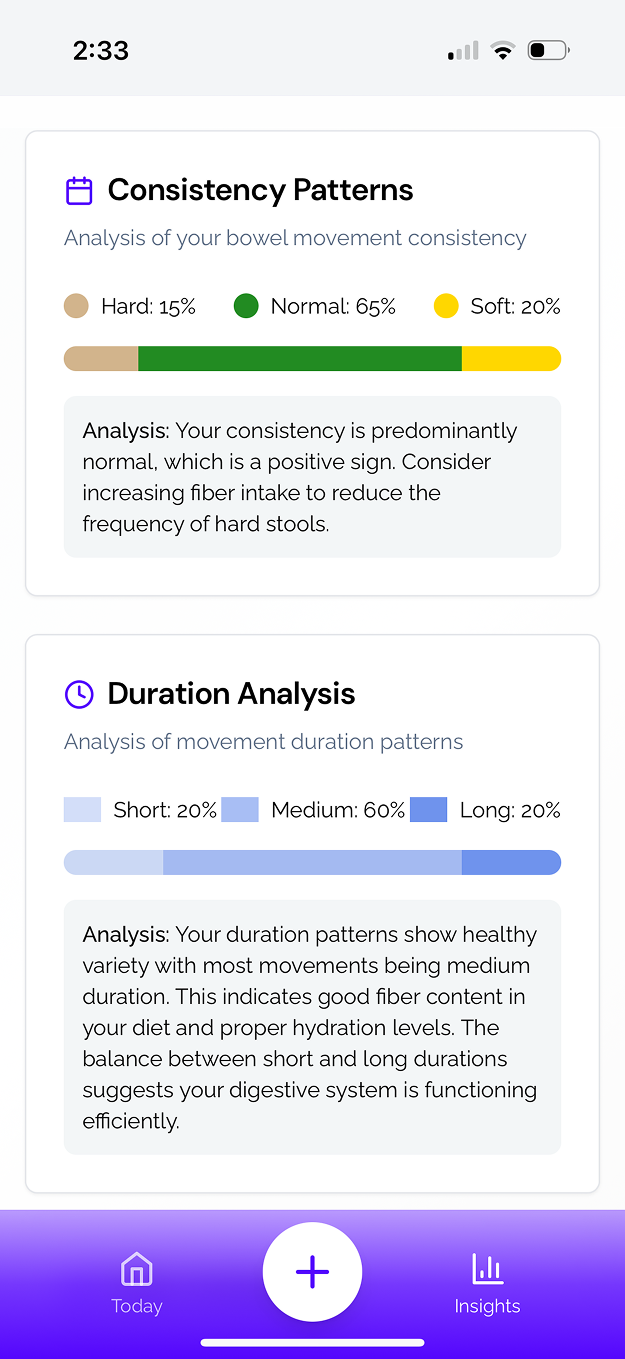
Volatile organic compound analysis is the most interesting near-term development. Rather than sequencing a stool sample, VOC systems measure bacterial metabolites through breath or passive gas sampling. The human volatilome, the full set of VOCs emitted in breath, skin, urine, feces, and saliva, has been catalogued in detail and includes many compounds of microbial origin (Amann et al., Journal of Breath Research, 2014). Reviews of breath VOC testing in non-cancer gastrointestinal disorders describe both the promise and the current analytical limitations of the approach (Zheng et al., Biomedicines, 2024). That opens the door to daily measurement instead of quarterly snapshots. This is the same shift described across advanced gut health optimization for biohackers, and it is the specific limitation that determines whether gut data belongs in your daily stack.
Comparing Performance ROI
Feedback speed
- CGM: real-time. Glucose response to a meal is visible within 15 to 30 minutes, so intervention and result complete inside 24 hours.
- HRV: next morning. Daily readiness data supports weekly training adjustments.
- Sleep: next morning. Informs same-day training and cognitive scheduling.
- Hormone panels: quarterly. Good for detecting chronic dysregulation, useless for iteration.
- Conventional microbiome testing: three to six month intervals plus two to four weeks of processing, producing a twelve to sixteen week loop minimum. Rapid iteration is structurally impossible.
| Modality | Feedback latency | Iteration cycle | Actionability | Evidence for performance use | Relative cost per useful decision |
|---|---|---|---|---|---|
| Continuous glucose monitoring | 15 to 30 minutes | Under 24 hours | Highest: a meal swap is a next-day testable hypothesis | Strong in endurance and metabolic contexts | High value during focused blocks |
| HRV | Next morning | Daily to weekly | High for readiness, slower for optimization | Robust for HRV-guided training | Exceptional, hardware often already owned |
| Sleep architecture | Next morning | Daily | High, drives training and cognitive scheduling | Strong for cognitive and recovery outcomes | High, usually the same device as HRV |
| Blood and hormone panels | Days | Quarterly | Moderate: detects chronic dysregulation | Strong for clinical detection, weak for iteration | Moderate |
| Conventional stool sequencing | 2 to 4 weeks | 12 to 16 weeks | Low: recommendations converge on the standard protocol | Mechanism strong, personalization unvalidated | Lower for routine tracking, higher for troubleshooting |
| VOC-based continuous gut monitoring | Daily, in principle | Weekly | Undetermined, pending consumer validation | Early stage, analytical standardisation still open | Not yet establishable |
Actionability
This is where the comparison gets uncomfortable for microbiome testing. CGM data converts directly into a testable hypothesis: if a given carbohydrate produces a problematic excursion, you swap it tomorrow and see the result. HRV converts into a training decision the same morning.
A microbiome report typically indicates low abundance of a butyrate producer, elevated abundance of another taxon, and reduced diversity. The recommendations that follow are almost always the same: increase fiber toward 40 to 50g daily, eat 30 or more plant species weekly, add fermented foods, consider specific probiotic strains. Those are good recommendations. They are also general microbiome optimization strategies applicable without any test at all. Analyses comparing commercial testing services have found that recommendations show limited variation despite different underlying compositions, and a policy analysis in Science argued specifically that the direct-to-consumer microbiome testing industry needs more regulation given the gap between marketed and validated capability (Hoffmann et al., Science, 2024).
Evidence quality
CGM has the strongest performance evidence, particularly in endurance contexts where glucose stability affects duration and perceived exertion. HRV-guided training has robust support, with multiple studies indicating better adaptation than fixed plans and reduced overtraining incidence. Sleep optimization produces measurable cognitive and recovery improvements.
Microbiome science is genuinely strong on the mechanism side. Composition is clearly linked to immune function, inflammation, SCFA production, and neuroactive compound synthesis. What is weaker is the specific claim that personalized testing produces better outcomes than applying evidence-based dietary optimization universally, and the field says so itself.
- An international consensus statement on microbiome testing in clinical practice concluded that current microbiome tests are not ready for routine clinical use outside defined research and disease contexts (Porcari et al., The Lancet Gastroenterology and Hepatology, 2025).
- A multidisciplinary Delphi consensus run by the Human Microbiome Action consortium surveyed 307 invited experts, of whom 114 completed round one and 93 completed both rounds. The panel expressed confidence in the potential of microbiome-based biomarkers but concluded that qualified microbiome-based biomarkers are currently not in use in clinical practice, with the paucity of validated analytical methods identified as the principal obstacle (Rodriguez et al., The Lancet Microbe, 2025).
- Where microbiome data has cleared a high validation bar, it has been for diagnosis rather than optimization. A 2024 Nature Medicine study reported a noninvasive, microbiome-based classifier for inflammatory bowel disease (Zheng et al., Nature Medicine, 2024). That is a disease-detection application, not a performance-tracking one.
Taken together, the conclusion that conventional sequencing is lower-ROI than HRV or CGM for routine performance tracking is not a contrarian opinion. It is close to the field's own stated position: two independent expert consensus exercises in 2024 and 2025 concluded that microbiome-based biomarkers are not yet qualified for routine clinical use, while HRV-guided training and CGM-guided nutrition already have direct interventional evidence behind them.
Cost per actionable insight
- HRV tracking: exceptional value. Often bundled into a device you already own, updates daily, evidence is solid.
- Sleep tracking: high value. Usually the same device, improves multiple performance domains.
- CGM: high value during focused blocks. Daily data points, immediate actionability.
- Comprehensive blood panels: moderate value. Infrequent but catches chronic issues nothing else surfaces.
- Conventional microbiome sequencing: lower value for routine performance optimization. Slow loop, generic recommendations. Better suited to troubleshooting persistent digestive issues.
That calculus shifts substantially if continuous, at-home monitoring becomes broadly available. Daily gut biomarker feedback comparable to glucose monitoring would justify meaningfully higher cost, because it converts a quarterly report into an iterable signal.
Building the Stack in Layers
Microbiome tracking versus traditional biomarkers is a false dichotomy. The right structure is hierarchical.
Foundation layer: continuous, daily, cheap
- HRV and sleep tracking. Daily recovery data informs training decisions and sleep drives several performance domains at once. This is the first purchase, always.
- Glucose monitoring, if metabolic optimization is a goal. Consider a one to three month intensive period to map your dietary patterns, then two-week verification blocks quarterly rather than permanent wear.
Second layer: periodic comprehensive assessment
Quarterly blood panels catch what continuous monitoring cannot: vitamin D, sex hormones, cortisol, hsCRP, complete metabolic panel, lipids, and thyroid function. This layer is about detecting chronic problems that need clinical attention, not about daily optimization.
Third layer: strategic microbiome assessment
When testing adds value:
- Establishing a baseline before a major dietary overhaul
- Troubleshooting chronic digestive problems or a performance plateau that survived optimization of everything else
- Validating a large intervention with a before and after comparison
- Contributing to citizen science projects, which is how datasets like the American Gut Project were assembled in the first place (McDonald et al., mSystems, 2018)
When to skip it:
- You have not yet implemented basic fiber, diversity, and fermented food protocols
- Budget pressure would make repeat testing stressful
- HRV, sleep, or glucose data still show unexploited optimization opportunities
Running microbiome optimization without testing
These interventions improve gut health biomarkers reliably across populations regardless of baseline composition:
- Fiber: increase gradually toward 40 to 50g daily from diverse sources
- Plant diversity: 30 or more distinct species weekly, herbs and spices included. This target comes from American Gut Project data, where plant species count associated with microbial diversity more strongly than diet labels did, comparing people eating more than 30 plant types weekly against those eating 10 or fewer (McDonald et al., mSystems, 2018).
- Fermented foods: two to three servings daily
- Polyphenols: regular intake from berries, dark chocolate, green tea, coffee
- Minimize ultra-processed inputs: emulsifiers, artificial sweeteners, excessive additives
Run these for eight to twelve weeks and most people see measurable change without a test guiding the process.
A 90-Day Implementation Protocol
Days 1 to 30: foundation
- Weeks 1 to 2: acquire HRV and sleep tracking, collect 14 days of baseline data, log subjective energy, training performance, cognition, and digestion on 1 to 10 scales. Consider a baseline blood panel.
- Weeks 3 to 4: begin gut interventions. Add roughly 5g fiber weekly until you reach target, expand toward 30 plant species weekly, start at one fermented serving daily and build to two or three, and watch HRV response.
Days 31 to 60: metabolic layer
- Add CGM. Systematically test food responses, experiment with carbohydrate timing around training, and identify personal triggers.
- Correlate glucose stability against next-morning HRV.
- Hold fiber and diversity targets, add 10 to 20g daily resistant starch, increase polyphenol intake, and track digestive changes.
Days 61 to 90: refinement
- Compare HRV trends, sleep quality, glucose stability, and subjective performance to identify which changes actually moved a metric.
- Repeat the blood panel.
- Keep high-impact interventions, find the minimum effective dose for maintenance, and shift CGM to periodic two-week blocks.
Population-Specific Priorities
| Population | Priority biomarkers | Rationale | Role of microbiome assessment |
|---|---|---|---|
| Competitive athletes | HRV, CGM during training blocks, periodic blood panels | Training load management prevents overtraining; CGM optimises fuelling | Justified mainly for troubleshooting persistent GI issues in training or competition |
| Cognitive performance focus | Sleep architecture, glucose stability, quarterly hormone panels | Sleep drives consolidation; glycemic stability drives sustained attention | Consider only if brain fog or mood issues persist after everything else, with clinician involvement |
| Metabolic health and longevity | CGM, quarterly comprehensive panels, body composition | Glucose regulation predicts metabolic disease risk | Strongest case for periodic assessment, though diet remains first line |
| Budget-conscious optimizers | HRV and sleep from an existing device, periodic basic blood work | Maximise value from free or low-cost continuous signals | Skip sequencing; put the money into food |
Competitive athletes
Priority: HRV, CGM during training blocks, periodic blood panels. Intense training transiently increases intestinal permeability, so dietary microbiome support matters for barrier function. Testing is most justified for troubleshooting persistent GI issues in training or competition.
Cognitive performance focus
Priority: sleep architecture, glucose stability, quarterly hormone panels. Gut brain axis research supports dietary optimization here without requiring testing. Consider assessment if brain fog or mood issues persist despite everything else being optimized, and involve a clinician in that conversation.
Metabolic health and longevity
Priority: CGM, quarterly comprehensive panels, body composition. This is the population where regular microbiome assessment has the most justification, given the strength of the composition and metabolic health literature. Dietary intervention remains first line regardless.
Budget-conscious optimizers
Priority: HRV and sleep from whatever device you already own, plus periodic basic blood work. Skip microbiome sequencing entirely and put the money into food. You will get most of the benefit at a fraction of the cost.
Where This Is Heading
- Continuous multi-analyte monitoring. Prototype systems described in recent research measure cortisol, lactate, glucose, and inflammatory markers from a single wearable, which would allow real-time correlation between molecular and physiological signals.
- Continuous gut monitoring. VOC-based tracking is the most promising near-term advance, because it targets the exact limitation that makes current microbiome testing low value: feedback speed.
- Population-scale microbiome data. There is an active argument for including microbiome measures in population health studies, with methods and benefits now formally reviewed (Buytaers et al., Frontiers in Public Health, 2024). Larger reference datasets are a precondition for individual interpretation getting better.
- AI-assisted interpretation. Multi-source biomarker synthesis is genuinely hard for a human with a spreadsheet, and machine learning approaches to microbiome biomarker discovery are advancing quickly (Xiao and Zhao, National Science Review, 2024).
- Cost reduction. Sequencing and sensor costs have fallen consistently. Assume microbiome assessment follows the same curve that took CGM from specialist device to over-the-counter product.
Hypothetical scenario. Consider a hypothetical case: a runner spends roughly three hundred dollars on a consumer sequencing panel while training through a plateau. The report comes back four weeks later showing low Faecalibacterium and below-average diversity, and recommends more fiber, more plant variety, and fermented foods. Those are the same five interventions the standard protocol specifies without a test, which is the actionability problem in one sentence. The same three hundred dollars spent on a wearable producing daily HRV and sleep data would have generated roughly ninety decision points in the same window. This is an illustrative comparison of feedback economics, not a claim about any specific product.
Key Performance Insights
- Feedback speed determines value more than data richness. A precise measurement you receive twelve weeks late cannot drive iteration.
- HRV and sleep are the highest return per dollar in the entire stack, and most people already own the hardware.
- Conventional microbiome sequencing is a troubleshooting instrument, not a routine monitoring layer. Two independent expert consensus processes concluded that microbiome-based biomarkers are not yet qualified for routine clinical use (Porcari et al., The Lancet Gastroenterology and Hepatology, 2025; Rodriguez et al., The Lancet Microbe, 2025).
- The HRV to cortisol relationship is real but modest and subgroup-dependent (r = 0.18 within the prototypical responder group, Bennett et al., Stress and Health, 2024). Treat single readings accordingly.
- The standard gut protocol works without a test. Run it before you buy anything.
- Continuous, at-home gut monitoring is the development that would change this ranking, and it is the one worth watching.
- Data without action produces spreadsheets, not performance gains.
Frequently Asked Questions
Is a microbiome test worth it compared to a CGM or HRV tracker?
For most performance-focused people, no, not as a first purchase. HRV and continuous glucose monitoring deliver daily feedback loops and have stronger evidence for guiding training and nutrition decisions. Microbiome testing currently returns a periodic snapshot whose recommendations are largely the same protocols you would run anyway, so it earns its place as a troubleshooting tool rather than a foundation.
How often should I test my gut microbiome?
Conventional stool sequencing is typically repeated every three to six months, and processing adds two to four weeks. That produces a feedback loop of roughly twelve to sixteen weeks, which is too slow for iteration. Test strategically at a baseline, before and after a major dietary change, or when troubleshooting a persistent issue, rather than on a routine schedule.
What are the best gut health biomarkers for biohackers to track?
Start with what you can measure daily and act on: plant species per week, fiber grams from distinct sources, Bristol Stool Scale type, transit time, and digestive symptom score. Layer these onto HRV and sleep data you already collect. These cost nothing, update daily, and respond to intervention faster than any sequencing report.
Can VOC analysis replace stool testing for microbiome tracking?
Not yet, but it addresses the core limitation. Volatile organic compound analysis measures bacterial metabolites through passive or breath sampling rather than sequencing a stool sample, which makes daily measurement plausible. The human volatilome has been catalogued in detail, and reviews of breath VOC testing in non-cancer gastrointestinal disorders describe both the promise and the outstanding standardisation problems.
Do microbiome test recommendations actually differ between people?
Often less than you would expect. Analyses comparing commercial testing services have found that recommendations show limited variation despite different underlying bacterial profiles, because most reports converge on increasing fiber, expanding plant diversity, and adding fermented foods. That is useful advice, but you do not need a test to receive it.
What order should I build my biomarker stack in?
Foundation first: HRV and sleep tracking, since they are cheap, passive, and inform daily training decisions. Add continuous glucose monitoring if metabolic optimization is a priority. Layer quarterly blood panels for chronic issues. Add microbiome assessment last, and strategically, once the faster-feedback layers have been exploited.
Does the research community agree that microbiome tests are not ready for routine use?
Largely yes. An international consensus statement in The Lancet Gastroenterology and Hepatology concluded that microbiome testing is not ready for routine clinical practice outside defined contexts, and a Human Microbiome Action Delphi consensus of 93 experts concluded that qualified microbiome-based biomarkers are not currently in clinical use, citing the shortage of validated analytical methods as the principal obstacle.
References
- Buytaers FE, Berger N, Van der Heyden J, Roosens NHC, De Keersmaecker SCJ. The potential of including the microbiome as biomarker in population-based health studies: methods and benefits. Frontiers in Public Health. 2024;12:1467121. doi:10.3389/fpubh.2024.1467121
- Bennett MM, Tomas CW, Fitzgerald JM. Relationship between heart rate variability and differential patterns of cortisol response to acute stressors in mid-life adults: A data-driven investigation. Stress and Health. 2024;40(3):e3327. doi:10.1002/smi.3327
- Porcari S, Mullish BH, Asnicar F, et al. International consensus statement on microbiome testing in clinical practice. The Lancet Gastroenterology and Hepatology. 2025;10(2):154-167. doi:10.1016/S2468-1253(24)00311-X
- Rodriguez J, Hassani Z, Alves Costa Silva C, et al. State of the art and the future of microbiome-based biomarkers: a multidisciplinary Delphi consensus. The Lancet Microbe. 2025;6(2):100948. doi:10.1016/j.lanmic.2024.07.011
- Zheng W, Pang K, Min Y, Wu D. Prospect and Challenges of Volatile Organic Compound Breath Testing in Non-Cancer Gastrointestinal Disorders. Biomedicines. 2024;12(8):1815. doi:10.3390/biomedicines12081815
- Xiao L, Zhao F. Exploring the frontier of microbiome biomarker discovery with artificial intelligence. National Science Review. 2024;11(11):nwae325. doi:10.1093/nsr/nwae325
- Zheng J, Sun Q, Zhang M, et al. Noninvasive, microbiome-based diagnosis of inflammatory bowel disease. Nature Medicine. 2024;30(12):3555-3567. doi:10.1038/s41591-024-03280-4
- Amann A, Costello BdL, Miekisch W, et al. The human volatilome: volatile organic compounds (VOCs) in exhaled breath, skin emanations, urine, feces and saliva. Journal of Breath Research. 2014;8(3):034001. doi:10.1088/1752-7155/8/3/034001
- Ravenda S, Mancabelli L, Gambetta S, et al. Heart rate variability, daily cortisol indices and their association with psychometric characteristics and gut microbiota composition in an Italian community sample. Scientific Reports. 2025;15:8584. doi:10.1038/s41598-025-93137-8
- Hoffmann DE, von Rosenvinge EC, Roghmann M, Palumbo FB, McDonald D. The DTC microbiome testing industry needs more regulation. Science. 2024;383(6688):1176-1179. doi:10.1126/science.adk4271
- McDonald D, Hyde E, Debelius JW, et al. American Gut: an Open Platform for Citizen Science Microbiome Research. mSystems. 2018;3(3):e00031-18. doi:10.1128/mSystems.00031-18
SNIFR is designed to provide insights about gut health patterns, not to diagnose or treat medical conditions. Individual results may vary as gut health is influenced by numerous factors including diet, stress, sleep, and genetics. SNIFR is currently in development, and features described may evolve before commercial release.
Other Posts



Be first to try SNIFR. Beta coming soon.
Join our waitlist to get notified when the app launches. Start understanding your gut health sooner.