
Living With IBS-D: A Guide to Daily Symptom Management
A clinical guide to living with IBS-D: the four stages, five practical foundations, what the drug trials actually found, and the red flags that need prompt care.

Living with IBS-D means living with a moving target. One day is manageable. The next brings urgency in the middle of a meeting, or a cancelled evening, or a quiet decision not to travel. The unpredictability itself becomes a source of anxiety, and the anxiety feeds back into the symptoms.
In the clinic, this is the part patients most often apologise for and least often get help with. So let me say it directly: the cycle is real, it is physiological as well as psychological, and it responds to structured management.
The burden is measurable, too. In a study using generic health status measures, patients with IBS scored worse than the general population across multiple domains, with impairment comparable to or exceeding several chronic organic diseases (Gralnek et al., Gastroenterology, 2000). This is not a minor condition being over-reported.
This guide is about structure. It assumes your IBS-D diagnosis has been established by a clinician, because IBS is a diagnosis of exclusion and diarrhea has other causes worth ruling out first.
Getting the Diagnosis Right First
Chronic diarrhea is not automatically IBS-D. The Rome IV criteria require recurrent abdominal pain at least one day per week over three months, associated with two or more of defecation, a change in stool frequency, or a change in stool form, with subtyping by predominant stool form on days with abnormal bowel movements (Lacy et al., Gastroenterology, 2016). Meeting those criteria does not by itself exclude the mimics.
Celiac disease, inflammatory bowel disease, microscopic colitis, bile acid diarrhea, thyroid disease, carbohydrate malabsorption, medication effects, and infection all present similarly. Two are worth naming with numbers, because they are both common and treatable. Bile acid malabsorption was present in 32 percent of 1,073 patients with diarrhoea-predominant IBS assessed by SeHCAT, and 80 percent of those with retention below 10 percent responded to colestyramine (Wedlake et al., Alimentary Pharmacology and Therapeutics, 2009). Small intestinal bacterial overgrowth was found in a pooled 38 percent of IBS patients across 50 case-control studies, with an odds ratio of 4.7 against controls (Shah et al., American Journal of Gastroenterology, 2020).
The ACG guideline recommends a positive diagnostic strategy using symptom criteria plus limited targeted testing rather than exhaustive investigation in patients without alarm features (Lacy et al., American Journal of Gastroenterology, 2021). Getting this right matters, because several of the alternatives have specific and effective treatments that IBS management will not deliver.
Four Stages, and Where You Are in Them
Patients tend to move through recognisable phases. The progression is not linear, and moving backward during a difficult stretch is normal rather than a failure.
Stage One: Crisis Management
Symptoms feel unpredictable and dominant. Plans get cancelled. Bathroom proximity governs decisions. The emotional load, including shame and anticipatory anxiety, is often heavier than the physical symptoms. This is a starting point, not a verdict.
Stage Two: Pattern Recognition
You begin to see connections. Certain foods, stress periods, or short nights correlate with worse days. Knowledge without a plan can feel frustrating, but this stage is where the useful information gets collected.
Stage Three: Proactive Management
You act on the patterns. Symptom frequency and severity typically fall. The psychological shift here is the big one: predictability reduces anxiety, and reduced anxiety tends to reduce symptoms.
Stage Four: Optimisation
Management becomes background rather than foreground. Your diet is broader than it was in Stage Three, not narrower. Flares still happen, but they read as temporary rather than catastrophic because you have recovered from them before.
Five Foundations That Matter Most
Practical Preparedness
Know where the bathrooms are on your usual routes. Keep a small kit in your bag or car. Have a plan for the worst case. This is not catastrophising, it is the opposite: preparation is what allows you to stop rehearsing the worst case in your head.
Baseline Tracking
Spend two weeks recording bowel frequency, urgency, stool form on the Bristol Stool Form Scale, and the context around it, without changing anything. Stool form is a reasonable proxy for transit: it correlates with whole-gut transit at r = -0.61 in a multicentre study (Saad et al., American Journal of Gastroenterology, 2010). If you want a validated severity number, the IBS Severity Scoring System treats a 50-point change as clinically meaningful (Francis et al., Alimentary Pharmacology and Therapeutics, 1997).
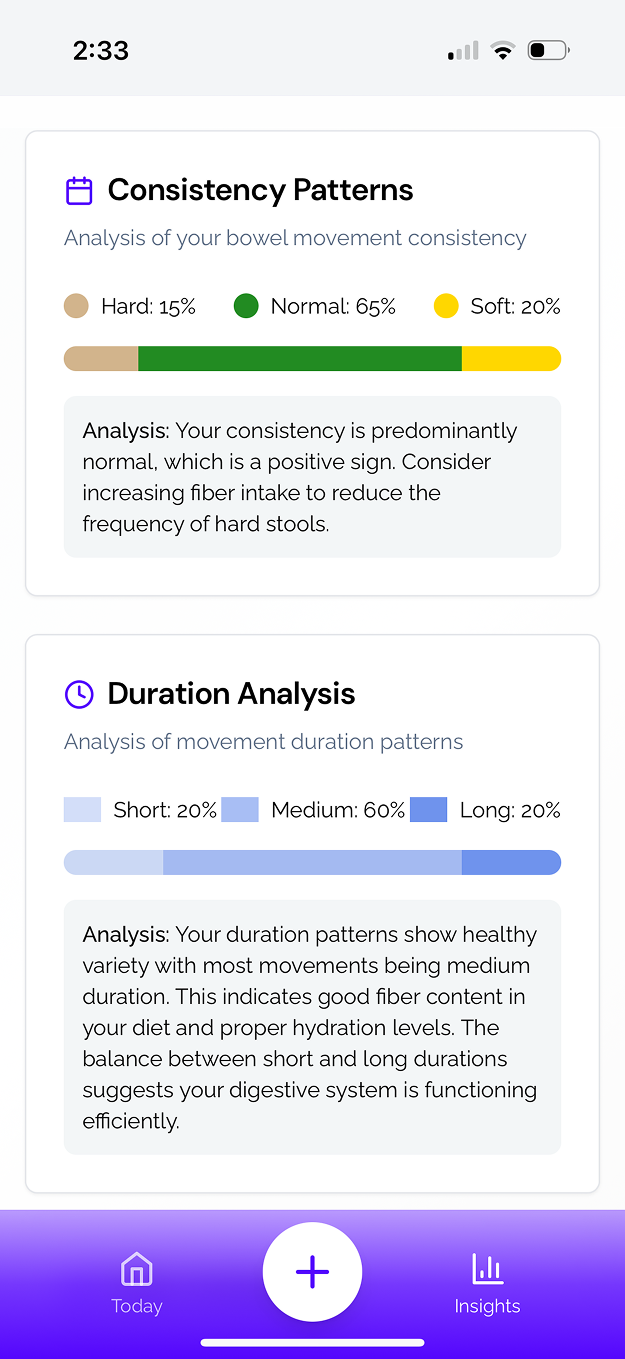
Continuous, low-effort monitoring is attractive here because manual diaries are usually abandoned. In one controlled study, only 11 percent of participants filled paper diaries as instructed while 90 percent said they had (Stone et al., BMJ, 2002). That failure mode is the design intent behind SNIFR, and the reason our overview of advanced digestive monitoring for IBS and gastrointestinal diseases is worth reading alongside this.
Stress and the Gut-Brain Axis
Experimental psychological stress and corticotropin-releasing hormone increase intestinal permeability in humans through a mast cell-dependent mechanism (Vanuytsel et al., Gut, 2014). Managing stress is not a soft extra. In a network meta-analysis of 67 randomised trials in 7,441 participants, cognitive behavioural therapy had a relative risk of global symptoms not improving of 0.65 (95 percent CI 0.53 to 0.80) and gut-directed hypnotherapy 0.79 (95 percent CI 0.66 to 0.95) versus waiting list (Thakur et al., The Lancet Gastroenterology and Hepatology, 2025). A daily practice you will actually maintain beats an ambitious one you will not.
A Clinical Team You Can Talk To
Find a gastroenterologist who listens, and be specific and honest with them. Embarrassment costs you accuracy, and accuracy is what they need. A dietitian with IBS experience is often the highest-value addition, particularly if your diet has been narrowing.
People Who Know
Shame does its worst work in silence. Tell a few people you trust. Consider a support group or a therapist experienced with chronic illness. Isolation worsens both the psychological load and, through stress pathways, the symptoms themselves.
Dietary Management Without Endless Restriction
The low FODMAP diet has good evidence and is often the first structured dietary intervention. A randomised crossover feeding study found lower overall gastrointestinal symptom scores on 21 days of low FODMAP eating than on a typical Australian diet (Halmos et al., Gastroenterology, 2014). In a US randomised trial in 92 adults with IBS-D, 51 percent of the low FODMAP arm were abdominal pain responders against 23 percent on modified NICE advice (p=0.008) (Eswaran et al., American Journal of Gastroenterology, 2016), and a companion analysis found improvements in quality of life and reductions in activity impairment (Eswaran et al., Clinical Gastroenterology and Hepatology, 2017). A network meta-analysis ranked it first among dietary interventions, with a relative risk of symptoms not improving of 0.67 (95 percent CI 0.48 to 0.91) versus habitual diet (Black et al., Gut, 2022).
It is designed as a short elimination phase followed by systematic reintroduction, with the goal of ending on the broadest tolerable diet, not the narrowest (Staudacher and Whelan, Gut, 2017). In practice the reintroduction phase gets skipped constantly, and patients end up years into an unnecessarily restrictive diet. If that describes you, that is a reason to see a dietitian rather than to eliminate one more thing.
Probiotic evidence is strain-specific and mixed as a class (Ford et al., Alimentary Pharmacology and Therapeutics, 2018), although Bifidobacterium infantis 35624 at 1 x 10^8 CFU daily for four weeks outperformed placebo for abdominal pain and composite score in one trial (Whorwell et al., American Journal of Gastroenterology, 2006). Soluble fibre suits some patients and not others: 10 grams per day of psyllium beat placebo in primary care IBS while 10 grams of bran did not (Bijkerk et al., BMJ, 2009). That contrast is exactly why single-variable testing matters.
Medication: What the Literature Studied
Several drug classes have trial evidence in IBS-D. What follows is what published trials used and what they found. It is not a dosing recommendation. Which of these fits you, at what dose, and in what sequence is a clinical decision that depends on your history, your other conditions, and your other medications. Bring your data to your prescriber and let them prescribe.
| Class or agent | Dose used in published trials | Trial endpoint and result | Key safety considerations | Source |
|---|---|---|---|---|
| Antispasmodics (12 agents) | Varied by agent across 22 placebo-controlled trials | RR of persistent symptoms 0.68 (95% CI 0.57-0.81), 1,778 patients | Anticholinergic effects; individual agents differ substantially | Ford et al., 2008 |
| Enteric-coated peppermint oil | Enteric-coated preparations versus placebo | NNT of 3 to prevent one patient having persistent symptoms | Heartburn and reflux; caution in GERD and hiatus hernia; do not crush capsules | Alammar et al., 2019 |
| Rifaximin | 550 mg three times daily for 14 days | Adequate relief of global IBS symptoms 40.8% vs 31.2% placebo in TARGET 1 (p=0.01) | Repeat courses studied separately; not for constipation-predominant IBS | Pimentel et al., 2011; Lembo et al., 2016 |
| Eluxadoline | 75 mg or 100 mg twice daily | Composite responder weeks 1-12: 23.9% and 25.1% vs 17.1% placebo (IBS-3001); 28.9% and 29.6% vs 16.2% (IBS-3002) | Pancreatitis and sphincter of Oddi spasm reported; contraindicated without a gallbladder, in biliary obstruction, in prior pancreatitis and with heavy alcohol use | Lembo et al., 2016 |
| Ondansetron | 4 mg, titrated up to two tablets three times daily over 3 weeks | Stool form improved by a mean of 0.9 Bristol points versus placebo (95% CI -1.1 to -0.6, p<0.001); less urgency, lower defaecation frequency, less bloating; pain unchanged | QT interval prolongation; constipation | Garsed et al., 2014 |
| Amitriptyline (neuromodulator) | 10 mg once daily, patient-titrated to a maximum of 30 mg over 3 weeks | IBS-SSS at 6 months -27.0 versus placebo (95% CI -46.9 to -7.10, p=0.0079), 463 primary care patients | 13% discontinued for adverse events; anticholinergic and sedative effects; interactions matter | Ford et al., 2023 |
| Bile acid sequestrants | Colestyramine in patients with confirmed bile acid malabsorption | Response in 96% at SeHCAT retention below 5%, 80% below 10%, 70% below 15% | Requires the diagnosis first; binds other drugs, so dosing must be separated | Wedlake et al., 2009 |
| Loperamide | Antidiarrhoeal, dose titrated clinically | Improves stool consistency; guidelines note the trial evidence for global IBS symptom improvement is limited | Constipation; guidelines differ on how strongly to position it | Lacy et al., 2021; Vasant et al., 2021 |
One thing this article will not do is tell you to take an antispasmodic before meals as a preventive habit. Preventive dosing schedules are a prescriber's decision made with knowledge of your full medication list, not a general recommendation.
Breaking the Anxiety Cycle
Anticipatory anxiety about symptoms activates the same pathways that produce the symptoms. That is a genuinely unfair loop, and it is also a treatable one. Psychological state measurably influences how gastrointestinal symptoms are perceived and reported in IBS (Enck et al., Nature Reviews Disease Primers, 2016).
Cognitive behavioural approaches work by testing catastrophic predictions against what actually happens, then gradually widening the range of situations you engage with, and they carry the strongest effect estimate among behavioural therapies in the current network meta-analysis (Thakur et al., 2025). Most patients find the anxiety recedes as predictability increases, which is the underrated benefit of good tracking: not the data itself, but the reduction in uncertainty.
Hypothetical scenario. Consider a hypothetical case: a man in Stage Two who has assumed he has already tried everything for IBS-D. A two-week Bristol and context baseline shows urgency clustering after short nights, consistent with the finding that poorer than usual subjective sleep quality predicts next-day lower gastrointestinal symptoms in IBS (Topan et al., American Journal of Gastroenterology, 2024). His gastroenterologist also notes he has never had a bile acid assessment despite persistent type 6 stools, and orders one on the basis that around a third of patients labelled IBS-D have SeHCAT retention below 10 percent. What changes his management is the clinical assessment. The record is what prompted the question.
Red Flag Symptoms That Need Prompt Medical Attention
Even with a confirmed IBS-D diagnosis, some symptoms mean stop and get assessed. The BSG lists family history of colorectal cancer or inflammatory bowel disease, unexplained weight loss, rectal bleeding not due to haemorrhoids, nocturnal diarrhoea and unexplained iron deficiency anaemia as alarm features requiring urgent colonoscopy or radiological evaluation of the colon (Vasant et al., Gut, 2021).
- Rectal bleeding, or black, tarry stools
- Unintentional weight loss
- Diarrhea that wakes you from sleep
- Unexplained anemia or iron deficiency
- Fever, severe abdominal pain, or signs of dehydration
- A family history of colorectal cancer, inflammatory bowel disease, or celiac disease
- New or clearly changed symptoms, particularly after age 50
A new symptom is new information. It deserves a clinical conversation, not a longer elimination diet. SNIFR does not diagnose IBS-D or any other condition, does not replace colonoscopy, endoscopy, breath testing, stool studies, or blood work, and does not tell you when to start, stop, or change a medication.
Starting This Week
You do not need to do all of this at once, and trying to is a reliable way to do none of it. Pick one foundation. Map your bathrooms if preparedness is the pressing problem. Start a two-week baseline if you want information. Book the gastroenterology appointment if the diagnosis has never been properly worked up. Tell one person if the isolation is the heaviest part.
Then add the second thing next week. Progress in IBS-D is usually measured in months, and the direction matters more than the pace.
Frequently Asked Questions
What is the difference between IBS-D and other causes of chronic diarrhea?
IBS-D is diagnosed by Rome IV symptom criteria after other causes are excluded, and it does not damage the bowel. Bile acid malabsorption was found in 32 percent of patients labelled with IBS-D in one systematic review, and small intestinal bacterial overgrowth in a pooled 38 percent of IBS patients. Both have specific treatments, so the workup matters.
How do I manage IBS-D day to day?
Start with five foundations: practical preparedness, a two-week symptom baseline using the Bristol Stool Form Scale, consistent stress management, a clinical team you can talk to honestly, and people who know. Add one at a time. Attempting everything simultaneously is the most common reason people abandon the plan.
Does the low FODMAP diet cure IBS-D?
No. It is a structured short-term elimination followed by systematic reintroduction. In a US randomised trial, 51 percent of the low FODMAP arm were abdominal pain responders against 23 percent on modified NICE advice, and a network meta-analysis ranked it first among dietary interventions. The reintroduction phase is frequently skipped, leaving people unnecessarily restricted.
What medications are used for IBS-D?
Published trials have studied antispasmodics, enteric-coated peppermint oil, rifaximin 550 mg three times daily for 14 days, eluxadoline 75 or 100 mg twice daily, ondansetron from 4 mg, low-dose amitriptyline from 10 mg, bile acid sequestrants where malabsorption is confirmed, and loperamide. Which one suits you, at what dose, is entirely a prescriber's decision.
How does anxiety make IBS-D worse?
Anticipatory anxiety activates the same gut-brain pathways that produce urgency and looser stools. Experimental stress increases intestinal permeability in humans. In a network meta-analysis of 67 trials, cognitive behavioural therapy had a relative risk of symptoms not improving of 0.65 and gut-directed hypnotherapy 0.79 versus waiting list.
Can I travel or work normally with IBS-D?
Most people can, though it usually takes preparation rather than luck. Knowing bathroom locations, carrying a small kit, planning meals around travel days, and managing sleep disruption all help. Many patients find that confidence returns as symptoms become predictable rather than after they disappear entirely.
What IBS-D symptoms mean I should see a doctor urgently?
Rectal bleeding, black or tarry stools, unintentional weight loss, nocturnal diarrhoea, unexplained iron deficiency anaemia, fever, severe pain, or signs of dehydration. These are British Society of Gastroenterology alarm features warranting urgent colonoscopy or radiological evaluation. Any clearly new or changed symptom also needs assessment, especially after age 50.
References
- Lacy BE, Mearin F, Chang L, Chey WD, Lembo AJ, Simren M, Spiller R. Bowel Disorders. Gastroenterology. 2016;150(6):1393-1407.e5. doi:10.1053/j.gastro.2016.02.031
- Lacy BE, Pimentel M, Brenner DM, Chey WD, Keefer LA, Long MD, Moshiree B. ACG Clinical Guideline: Management of Irritable Bowel Syndrome. American Journal of Gastroenterology. 2021;116(1):17-44. doi:10.14309/ajg.0000000000001036
- Vasant DH, Paine PA, Black CJ, et al. British Society of Gastroenterology guidelines on the management of irritable bowel syndrome. Gut. 2021;70(7):1214-1240. doi:10.1136/gutjnl-2021-324598
- Gralnek IM, Hays RD, Kilbourne A, Naliboff B, Mayer EA. The impact of irritable bowel syndrome on health-related quality of life. Gastroenterology. 2000;119(3):654-660. doi:10.1053/gast.2000.16484
- Wedlake L, A’Hern R, Russell D, Thomas K, Walters JRF, Andreyev HJN. Systematic review: the prevalence of idiopathic bile acid malabsorption as diagnosed by SeHCAT scanning in patients with diarrhoea-predominant irritable bowel syndrome. Alimentary Pharmacology and Therapeutics. 2009;30(7):707-717. doi:10.1111/j.1365-2036.2009.04081.x
- Shah A, Talley NJ, Jones M, et al. Small Intestinal Bacterial Overgrowth in Irritable Bowel Syndrome: A Systematic Review and Meta-Analysis of Case-Control Studies. American Journal of Gastroenterology. 2020;115(2):190-201. doi:10.14309/ajg.0000000000000504
- Saad RJ, Rao SSC, Koch KL, et al. Do Stool Form and Frequency Correlate With Whole-Gut and Colonic Transit? Results From a Multicenter Study in Constipated Individuals and Healthy Controls. American Journal of Gastroenterology. 2010;105(2):403-411. doi:10.1038/ajg.2009.612
- Francis CY, Morris J, Whorwell PJ. The irritable bowel severity scoring system: a simple method of monitoring irritable bowel syndrome and its progress. Alimentary Pharmacology and Therapeutics. 1997;11(2):395-402. doi:10.1046/j.1365-2036.1997.142318000.x
- Stone AA, Shiffman S, Schwartz JE, Broderick JE, Hufford MR. Patient non-compliance with paper diaries. BMJ. 2002;324(7347):1193-1194. doi:10.1136/bmj.324.7347.1193
- Vanuytsel T, van Wanrooy S, Vanheel H, et al. Psychological stress and corticotropin-releasing hormone increase intestinal permeability in humans by a mast cell-dependent mechanism. Gut. 2014;63(8):1293-1299. doi:10.1136/gutjnl-2013-305690
- Thakur ER, Khasawneh M, Moayyedi P, Black CJ, Ford AC. Efficacy of behavioural therapies for irritable bowel syndrome: a systematic review and network meta-analysis. The Lancet Gastroenterology & Hepatology. 2025;10(12):1075-1088. doi:10.1016/S2468-1253(25)00238-9
- Halmos EP, Power VA, Shepherd SJ, Gibson PR, Muir JG. A Diet Low in FODMAPs Reduces Symptoms of Irritable Bowel Syndrome. Gastroenterology. 2014;146(1):67-75.e5. doi:10.1053/j.gastro.2013.09.046
- Eswaran SL, Chey WD, Han-Markey T, Ball S, Jackson K. A Randomized Controlled Trial Comparing the Low FODMAP Diet vs. Modified NICE Guidelines in US Adults with IBS-D. American Journal of Gastroenterology. 2016;111(12):1824-1832. doi:10.1038/ajg.2016.434
- Eswaran S, Chey WD, Jackson K, Pillai S, Chey SW, Han-Markey T. A Diet Low in Fermentable Oligo-, Di-, and Monosaccharides and Polyols Improves Quality of Life and Reduces Activity Impairment in Patients With Irritable Bowel Syndrome and Diarrhea. Clinical Gastroenterology and Hepatology. 2017;15(12):1890-1899.e3. doi:10.1016/j.cgh.2017.06.044
- Black CJ, Staudacher HM, Ford AC. Efficacy of a low FODMAP diet in irritable bowel syndrome: systematic review and network meta-analysis. Gut. 2022;71(6):1117-1126. doi:10.1136/gutjnl-2021-325214
- Staudacher HM, Whelan K. The low FODMAP diet: recent advances in understanding its mechanisms and efficacy in IBS. Gut. 2017;66(8):1517-1527. doi:10.1136/gutjnl-2017-313750
- Ford AC, Harris LA, Lacy BE, Quigley EMM, Moayyedi P. Systematic review with meta-analysis: the efficacy of prebiotics, probiotics, synbiotics and antibiotics in irritable bowel syndrome. Alimentary Pharmacology and Therapeutics. 2018;48(10):1044-1060. doi:10.1111/apt.15001
- Whorwell PJ, Altringer L, Morel J, et al. Efficacy of an Encapsulated Probiotic Bifidobacterium infantis 35624 in Women with Irritable Bowel Syndrome. American Journal of Gastroenterology. 2006;101(7):1581-1590. doi:10.1111/j.1572-0241.2006.00734.x
- Bijkerk CJ, de Wit NJ, Muris JWM, Whorwell PJ, Knottnerus JA, Hoes AW. Soluble or insoluble fibre in irritable bowel syndrome in primary care? Randomised placebo controlled trial. BMJ. 2009;339:b3154. doi:10.1136/bmj.b3154
- Ford AC, Talley NJ, Spiegel BMR, et al. Effect of fibre, antispasmodics, and peppermint oil in the treatment of irritable bowel syndrome: systematic review and meta-analysis. BMJ. 2008;337:a2313. doi:10.1136/bmj.a2313
- Alammar N, Wang L, Saberi B, et al. The impact of peppermint oil on the irritable bowel syndrome: a meta-analysis of the pooled clinical data. BMC Complementary and Alternative Medicine. 2019;19(1):21. doi:10.1186/s12906-018-2409-0
- Pimentel M, Lembo A, Chey WD, et al. Rifaximin Therapy for Patients with Irritable Bowel Syndrome without Constipation. New England Journal of Medicine. 2011;364(1):22-32. doi:10.1056/NEJMoa1004409
- Lembo A, Pimentel M, Rao SS, et al. Repeat Treatment With Rifaximin Is Safe and Effective in Patients With Diarrhea-Predominant Irritable Bowel Syndrome. Gastroenterology. 2016;151(6):1113-1121. doi:10.1053/j.gastro.2016.08.003
- Lembo AJ, Lacy BE, Zuckerman MJ, et al. Eluxadoline for Irritable Bowel Syndrome with Diarrhea. New England Journal of Medicine. 2016;374(3):242-253. doi:10.1056/NEJMoa1505180
- Garsed K, Chernova J, Hastings M, et al. A randomised trial of ondansetron for the treatment of irritable bowel syndrome with diarrhoea. Gut. 2014;63(10):1617-1625. doi:10.1136/gutjnl-2013-305989
- Ford AC, Wright-Hughes A, Alderson SL, et al. Amitriptyline at Low-Dose and Titrated for Irritable Bowel Syndrome as Second-Line Treatment in primary care (ATLANTIS): a randomised, double-blind, placebo-controlled, phase 3 trial. The Lancet. 2023;402(10414):1773-1785. doi:10.1016/S0140-6736(23)01523-4
- Topan R, Vork L, Fitzke H, et al. Poor Subjective Sleep Quality Predicts Symptoms in Irritable Bowel Syndrome Using the Experience Sampling Method. American Journal of Gastroenterology. 2024;119(1):155-164. doi:10.14309/ajg.0000000000002510
- Khasawneh M, Mokhtare M, Moayyedi P, Black CJ, Ford AC. Efficacy of gut-brain neuromodulators in irritable bowel syndrome: an updated systematic review and meta-analysis. The Lancet Gastroenterology & Hepatology. 2025;10(6):537-549. doi:10.1016/S2468-1253(25)00051-2
- Ford AC, Lacy BE, Talley NJ. Irritable Bowel Syndrome. New England Journal of Medicine. 2017;376(26):2566-2578. doi:10.1056/NEJMra1607547
SNIFR is designed to provide insights about gut health patterns, not to diagnose or treat medical conditions. Individual results may vary as gut health is influenced by numerous factors including diet, stress, sleep, and genetics. SNIFR is currently in development, and features described may evolve before commercial release.
Other Posts



Be first to try SNIFR. Beta coming soon.
Join our waitlist to get notified when the app launches. Start understanding your gut health sooner.