
IBS Trigger Identification: Finding Your Personal Patterns
IBS trigger identification fails for predictable, documented reasons. Here is a four-week approach grounded in the diet, sleep, hormonal and stress evidence.
One day you feel fine. The next, bloating, cramping, and urgency arrive with no obvious cause. Was it last night's dinner? The meeting that ran long? Something you ate three days ago? For most people with IBS, the honest answer is that they never find out.
IBS trigger identification is genuinely difficult, and not because patients are careless. It is difficult because the system you are trying to observe is noisy, delayed, and influenced by several things at once. Understanding why the usual approach fails is the first step toward doing it better.
A note before we start: this article assumes you already have an IBS diagnosis from a clinician. IBS is a diagnosis of exclusion, and hunting for trigger foods before other causes have been ruled out is a good way to delay a real diagnosis (Lacy et al., American Journal of Gastroenterology, 2021).
Why Traditional Trigger Hunting Usually Fails
The standard method is a food and symptom diary. Write down what you ate. Write down how you felt. Look for patterns. Millions of people have tried it, and the design has predictable weak points.
- Diaries are not filled in the way people believe they are. In a study of 80 patients issued paper diaries containing a hidden photosensor, only 11 percent made entries three times daily as instructed while 90 percent reported that they had, and hoarding, meaning back-filling several days at once, was common (Stone et al., BMJ, 2002).
- Delayed response. Symptoms can follow a meal by anywhere from minutes to a couple of days depending on transit and mechanism, which blurs the connection (Chey et al., JAMA, 2015).
- Simultaneous variables. If a stressful day, a short night of sleep, and an unusual meal all land on the same Tuesday, the diary cannot tell you which one mattered.
- Reporting drifts with mood. Psychological state measurably influences how gastrointestinal symptoms are perceived and reported in IBS (Enck et al., Nature Reviews Disease Primers, 2016).
- Confirmation bias. Once you suspect a food, you notice symptoms after eating it and forget the times you tolerated it fine.
The consequence is not just frustration. It is unnecessary restriction. Patients routinely eliminate foods they actually tolerate, based on a coincidence that felt like evidence.
The Four Categories of IBS Triggers
Triggers are not all dietary, and treating them as if they are is one reason people get stuck. Each category has a different typical latency and a different way of being tested.
| Category | Typical latency | How the literature tests it | Evidence |
|---|---|---|---|
| Fermentable carbohydrates (FODMAPs) | Hours; gas production tracks the carbohydrate load | Time-limited elimination then structured reintroduction, dietitian supervised | Ong et al., 2010; Halmos et al., 2014; Black et al., 2022 |
| Stress and psychological state | Same day to days | Behavioural therapy trials; experimental stress protocols | Vanuytsel et al., 2014; Thakur et al., 2025 |
| Menstrual cycle phase | Perimenstrual, cyclical | Daily symptom diaries across complete cycles | Heitkemper and Jarrett, 2008 |
| Sleep quality | Next day | Prospective daily diary and experience sampling | Buchanan et al., 2014; Topan et al., 2024 |
Food and Nutrient Triggers
Fermentable carbohydrates, high-fat meals, large portions, caffeine, alcohol, and certain additives are common culprits. When patients with IBS were fed diets differing in fermentable short-chain carbohydrates, both breath hydrogen production and symptom generation rose with the load (Ong et al., Journal of Gastroenterology and Hepatology, 2010).
The structured way to test these is a time-limited elimination followed by controlled reintroduction. A network meta-analysis ranked the low FODMAP diet first among dietary interventions, with a relative risk of symptoms not improving of 0.67 (95 percent CI 0.48 to 0.91) versus habitual diet (Black et al., Gut, 2022). In a US randomised trial in IBS-D, 51 percent of the low FODMAP group were abdominal pain responders against 23 percent on modified NICE advice (p=0.008) (Eswaran et al., American Journal of Gastroenterology, 2016). Do this with dietitian support so your diet does not quietly shrink.
Stress and Emotional Triggers
The gut-brain axis is not a metaphor. Experimental psychological stress and corticotropin-releasing hormone increase intestinal permeability in humans through a mast cell-dependent mechanism (Vanuytsel et al., Gut, 2014). Many patients find that stress correlates with flares more reliably than any single food.
Behavioural therapies have among the better evidence bases in IBS. In a network meta-analysis of 67 randomised trials in 7,441 participants, cognitive behavioural therapy had a relative risk of global symptoms not improving of 0.65 (95 percent CI 0.53 to 0.80) and gut-directed hypnotherapy 0.79 (95 percent CI 0.66 to 0.95) against waiting list control (Thakur et al., The Lancet Gastroenterology and Hepatology, 2025).
Hormonal and Cycle-Based Triggers
Many women report predictable worsening around menstruation. Reviews of the gender and hormone literature report that gastrointestinal symptoms including abdominal pain, bloating and altered bowel pattern increase during the premenstrual and menstrual phases in women with and without IBS (Heitkemper and Jarrett, Nutrition in Clinical Practice, 2008). If this is you, tracking symptoms against cycle phase across two or three complete cycles is often the single most informative thing you can do.
Sleep and Circadian Triggers
Short or irregular sleep, shift work, and travel across time zones are all common flare precipitants. In an experience sampling study, poorer than usual subjective sleep quality predicted next-day abdominal pain and lower gastrointestinal symptoms in IBS, and the relationship ran in that direction rather than the reverse (Topan et al., American Journal of Gastroenterology, 2024). An earlier prospective diary study in women with IBS found the same next-day pattern (Buchanan et al., Journal of Clinical Sleep Medicine, 2014). Sleep is also the variable most people forget to record, which means it hides in the noise.
A Structured Four-Week Approach
Trigger identification works better with a plan than with vigilance. Here is a sequence I find practical.
- Week 1, baseline. Change nothing. Record symptom frequency, stool form using the Bristol Stool Form Scale, stress on a simple scale, and sleep. The Bristol scale is the standard because stool form correlates with intestinal transit time (Lewis and Heaton, Scandinavian Journal of Gastroenterology, 1997).
- Weeks 2 and 3, observe. Keep recording and start noting clusters. Resist the urge to intervene. Premature changes destroy the comparison you are building.
- Week 4, test one variable. Pick the single most plausible pattern and test it deliberately for several days. One variable at a time is what makes the result interpretable.
- Then review with your clinician. Bring the record. If you want a number, the IBS Severity Scoring System is validated and treats a 50-point change as clinically meaningful (Francis et al., Alimentary Pharmacology and Therapeutics, 1997).
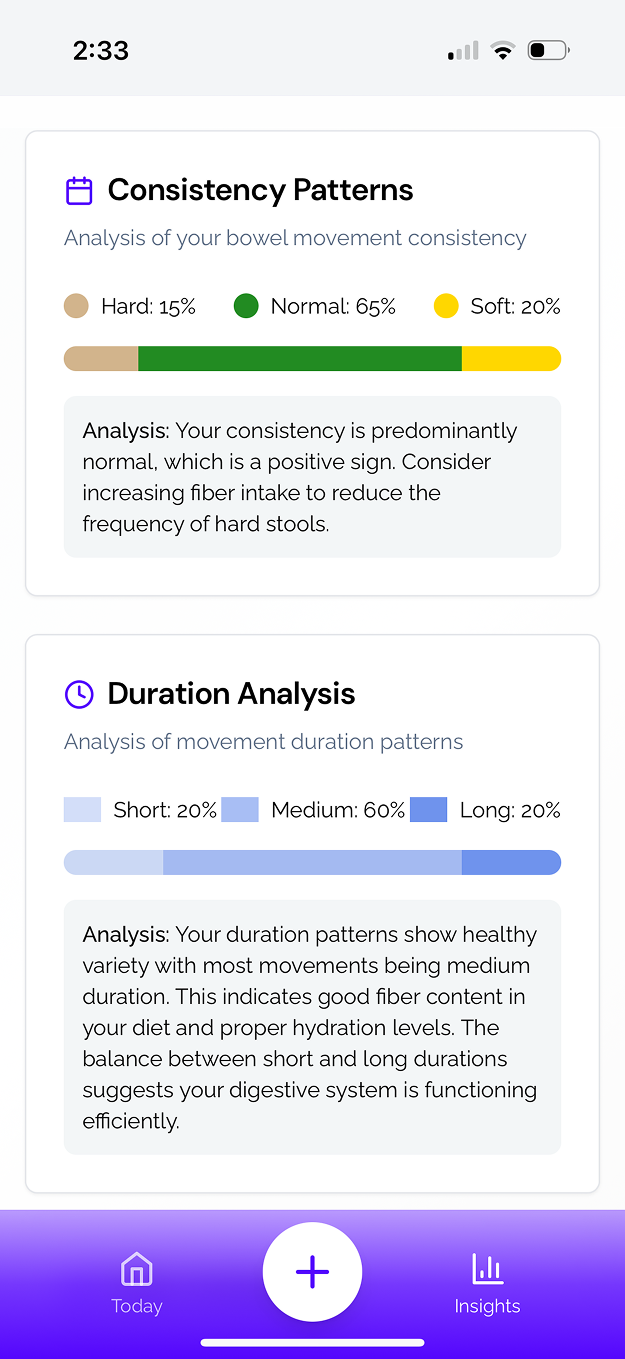
Passive monitoring is attractive here precisely because attrition is the main failure mode. A system that collects data without asking you to remember anything removes the step most likely to break. That is the design intent behind SNIFR, and our overview of advanced digestive monitoring for IBS and gastrointestinal diseases explains how continuous data fits alongside clinical care. SNIFR does not identify triggers for you, diagnose IBS, or replace colonoscopy, endoscopy, breath testing, stool studies, or blood work.
Hypothetical scenario. Consider a hypothetical case: a woman with IBS-M convinced that onions are her trigger, who has avoided them for two years. Across three complete menstrual cycles she records stool form, sleep and a simple stress rating without changing her diet. Her worst days cluster in the perimenstrual window, consistent with the reported increase in gastrointestinal symptoms during the premenstrual and menstrual phases (Heitkemper and Jarrett, Nutrition in Clinical Practice, 2008), rather than around onion-containing meals. Her dietitian then supervises a single-variable onion reintroduction. This is an illustrative example of sequencing, not an outcome attributed to any product.
Five Commonly Missed Triggers
- Eating pattern rather than food. Eating very fast, very late, or in unusually large volumes affects symptoms independently of what was on the plate.
- Meal composition. Fat, fiber, and fluid interact. Soluble fibre illustrates this well: in a primary care randomised trial, 10 grams per day of psyllium produced greater adequate relief than placebo at one and two months, while 10 grams of bran did not (Bijkerk et al., BMJ, 2009).
- Beverages. Coffee, alcohol, carbonated drinks, and sugar alcohols in diet drinks are frequently omitted from food diaries entirely because people do not think of them as food.
- Cumulative dose. A small amount is tolerated, the same food across three meals is not. This is consistent with symptom generation tracking total fermentable load rather than any single exposure (Ong et al., 2010). Single-meal tracking misses it completely.
- Indirect chains. Sometimes gas leads to discomfort, discomfort leads to anxiety, and anxiety drives the flare. Rectal hypersensitivity, present in a substantial minority of IBS patients, correlates with symptom severity and helps explain why the same gas volume is not felt equally by everyone (Posserud et al., Gastroenterology, 2007).
Red Flag Symptoms That Need Prompt Medical Attention
Trigger hunting is for people whose diagnosis is settled and whose symptoms are stable in character. The BSG lists family history of colorectal cancer or inflammatory bowel disease, unexplained weight loss, rectal bleeding not due to haemorrhoids, nocturnal diarrhoea and unexplained iron deficiency anaemia as alarm features requiring urgent evaluation (Vasant et al., Gut, 2021). Stop and seek prompt medical care if you have:
- Rectal bleeding, or black, tarry stools
- Unintentional weight loss
- Symptoms that wake you from sleep
- Unexplained anemia
- Fever, persistent vomiting, or severe worsening pain
- A family history of colorectal cancer, inflammatory bowel disease, or celiac disease
- New bowel symptoms after age 50
Beyond Avoidance
Identifying a trigger is not the same as needing to avoid it forever. In practice there are three strategies, and most patients need all three at different times.
- Avoid the small number of things that reliably cause significant symptoms and offer little in return.
- Modify most of the rest. Smaller portions, different timing, different preparation, or pairing with other foods often makes a trigger manageable. This is exactly what structured FODMAP reintroduction is designed to establish (Staudacher and Whelan, Gut, 2017).
- Build tolerance over the long term through sleep, stress management, and a diet that is as varied as your symptoms allow.
The goal of trigger identification is not a longer list of forbidden foods. It is a shorter one, held with more confidence, so the rest of your diet and your life can open back up.
Frequently Asked Questions
How long does it take to identify IBS triggers?
With a structured approach, useful patterns often emerge within four weeks, though confirming a specific food trigger through elimination and reintroduction takes longer. Hormonal patterns need two or three complete cycles. Unstructured diary keeping can drag on for months, mainly because gaps, delayed responses and overlapping variables obscure the signal.
What are the most common IBS trigger foods?
Fermentable carbohydrates, high-fat meals, large portions, caffeine, alcohol and carbonated or artificially sweetened drinks are among the most frequently reported. Experimental feeding studies show gas production and symptoms rise with fermentable carbohydrate load. Triggers remain highly individual, so test rather than assume, ideally with dietitian support.
Why do my IBS symptoms happen even when I have not eaten a trigger food?
Because food is only one category. In an experience sampling study, poorer than usual subjective sleep quality predicted next-day abdominal pain and lower gastrointestinal symptoms. Menstrual cycle phase, stress, travel and illness all affect motility and sensitivity. Symptoms that do not track with diet are information, not failure.
What are the best IBS symptom tracking methods?
The one you will sustain, because abandonment is the main failure mode. One controlled study found only 11 percent of paper diaries were filled as instructed while 90 percent of participants said they had been. Record stool form on the Bristol scale alongside stress and sleep, and consider passive monitoring to remove the memory step.
Should I eliminate a food as soon as I suspect it?
Not immediately. Suspicion is often confirmation bias in disguise, and each unnecessary elimination narrows your diet. A better approach is a time-limited removal followed by a deliberate reintroduction while you watch what happens, changing one variable at a time so the result is interpretable.
Can stress alone trigger an IBS flare-up?
Yes. Experimental psychological stress and corticotropin-releasing hormone increase intestinal permeability in humans by a mast cell-dependent mechanism. In a network meta-analysis of 67 trials, cognitive behavioural therapy had a relative risk of symptoms not improving of 0.65 and gut-directed hypnotherapy 0.79 versus waiting list, so the pathway is treatable.
Does fibre help or hurt IBS symptoms?
It depends on the type. In a primary care randomised trial, 10 grams per day of psyllium produced greater adequate relief than placebo at one and two months, while 10 grams of bran did not. Soluble fibre suits some patients and worsens bloating in others, which is exactly why single-variable testing matters.
References
- Lacy BE, Pimentel M, Brenner DM, Chey WD, Keefer LA, Long MD, Moshiree B. ACG Clinical Guideline: Management of Irritable Bowel Syndrome. American Journal of Gastroenterology. 2021;116(1):17-44. doi:10.14309/ajg.0000000000001036
- Vasant DH, Paine PA, Black CJ, et al. British Society of Gastroenterology guidelines on the management of irritable bowel syndrome. Gut. 2021;70(7):1214-1240. doi:10.1136/gutjnl-2021-324598
- Stone AA, Shiffman S, Schwartz JE, Broderick JE, Hufford MR. Patient non-compliance with paper diaries. BMJ. 2002;324(7347):1193-1194. doi:10.1136/bmj.324.7347.1193
- Chey WD, Kurlander J, Eswaran S. Irritable Bowel Syndrome: A Clinical Review. JAMA. 2015;313(9):949-958. doi:10.1001/jama.2015.0954
- Ong DK, Mitchell SB, Barrett JS, et al. Manipulation of dietary short chain carbohydrates alters the pattern of gas production and genesis of symptoms in irritable bowel syndrome. Journal of Gastroenterology and Hepatology. 2010;25(8):1366-1373. doi:10.1111/j.1440-1746.2010.06370.x
- Halmos EP, Power VA, Shepherd SJ, Gibson PR, Muir JG. A Diet Low in FODMAPs Reduces Symptoms of Irritable Bowel Syndrome. Gastroenterology. 2014;146(1):67-75.e5. doi:10.1053/j.gastro.2013.09.046
- Black CJ, Staudacher HM, Ford AC. Efficacy of a low FODMAP diet in irritable bowel syndrome: systematic review and network meta-analysis. Gut. 2022;71(6):1117-1126. doi:10.1136/gutjnl-2021-325214
- Eswaran SL, Chey WD, Han-Markey T, Ball S, Jackson K. A Randomized Controlled Trial Comparing the Low FODMAP Diet vs. Modified NICE Guidelines in US Adults with IBS-D. American Journal of Gastroenterology. 2016;111(12):1824-1832. doi:10.1038/ajg.2016.434
- Vanuytsel T, van Wanrooy S, Vanheel H, et al. Psychological stress and corticotropin-releasing hormone increase intestinal permeability in humans by a mast cell-dependent mechanism. Gut. 2014;63(8):1293-1299. doi:10.1136/gutjnl-2013-305690
- Thakur ER, Khasawneh M, Moayyedi P, Black CJ, Ford AC. Efficacy of behavioural therapies for irritable bowel syndrome: a systematic review and network meta-analysis. The Lancet Gastroenterology & Hepatology. 2025;10(12):1075-1088. doi:10.1016/S2468-1253(25)00238-9
- Heitkemper MM, Jarrett M. Update on Irritable Bowel Syndrome and Gender Differences. Nutrition in Clinical Practice. 2008;23(3):275-283. doi:10.1177/0884533608318672
- Topan R, Vork L, Fitzke H, et al. Poor Subjective Sleep Quality Predicts Symptoms in Irritable Bowel Syndrome Using the Experience Sampling Method. American Journal of Gastroenterology. 2024;119(1):155-164. doi:10.14309/ajg.0000000000002510
- Buchanan DT, Cain K, Heitkemper M, et al. Sleep Measures Predict Next-Day Symptoms in Women with Irritable Bowel Syndrome. Journal of Clinical Sleep Medicine. 2014;10(9):1003-1009. doi:10.5664/jcsm.4038
- Lewis SJ, Heaton KW. Stool Form Scale as a Useful Guide to Intestinal Transit Time. Scandinavian Journal of Gastroenterology. 1997;32(9):920-924. doi:10.3109/00365529709011203
- Francis CY, Morris J, Whorwell PJ. The irritable bowel severity scoring system: a simple method of monitoring irritable bowel syndrome and its progress. Alimentary Pharmacology and Therapeutics. 1997;11(2):395-402. doi:10.1046/j.1365-2036.1997.142318000.x
- Bijkerk CJ, de Wit NJ, Muris JWM, Whorwell PJ, Knottnerus JA, Hoes AW. Soluble or insoluble fibre in irritable bowel syndrome in primary care? Randomised placebo controlled trial. BMJ. 2009;339:b3154. doi:10.1136/bmj.b3154
- Posserud I, Syrous A, Lindström L, Tack J, Abrahamsson H, Simrén M. Altered Rectal Perception in Irritable Bowel Syndrome Is Associated With Symptom Severity. Gastroenterology. 2007;133(4):1113-1123. doi:10.1053/j.gastro.2007.07.024
- Staudacher HM, Whelan K. The low FODMAP diet: recent advances in understanding its mechanisms and efficacy in IBS. Gut. 2017;66(8):1517-1527. doi:10.1136/gutjnl-2017-313750
- Lovell RM, Ford AC. Global Prevalence of and Risk Factors for Irritable Bowel Syndrome: A Meta-analysis. Clinical Gastroenterology and Hepatology. 2012;10(7):712-721.e4. doi:10.1016/j.cgh.2012.02.029
- Drossman DA. Functional Gastrointestinal Disorders: History, Pathophysiology, Clinical Features, and Rome IV. Gastroenterology. 2016;150(6):1262-1279.e2. doi:10.1053/j.gastro.2016.02.032
- Camilleri M, Lasch K, Zhou W. Irritable Bowel Syndrome: Methods, Mechanisms, and Pathophysiology. American Journal of Physiology: Gastrointestinal and Liver Physiology. 2012;303(7):G775-G785. doi:10.1152/ajpgi.00155.2012
- Spiller R, Garsed K. Postinfectious Irritable Bowel Syndrome. Gastroenterology. 2009;136(6):1979-1988. doi:10.1053/j.gastro.2009.02.074
- Moayyedi P, Andrews CN, MacQueen G, et al. Canadian Association of Gastroenterology Clinical Practice Guideline for the Management of Irritable Bowel Syndrome. Journal of the Canadian Association of Gastroenterology. 2019;2(1):6-29. doi:10.1093/jcag/gwy071
SNIFR is designed to provide insights about gut health patterns, not to diagnose or treat medical conditions. Individual results may vary as gut health is influenced by numerous factors including diet, stress, sleep, and genetics. SNIFR is currently in development, and features described may evolve before commercial release.
Other Posts


Be first to try SNIFR. Beta coming soon.
Join our waitlist to get notified when the app launches. Start understanding your gut health sooner.