
IBS Symptoms Management: Beyond Traditional Monitoring
IBS symptoms management has relied on memory and elimination diets for decades. Here are the Rome IV criteria, the trial evidence, and what objective monitoring adds.

In the gastroenterology clinic, I meet a version of the same patient almost every week. She knows the bathroom layout of every restaurant within a mile of her office. She has kept food diaries, tried elimination diets, and seen more than one specialist. After years of effort, she still cannot tell me what is going to happen to her body next Tuesday.
Her problem is not diligence. Her problem is the toolkit. For decades, IBS symptoms management has meant reconstructing the past from memory and then reacting to symptoms after they arrive. That is a hard way to run a chronic condition.
This article looks at where traditional IBS management genuinely works, where it runs out of road, and what objective digestive health monitoring may add. It is written from a clinical perspective, and it starts where every good IBS conversation should start: with the diagnosis itself.
IBS Is a Diagnosis of Exclusion, and That Matters
The Rome IV criteria define IBS as recurrent abdominal pain, on average at least one day per week in the last three months, associated with two or more of the following: related to defecation, associated with a change in stool frequency, or associated with a change in stool form. Criteria must be fulfilled for the last three months with symptom onset at least six months before diagnosis (Lacy et al., Gastroenterology, 2016).
That definition is symptom based. There is no single blood test, scan, or scope finding that says "this is IBS." Rome IV also reclassified IBS as a disorder of gut-brain interaction rather than a purely functional complaint, which reflects how much of the mechanism sits in signalling between gut and brain (Drossman and Hasler, Gastroenterology, 2016).
The exact wording matters clinically, because Rome IV raised the pain frequency threshold from at least three days per month under Rome III to at least one day per week. That single change cut measured prevalence substantially. In the Rome Foundation Global Study of over 73,000 adults across 33 countries, Rome IV IBS prevalence was 4.1 percent by internet survey, against roughly 10 percent under Rome III criteria (Sperber et al., Gastroenterology, 2021). An earlier meta-analysis using predominantly Rome I to Rome III definitions found a pooled global prevalence of 11.2 percent (Lovell and Ford, Clinical Gastroenterology and Hepatology, 2012).
| Rome IV element | Requirement | Source |
|---|---|---|
| Core symptom | Recurrent abdominal pain | Lacy et al., 2016 |
| Frequency | On average at least 1 day per week in the last 3 months | Lacy et al., 2016 |
| Associations (2 or more required) | Related to defecation; associated with a change in stool frequency; associated with a change in stool form | Lacy et al., 2016 |
| Duration | Criteria met for 3 months, onset at least 6 months before diagnosis | Lacy et al., 2016 |
| Subtyping | By predominant stool form on days with abnormal bowel movements, using the Bristol Stool Form Scale | Lacy et al., 2016; Lewis and Heaton, 1997 |
Subtype distribution matters for what treatment gets chosen. In the Rome Foundation Global Study internet cohort, Rome IV subtypes broke down as 28.7 percent IBS-D, 32.4 percent IBS-C, 32.4 percent IBS-M and 6.5 percent unsubtyped (Sperber et al., Gastroenterology, 2021).
In practice, this means IBS is diagnosed partly by what your clinician rules out. Celiac disease, inflammatory bowel disease, microscopic colitis, bile acid diarrhea, thyroid disease, and infection all mimic IBS. The ACG guideline recommends a positive diagnostic strategy using symptom criteria plus limited testing rather than an exhaustive workup in patients without alarm features (Lacy et al., American Journal of Gastroenterology, 2021).
No at-home monitoring product changes that. If you have digestive symptoms that have not been formally evaluated, the first step is an appointment with a gastroenterologist or your primary care clinician, not a device.
Where Traditional IBS Symptom Tracking Falls Short
Once a diagnosis is established, standard care leans on diet, stress reduction, medication, and behavioral strategies. The framework is sound. The measurement underneath it is the weak link.
Food Diaries Depend on Memory
The standard advice is to write down what you eat and what you feel. It sounds simple. The evidence on how well paper diaries actually perform is unflattering. In a study of 80 patients with chronic pain given paper diaries fitted with a hidden photosensor that recorded when the binder was opened, only 11 percent made entries three times a day as instructed, while 90 percent reported that they had (Stone et al., BMJ, 2002). Hoarding, meaning filling in several days at once shortly before a visit, was common.
That is a general finding about diaries rather than an IBS-specific one, but it explains the pattern gastroenterologists see. Recall degrades quickly, portions get estimated, restaurant ingredients are invisible, and most people quietly abandon the diary within a few weeks. The gaps are not a character flaw. They are what happens when you ask a human being to be a data logger while also having a life.
Symptom Journals Capture Only What You Notice
Most patients track the few symptoms that bother them most. That means the quieter changes that often precede a flare, subtle bloating, a shift in urgency, a change in stool form, go unrecorded. Ratings also drift with mood. Psychological state measurably influences how gastrointestinal symptoms are perceived and reported in IBS (Enck et al., Nature Reviews Disease Primers, 2016), so a pain score written on a good day rarely matches what was actually felt three days earlier.
Validated instruments exist for this reason. The IBS Severity Scoring System combines pain, distension, bowel dysfunction and general wellbeing, was validated in 141 patients and 40 controls, and treats a change of 50 points as clinically meaningful (Francis et al., Alimentary Pharmacology and Therapeutics, 1997). If you are going to score yourself, score yourself with something that has been calibrated.
Elimination Diets Are Slow and Blunt
The low FODMAP diet has real evidence behind it. In a randomised crossover feeding study, 21 days of a low FODMAP diet reduced overall gastrointestinal symptom scores compared with a typical Australian diet (Halmos et al., Gastroenterology, 2014). In a US randomised controlled trial in 92 adults with IBS-D, 51 percent of the low FODMAP group were abdominal pain responders against 23 percent on modified NICE dietary advice (p=0.008), although the difference in adequate relief of global symptoms, 52 percent against 41 percent, did not reach significance (Eswaran et al., American Journal of Gastroenterology, 2016). A network meta-analysis ranked the low FODMAP diet first among dietary interventions, with a relative risk of symptoms not improving of 0.67 (95 percent CI 0.48 to 0.91) versus habitual diet (Black et al., Gut, 2022).
But it is a diagnostic tool, not a permanent way of eating. A full elimination and structured reintroduction takes months, is nutritionally restrictive, and often ends in ambiguity, because a food that causes trouble on a stressful, poorly slept Tuesday may be perfectly tolerated on a calm Saturday. The ACG guideline recommends a limited trial with dietitian supervision and structured reintroduction rather than indefinite restriction (Lacy et al., American Journal of Gastroenterology, 2021).
Medication Manages Symptoms, Not Causes
Several drug classes have genuine trial evidence in IBS, and your clinician will choose among them based on your subtype and history. Naming what the literature studied is not the same as prescribing.
- Antispasmodics. A meta-analysis of 22 placebo-controlled trials of 12 different antispasmodics in 1,778 patients found a relative risk of persistent symptoms of 0.68 (95 percent CI 0.57 to 0.81) (Ford et al., BMJ, 2008).
- Enteric-coated peppermint oil. A pooled analysis of randomised trials reported a number needed to treat of three to prevent one patient having persistent symptoms (Alammar et al., BMC Complementary and Alternative Medicine, 2019).
- Gut-selective antibiotics. In the TARGET 1 and TARGET 2 trials, rifaximin 550 mg three times daily for 14 days produced adequate relief of global IBS symptoms in 40.8 percent versus 31.2 percent on placebo in TARGET 1 (p=0.01) (Pimentel et al., New England Journal of Medicine, 2011).
- Neuromodulators. In the ATLANTIS trial of 463 primary care patients, amitriptyline titrated from 10 mg to a maximum of 30 mg once daily over three weeks improved IBS-SSS at six months by 27.0 points versus placebo (95 percent CI −46.9 to −7.10; p=0.0079), with 13 percent discontinuing for adverse events (Ford et al., The Lancet, 2023).
What none of them do is tell you what set the flare off. Prescribing belongs with your clinician; pattern recognition is where monitoring may help.
Why Objective Measurement Is the Interesting Frontier
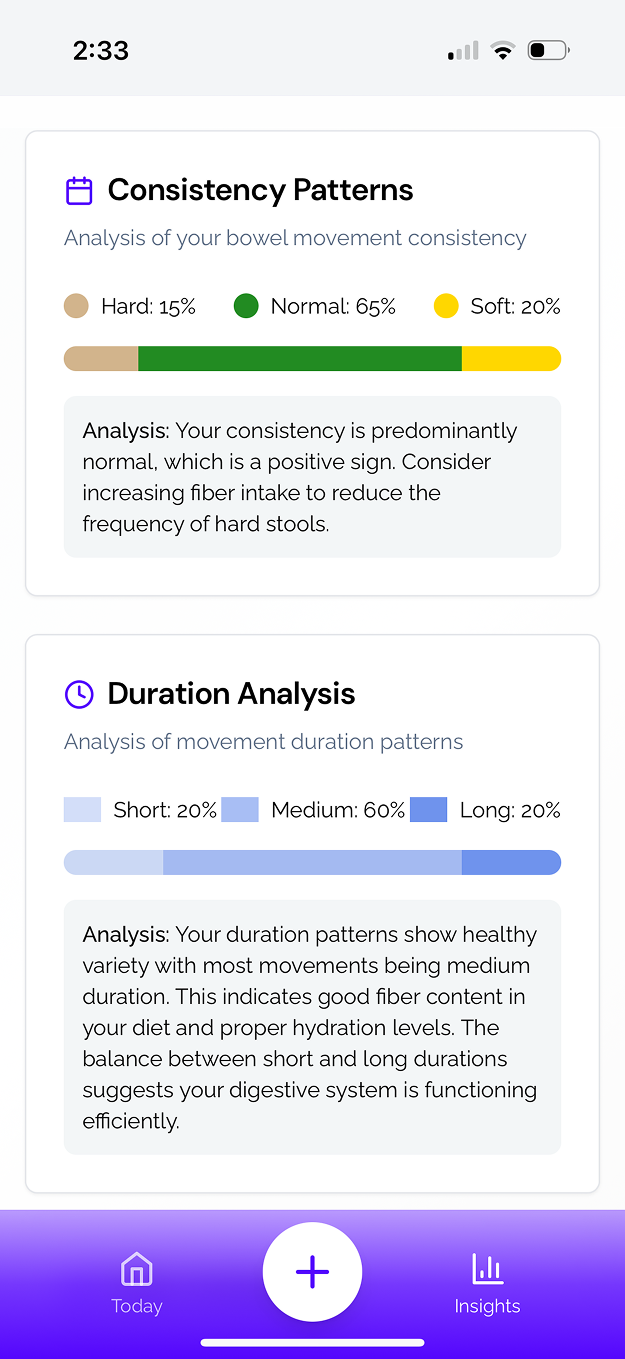
What excites me about this area is the shift from asking patients to remember to actually measuring something. Volatile organic compounds, or VOCs, are gases produced as your gut microbiome metabolizes what reaches the colon. Their composition shifts with fermentation patterns, microbial balance, and inflammatory activity.
Researchers have studied fecal VOC profiles in IBS for over a decade. An early gas chromatography study found differences in fecal volatile organic metabolites between patients with IBS and healthy controls (Ahmed et al., PLoS ONE, 2013). A systematic review of VOC studies in IBS found that 57 percent of included studies distinguished IBS patients from healthy controls, with reported areas under the curve ranging from 0.83 to 0.99, while noting small sample sizes and heterogeneous methods (Zhang et al., Neurogastroenterology and Motility, 2023).
That literature is genuinely promising and genuinely early. VOC analysis is a research field with clinical potential, not a settled diagnostic test.
SNIFR is being developed to bring that kind of at-home VOC monitoring of stool gas into daily life, passively, without a diary. If you want the wider clinical context for where this fits across digestive conditions, our overview of advanced digestive monitoring for IBS and gastrointestinal diseases covers the landscape in more detail.
What Passive Monitoring Can and Cannot Do
Being precise here matters more than being enthusiastic. So let me be both.
- It can collect data continuously without asking you to remember anything, which addresses the single biggest failure point of diary-based tracking.
- It can surface patterns across diet, stress, sleep, and symptom timing that are difficult to see from the inside.
- It can give you something concrete to bring to your gastroenterologist instead of a vague description of a bad month.
- It cannot diagnose IBS, inflammatory bowel disease, celiac disease, small intestinal bacterial overgrowth, or colorectal cancer.
- It cannot replace colonoscopy, endoscopy, breath testing, stool studies, or blood work when those are clinically indicated.
- It cannot tell you when to start, stop, or change a medication. That is a conversation with your prescriber.
Red Flag Symptoms That Need Prompt Medical Attention
This is the part of the article I would most like you to remember. The BSG guideline lists alarm features including a family history of colorectal cancer or inflammatory bowel disease, unexplained weight loss, rectal bleeding not attributable to haemorrhoids, nocturnal diarrhoea, and unexplained iron deficiency anaemia, and recommends urgent colonoscopy or radiological evaluation of the colon when they are present (Vasant et al., Gut, 2021).
The same guideline is honest about the limits of alarm features: their diagnostic performance is modest, and up to 80 percent of patients with IBS in primary and secondary care report at least one alarm symptom. That is a reason to be evaluated rather than a reason to ignore them.
- Rectal bleeding, or black, tarry stools
- Unintentional weight loss
- Symptoms that wake you from sleep, particularly nocturnal diarrhea or pain
- Iron deficiency anemia or other unexplained abnormal blood work
- A family history of colorectal cancer, inflammatory bowel disease, or celiac disease
- New or changing bowel symptoms beginning after age 50
- Fever, persistent vomiting, or a palpable abdominal mass
Any of these warrants prompt clinical evaluation. Monitoring data is a supplement to that evaluation, never a substitute for it.
Building a Data-Informed IBS Plan With Your Clinician
Here is how I would structure the work if you and I were sitting in the same room.
- Confirm the diagnosis first. Make sure the exclusion work has actually been done and that red flags have been addressed.
- Establish a baseline. Spend a couple of weeks observing your usual patterns without changing anything, so you have something to compare against.
- Add context, not burden. Note stress, sleep, and cycle phase where relevant. Keep it light enough that you will actually sustain it.
- Change one thing at a time. Single-variable experiments produce interpretable answers. Changing four things at once produces a shrug.
- Bring the data to your appointment. Patterns are far more useful to your clinician than a summary of how the last six months felt.
- Re-evaluate if anything changes. New symptoms, new severity, or new red flags mean a new clinical conversation, not a new dashboard.
Hypothetical scenario. Consider a hypothetical patient with an established Rome IV diagnosis of IBS-D who has eliminated dairy for three years on the basis of a few bad evenings. She records a two-week baseline of stool form using the Bristol Stool Form Scale alongside sleep and a simple stress rating, then reintroduces a single dairy-containing meal under dietitian supervision while changing nothing else. Her record shows looser stools clustering after short nights rather than after dairy, which is consistent with the finding that poorer than usual subjective sleep quality predicts next-day abdominal pain and lower gastrointestinal symptoms in IBS (Topan et al., American Journal of Gastroenterology, 2024). She brings the pattern to her gastroenterologist, who supervises a structured reintroduction rather than adding another exclusion. This is an illustrative example of how single-variable testing works, not a result attributed to any product.
What It Costs to Guess
The cost of running IBS on poor information is not only emotional. In a retrospective analysis of a US commercially insured population, mean annual all-cause healthcare costs for patients with IBS-D were 13,038 dollars, with 58.4 percent attributable to office visits and other outpatient services (Buono et al., Journal of Managed Care and Specialty Pharmacy, 2017). IBS also carries a substantial quality of life burden, with scores on generic health status measures comparable to or worse than several chronic organic diseases (Gralnek et al., Gastroenterology, 2000).
Better measurement will not make those numbers disappear. It may reduce the number of blind alleys you have to walk down first.
The Honest Summary
Traditional IBS symptoms management is not wrong. It is under-instrumented. Better measurement will not cure IBS, and anyone who tells you otherwise is selling something. What better measurement can do is shorten the guessing, narrow the restriction, and make the fifteen minutes you get with your gastroenterologist far more productive.
That is a modest promise. It is also, for a condition this variable, a genuinely useful one.
Frequently Asked Questions
How do doctors diagnose IBS?
Doctors use the Rome IV criteria, which require recurrent abdominal pain at least one day per week over three months, associated with two or more of defecation, a change in stool frequency, or a change in stool form. IBS remains a diagnosis of exclusion, so celiac disease, inflammatory bowel disease, infection and thyroid problems are considered alongside limited targeted testing.
How can I track my IBS symptoms effectively?
Track continuously rather than from memory. In one controlled study, only 11 percent of participants filled paper diaries as instructed while 90 percent said they had. Pair a light record of stress, sleep and stool form on the Bristol Stool Form Scale with passive at-home monitoring, and use a validated score such as the IBS-SSS if you want a number.
Can SNIFR diagnose IBS or replace a colonoscopy?
No. SNIFR is a wellness monitoring system in development, not a diagnostic device. It cannot diagnose IBS, inflammatory bowel disease, celiac disease, or cancer, and it does not replace colonoscopy, endoscopy, stool studies, or blood work. Its purpose is to provide objective pattern data that supports the care plan your clinician builds.
What IBS symptoms mean I should see a doctor right away?
British Society of Gastroenterology alarm features include rectal bleeding not due to haemorrhoids, unexplained weight loss, nocturnal diarrhoea, unexplained iron deficiency anaemia, and a family history of colorectal cancer or inflammatory bowel disease. Any of these warrants prompt evaluation, as do fever, persistent vomiting, or new bowel symptoms after age 50.
Is the low FODMAP diet a permanent solution for IBS?
No. It is designed as a short-term diagnostic elimination followed by structured reintroduction. A network meta-analysis ranked it first among dietary interventions, with a relative risk of symptoms not improving of 0.67 versus habitual diet, but long-term restriction narrows the diet unnecessarily. Work with a dietitian so the reintroduction phase actually happens.
How common is IBS, and which subtype is most common?
Prevalence depends heavily on the criteria used. The Rome Foundation Global Study found 4.1 percent under Rome IV against roughly 10 percent under Rome III. In that internet cohort, subtypes divided as 32.4 percent IBS-C, 32.4 percent IBS-M, 28.7 percent IBS-D and 6.5 percent unsubtyped, so no single subtype dominates.
References
- Lacy BE, Mearin F, Chang L, Chey WD, Lembo AJ, Simren M, Spiller R. Bowel Disorders. Gastroenterology. 2016;150(6):1393-1407.e5. doi:10.1053/j.gastro.2016.02.031
- Drossman DA, Hasler WL. Rome IV. Functional GI Disorders: Disorders of Gut-Brain Interaction. Gastroenterology. 2016;150(6):1257-1261. doi:10.1053/j.gastro.2016.03.035
- Sperber AD, Bangdiwala SI, Drossman DA, et al. Worldwide Prevalence and Burden of Functional Gastrointestinal Disorders, Results of Rome Foundation Global Study. Gastroenterology. 2021;160(1):99-114.e3. doi:10.1053/j.gastro.2020.04.014
- Lovell RM, Ford AC. Global Prevalence of and Risk Factors for Irritable Bowel Syndrome: A Meta-analysis. Clinical Gastroenterology and Hepatology. 2012;10(7):712-721.e4. doi:10.1016/j.cgh.2012.02.029
- Lacy BE, Pimentel M, Brenner DM, Chey WD, Keefer LA, Long MD, Moshiree B. ACG Clinical Guideline: Management of Irritable Bowel Syndrome. American Journal of Gastroenterology. 2021;116(1):17-44. doi:10.14309/ajg.0000000000001036
- Vasant DH, Paine PA, Black CJ, et al. British Society of Gastroenterology guidelines on the management of irritable bowel syndrome. Gut. 2021;70(7):1214-1240. doi:10.1136/gutjnl-2021-324598
- Chey WD, Kurlander J, Eswaran S. Irritable Bowel Syndrome: A Clinical Review. JAMA. 2015;313(9):949-958. doi:10.1001/jama.2015.0954
- Ford AC, Lacy BE, Talley NJ. Irritable Bowel Syndrome. New England Journal of Medicine. 2017;376(26):2566-2578. doi:10.1056/NEJMra1607547
- Camilleri M. Diagnosis and Treatment of Irritable Bowel Syndrome: A Review. JAMA. 2021;325(9):865-877. doi:10.1001/jama.2020.22532
- Stone AA, Shiffman S, Schwartz JE, Broderick JE, Hufford MR. Patient non-compliance with paper diaries. BMJ. 2002;324(7347):1193-1194. doi:10.1136/bmj.324.7347.1193
- Francis CY, Morris J, Whorwell PJ. The irritable bowel severity scoring system: a simple method of monitoring irritable bowel syndrome and its progress. Alimentary Pharmacology and Therapeutics. 1997;11(2):395-402. doi:10.1046/j.1365-2036.1997.142318000.x
- Halmos EP, Power VA, Shepherd SJ, Gibson PR, Muir JG. A Diet Low in FODMAPs Reduces Symptoms of Irritable Bowel Syndrome. Gastroenterology. 2014;146(1):67-75.e5. doi:10.1053/j.gastro.2013.09.046
- Eswaran SL, Chey WD, Han-Markey T, Ball S, Jackson K. A Randomized Controlled Trial Comparing the Low FODMAP Diet vs. Modified NICE Guidelines in US Adults with IBS-D. American Journal of Gastroenterology. 2016;111(12):1824-1832. doi:10.1038/ajg.2016.434
- Black CJ, Staudacher HM, Ford AC. Efficacy of a low FODMAP diet in irritable bowel syndrome: systematic review and network meta-analysis. Gut. 2022;71(6):1117-1126. doi:10.1136/gutjnl-2021-325214
- Ford AC, Talley NJ, Spiegel BMR, et al. Effect of fibre, antispasmodics, and peppermint oil in the treatment of irritable bowel syndrome: systematic review and meta-analysis. BMJ. 2008;337:a2313. doi:10.1136/bmj.a2313
- Alammar N, Wang L, Saberi B, et al. The impact of peppermint oil on the irritable bowel syndrome: a meta-analysis of the pooled clinical data. BMC Complementary and Alternative Medicine. 2019;19(1):21. doi:10.1186/s12906-018-2409-0
- Pimentel M, Lembo A, Chey WD, et al. Rifaximin Therapy for Patients with Irritable Bowel Syndrome without Constipation. New England Journal of Medicine. 2011;364(1):22-32. doi:10.1056/NEJMoa1004409
- Ford AC, Wright-Hughes A, Alderson SL, et al. Amitriptyline at Low-Dose and Titrated for Irritable Bowel Syndrome as Second-Line Treatment in primary care (ATLANTIS): a randomised, double-blind, placebo-controlled, phase 3 trial. The Lancet. 2023;402(10414):1773-1785. doi:10.1016/S0140-6736(23)01523-4
- Ahmed I, Greenwood R, Costello BdL, Ratcliffe NM, Probert CS. An Investigation of Fecal Volatile Organic Metabolites in Irritable Bowel Syndrome. PLoS ONE. 2013;8(3):e58204. doi:10.1371/journal.pone.0058204
- Zhang VR, Ramachandran GK, Loo EXL, Soh AYS, Yong WP, Siah KTH. Volatile organic compounds as potential biomarkers of irritable bowel syndrome: A systematic review. Neurogastroenterology & Motility. 2023;35(7):e14536. doi:10.1111/nmo.14536
- Topan R, Vork L, Fitzke H, et al. Poor Subjective Sleep Quality Predicts Symptoms in Irritable Bowel Syndrome Using the Experience Sampling Method. American Journal of Gastroenterology. 2024;119(1):155-164. doi:10.14309/ajg.0000000000002510
- Buono JL, Mathur K, Averitt AJ, Andrae DA. Economic Burden of Irritable Bowel Syndrome with Diarrhea: Retrospective Analysis of a U.S. Commercially Insured Population. Journal of Managed Care & Specialty Pharmacy. 2017;23(4):453-460. doi:10.18553/jmcp.2016.16138
- Gralnek IM, Hays RD, Kilbourne A, Naliboff B, Mayer EA. The impact of irritable bowel syndrome on health-related quality of life. Gastroenterology. 2000;119(3):654-660. doi:10.1053/gast.2000.16484
- Lewis SJ, Heaton KW. Stool Form Scale as a Useful Guide to Intestinal Transit Time. Scandinavian Journal of Gastroenterology. 1997;32(9):920-924. doi:10.3109/00365529709011203
- Thabane M, Kottachchi DT, Marshall JK. Systematic review and meta-analysis: the incidence and prognosis of post-infectious irritable bowel syndrome. Alimentary Pharmacology and Therapeutics. 2007;26(4):535-544. doi:10.1111/j.1365-2036.2007.03399.x
- Posserud I, Syrous A, Lindström L, Tack J, Abrahamsson H, Simrén M. Altered Rectal Perception in Irritable Bowel Syndrome Is Associated With Symptom Severity. Gastroenterology. 2007;133(4):1113-1123. doi:10.1053/j.gastro.2007.07.024
SNIFR is designed to provide insights about gut health patterns, not to diagnose or treat medical conditions. Individual results may vary as gut health is influenced by numerous factors including diet, stress, sleep, and genetics. SNIFR is currently in development, and features described may evolve before commercial release.
Other Posts



Be first to try SNIFR. Beta coming soon.
Join our waitlist to get notified when the app launches. Start understanding your gut health sooner.