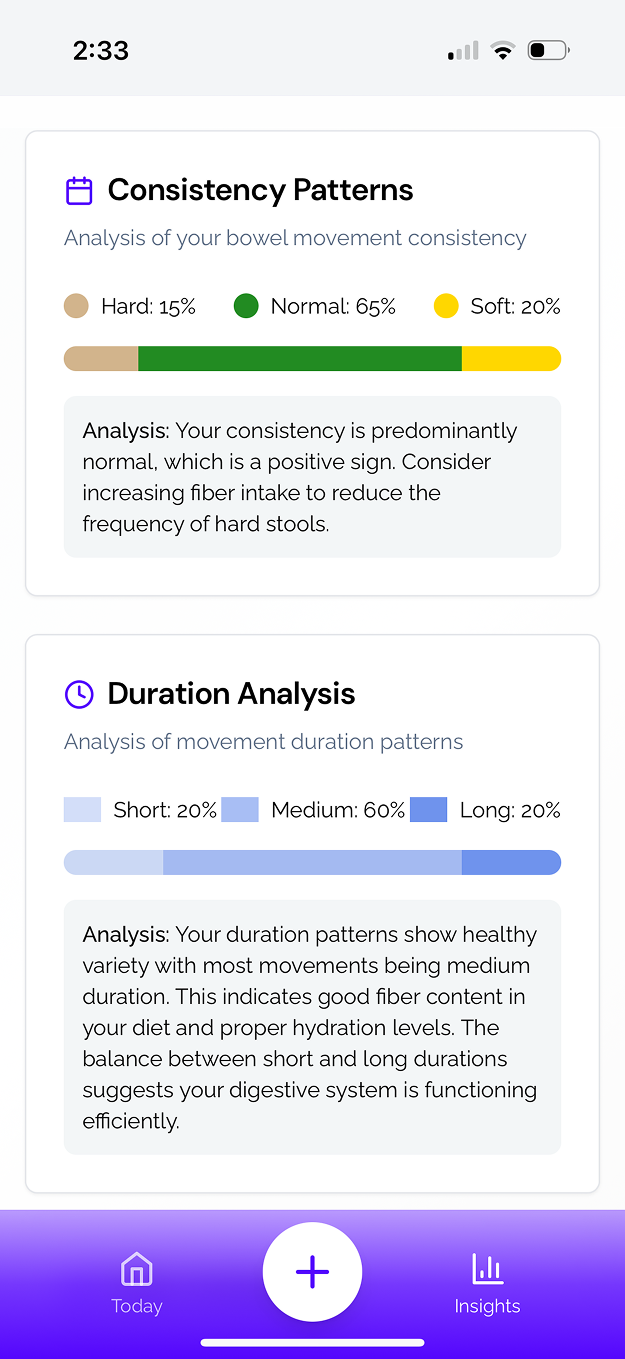

IBS-D Early Warning Systems: The Science of Flare Prediction
What the research on flare prediction and physiological monitoring actually shows, what the FDA has really cleared in GI, and why SNIFR's prediction remains design intent.

Ask anyone living with IBS-D what they would change, and prediction comes up before relief. Not knowing when the next flare is coming is exhausting in a way the symptoms themselves sometimes are not. The constant low-grade vigilance costs more than most people admit.
So the question of whether flare-ups can be predicted before they happen is a genuinely important one. It is also a question that invites overpromising, which is why I want to answer it carefully.
Here is the honest position. Flare-up prediction is the design intent behind systems like SNIFR, and it is an active area of scientific research with real published findings. It is not a validated, delivered capability today, and any product claiming otherwise has outrun its evidence.
The Scientific Idea Behind Early Warning
The premise rests on a plausible biological argument. Your gut is a chemically active environment. As bacteria ferment what reaches the colon, they produce gases, including volatile organic compounds whose composition shifts with microbial activity, substrate availability, and transit. Controlled feeding studies show that both breath hydrogen production and symptom generation rise with fermentable carbohydrate load in IBS (Ong et al., Journal of Gastroenterology and Hepatology, 2010), which establishes that the chemistry and the symptoms are coupled.
Because those chemical changes happen upstream of what you consciously feel, the reasoning goes that measurable shifts might precede symptoms. If that holds, and if the shifts are consistent enough within an individual, a system that has learned your baseline could in principle flag a departure from it.
Every clause in that paragraph is doing work. Might precede. If consistent. In principle. That is where the science currently sits.
What the Research Actually Supports
The strongest evidence for physiological signals preceding gastrointestinal flares comes from inflammatory bowel disease, not IBS. In a prospective study of 309 participants with IBD enrolled across 36 states, metrics from consumer wearables including heart rate variability, heart rate, resting heart rate, steps and oxygenation were significantly altered up to seven weeks before both inflammatory and symptomatic flares, and circadian patterns of heart rate variability differed between flare and remission (Hirten et al., Gastroenterology, 2025).
That is a genuinely important result, and it is worth being precise about what it is. It is a research finding in a different condition, using a different signal, in a population where objective inflammatory markers give the model something concrete to learn from. It is not a cleared prediction device, and it does not transfer automatically to IBS.
In IBS, the closest analogues are prospective daily-diary and experience-sampling studies. Poorer than usual subjective sleep quality predicts next-day abdominal pain and lower gastrointestinal symptoms, and the relationship runs in that direction rather than the reverse (Topan et al., American Journal of Gastroenterology, 2024). An earlier prospective study in women with IBS found the same next-day pattern (Buchanan et al., Journal of Clinical Sleep Medicine, 2014). Symptoms also increase predictably during the premenstrual and menstrual phases in women with IBS (Heitkemper and Jarrett, Nutrition in Clinical Practice, 2008). Those are real antecedents, measured prospectively, and you do not need a device to use them.
On the chemical side, there is a growing VOC literature. A systematic review and meta-analysis in inflammatory bowel disease pooled 696 cases against 605 controls and reported sensitivity of 87 percent and specificity of 83 percent with an area under the curve of 0.92 (Krishnamoorthy et al., Journal of Crohn's and Colitis, 2024). In IBS, a systematic review found that 57 percent of studies separated patients from controls, with areas under the curve of 0.83 to 0.99 (Zhang et al., Neurogastroenterology and Motility, 2023). Faecal bacterial profiles have also been modelled to distinguish responders from non-responders to a low FODMAP diet (Bennet et al., Gut, 2018).
All of those are cross-sectional discrimination or response prediction. None of them is prospective flare prediction in an individual patient. What does not yet exist is a validated, clinically deployed system that predicts IBS-D flares with established accuracy. Treat any specific prediction accuracy figure you encounter in marketing with real skepticism, including figures attached to this technology.
What Is Actually Cleared by the FDA in Gastroenterology
This point is worth stating precisely, because it is frequently overstated. There are FDA-authorised artificial intelligence devices in gastroenterology, and they all do the same job: computer-aided detection of colorectal polyps in real time during colonoscopy.
| Device | Authorisation | What it does | What it does not do |
|---|---|---|---|
| GI Genius (Medtronic, developed by Cosmo) | FDA De Novo, April 2021, the first AI device authorised for colonoscopy | Marks regions consistent with colorectal polyps on the endoscopy display in real time | Does not diagnose, does not predict symptoms, does not operate outside colonoscopy |
| EndoScreener (Wision AI) | FDA 510(k), November 2021 | Computer-aided polyp detection during colonoscopy | As above |
| SKOUT (Iterative Health) | FDA 510(k), September 2022 | Computer-aided polyp detection during colonoscopy | As above |
The clinical evidence behind this category is real. In a randomised trial of 685 subjects at three centres, computer-aided detection raised the adenoma detection rate to 54.8 percent from 40.4 percent with standard high-definition colonoscopy, a relative risk of 1.30 (Repici et al., Gastroenterology, 2020).
So the accurate statement is this: the FDA has authorised multiple AI-based computer-aided detection systems for identifying polyps during colonoscopy. It has not authorised any AI system that predicts IBS flares, diagnoses IBS, or interprets at-home gut chemistry. Those are different claims, and conflating them is how a real regulatory fact becomes a misleading one.
Why Personalisation Is the Hard Part
Population averages are not much use here. IBS is heterogeneous, and flare mechanisms differ between patients: one person's flares track with stress, another's with fermentable carbohydrate load, another's with sleep disruption or hormonal cycle. Rome IV subtype distribution alone spreads patients across four categories with no dominant group (Sperber et al., Gastroenterology, 2021).
A prediction system therefore has to learn an individual baseline before it can recognise a departure from it. That requires sustained data collection, which is precisely why passive monitoring matters more than clever algorithms. In one controlled study, only 11 percent of participants completed paper diaries as instructed while 90 percent said they had (Stone et al., BMJ, 2002). An algorithm with three weeks of gaps in the input has nothing to work with.
This is the part of the problem SNIFR is designed to address: making sustained collection of stool gas VOC data effortless enough that it actually happens. Our overview of advanced digestive monitoring for IBS and gastrointestinal diseases explains where continuous data fits alongside clinical care.
What Patients Can Do Now, Without Waiting for Technology
You do not need an algorithm to start noticing your own warning signs. Many patients already have them and have never written them down.
- Look for your personal prodrome. Increased bloating, a change in stool form on the Bristol Stool Form Scale, unusual gas, restless sleep, or a shift in appetite in the day or two before a flare.
- Track sequence, not just severity. What tends to come first is more useful than how bad the worst day was.
- Record the non-dietary variables. Sleep and cycle phase in particular have prospective evidence behind them as antecedents (Topan et al., 2024; Heitkemper and Jarrett, 2008).
- Test one hypothesis at a time. If you think short sleep precedes your flares, watch that specifically for a few weeks rather than watching everything.
- Bring the sequence to your clinician. If you want a number, the IBS Severity Scoring System is validated and treats a 50-point change as clinically meaningful (Francis et al., Alimentary Pharmacology and Therapeutics, 1997).
Plenty of patients develop a reasonably reliable personal early warning sense this way. It is not high technology. It works because it is specific to you.
Hypothetical scenario. As an illustrative scenario, imagine someone with IBS-D who suspects her flares are random. Over eight weeks she records stool form, a one-to-five sleep rating and cycle day, and nothing else. Two antecedents emerge that match the published literature: worse days follow poor nights, consistent with the experience-sampling finding that subjective sleep quality predicts next-day lower gastrointestinal symptoms (Topan et al., American Journal of Gastroenterology, 2024), and a perimenstrual cluster consistent with the reported perimenstrual increase in gastrointestinal symptoms in women with IBS (Heitkemper and Jarrett, Nutrition in Clinical Practice, 2008). She now has a personal early warning pattern derived from her own record. No device predicted anything, and nothing about her medication changed without her prescriber.
What You Could Do With Advance Notice
If early warning does eventually work as intended, the practical value is straightforward. Advance notice would let you adjust meals toward what you tolerate best, build flexibility into your schedule, prioritise sleep, lean on your stress management, and have an informed conversation with your prescriber about whether anything in your regimen should be timed differently.
That last point deserves emphasis. Any change to medication timing, dose, or use is a decision for your clinician, made in advance as part of an agreed plan. A notification on a phone is not a prescription and should never function as one.
What Early Warning Will Not Do
- It will not diagnose IBS, IBS-D, inflammatory bowel disease, celiac disease, SIBO, or any other condition.
- It will not replace colonoscopy, endoscopy, breath testing, stool studies, or blood work.
- It will not tell you to start, stop, or adjust a medication.
- It will not catch every flare, and a quiet system is not evidence that nothing is wrong.
- It will not override symptoms. If you feel unwell, act on that, not on a dashboard.
Red Flag Symptoms That Need Prompt Medical Attention
No prediction system, present or future, changes this list. The BSG lists family history of colorectal cancer or inflammatory bowel disease, unexplained weight loss, rectal bleeding not due to haemorrhoids, nocturnal diarrhoea and unexplained iron deficiency anaemia as alarm features requiring urgent colonoscopy or radiological evaluation of the colon (Vasant et al., Gut, 2021). Seek prompt medical care for:
- Rectal bleeding, or black, tarry stools
- Unintentional weight loss
- Diarrhea or pain that wakes you from sleep
- Unexplained anemia or iron deficiency
- Fever, persistent vomiting, or severe abdominal pain
- A family history of colorectal cancer, inflammatory bowel disease, or celiac disease
- New or changing bowel symptoms after age 50
Where This Leaves Us
I find this line of research genuinely exciting, and I have been doing this long enough to be careful about what excitement is worth. The mechanism is plausible. The early data, particularly the wearable work in inflammatory bowel disease, is interesting. The validation work in IBS has not been done.
What would convince me? Prospective studies in real patients, clear performance characteristics reported honestly including the misses, replication across diverse populations, and integration into clinical guidance. That is the standard any predictive tool in gastroenterology should be held to, and it is the standard SNIFR should be held to as well.
In the meantime, the useful move is the unglamorous one: learn your own patterns, write them down, and take them to your gastroenterologist.
Frequently Asked Questions
Can IBS flare-ups actually be predicted before they happen?
Not reliably, not yet. There is no validated tool that predicts IBS-D flares in individual patients. The closest published evidence is in inflammatory bowel disease, where wearable-derived signals in 309 participants differed up to seven weeks before flares. In IBS, sleep quality and menstrual cycle phase are documented next-day and cyclical antecedents.
What is an IBS-D early warning system?
It refers to detecting measurable changes that precede symptoms so a person has time to prepare. The idea rests on gut chemistry shifting upstream of what you consciously feel, which controlled feeding studies support in principle. It remains a research premise and a design intent rather than a proven capability.
Has the FDA approved AI systems for gastroenterology?
Yes, but for one specific job. GI Genius received De Novo authorisation in April 2021, followed by EndoScreener in November 2021 and SKOUT in September 2022, all for computer-aided detection of colorectal polyps during colonoscopy. No FDA-authorised device predicts IBS flares, diagnoses IBS, or interprets at-home gut chemistry.
How much data does a prediction system need before it works?
Enough to establish your individual baseline, since IBS is heterogeneous and population averages do not transfer between patients. That means sustained collection over weeks without long gaps. One controlled study found only 11 percent of paper diaries were filled as instructed, which is why passive collection matters more than the algorithm.
Can I use flare predictions to adjust my medication?
No, not on your own. Any change to medication timing, dose, or use is a clinical decision made in advance with your prescriber as part of an agreed plan. A notification from a monitoring app is not a prescription and should never be treated as one, however confident it sounds.
What are my personal IBS warning signs?
They vary, but common early signals include increased bloating, a change in stool form, unusual gas, disturbed sleep, or a shift in appetite in the day or two before a flare. Poor subjective sleep quality predicts next-day abdominal pain and lower gastrointestinal symptoms, so sleep is worth recording specifically.
Does an early warning system replace seeing a gastroenterologist?
No. Monitoring does not diagnose any condition and does not replace colonoscopy, endoscopy, breath testing, stool studies, or blood work. It is intended to give you and your gastroenterologist better pattern information. Red flag symptoms such as bleeding, weight loss, or nocturnal diarrhoea always need prompt clinical evaluation.
References
- Hirten RP, Danieletto M, Sanchez-Mayor M, et al. Physiological Data Collected From Wearable Devices Identify and Predict Inflammatory Bowel Disease Flares. Gastroenterology. 2025;168(5):939-951.e5. doi:10.1053/j.gastro.2024.12.024
- Topan R, Vork L, Fitzke H, et al. Poor Subjective Sleep Quality Predicts Symptoms in Irritable Bowel Syndrome Using the Experience Sampling Method. American Journal of Gastroenterology. 2024;119(1):155-164. doi:10.14309/ajg.0000000000002510
- Buchanan DT, Cain K, Heitkemper M, et al. Sleep Measures Predict Next-Day Symptoms in Women with Irritable Bowel Syndrome. Journal of Clinical Sleep Medicine. 2014;10(9):1003-1009. doi:10.5664/jcsm.4038
- Heitkemper MM, Jarrett M. Update on Irritable Bowel Syndrome and Gender Differences. Nutrition in Clinical Practice. 2008;23(3):275-283. doi:10.1177/0884533608318672
- Ong DK, Mitchell SB, Barrett JS, et al. Manipulation of dietary short chain carbohydrates alters the pattern of gas production and genesis of symptoms in irritable bowel syndrome. Journal of Gastroenterology and Hepatology. 2010;25(8):1366-1373. doi:10.1111/j.1440-1746.2010.06370.x
- Krishnamoorthy A, Chandrapalan S, Ahmed M, Arasaradnam RP. The Diagnostic Utility of Volatile Organic Compounds in Inflammatory Bowel Disease: A Systematic Review and Meta-Analysis. Journal of Crohn’s and Colitis. 2024;18(2):320-330. doi:10.1093/ecco-jcc/jjad132
- Zhang VR, Ramachandran GK, Loo EXL, Soh AYS, Yong WP, Siah KTH. Volatile organic compounds as potential biomarkers of irritable bowel syndrome: A systematic review. Neurogastroenterology & Motility. 2023;35(7):e14536. doi:10.1111/nmo.14536
- Ahmed I, Greenwood R, Costello BdL, Ratcliffe NM, Probert CS. An Investigation of Fecal Volatile Organic Metabolites in Irritable Bowel Syndrome. PLoS ONE. 2013;8(3):e58204. doi:10.1371/journal.pone.0058204
- Bennet SMP, Böhn L, Störsrud S, et al. Multivariate modelling of faecal bacterial profiles of patients with IBS predicts responsiveness to a diet low in FODMAPs. Gut. 2018;67(5):872-881. doi:10.1136/gutjnl-2016-313128
- Repici A, Badalamenti M, Maselli R, et al. Efficacy of Real-Time Computer-Aided Detection of Colorectal Neoplasia in a Randomized Trial. Gastroenterology. 2020;159(2):512-520.e7. doi:10.1053/j.gastro.2020.04.062
- Sperber AD, Bangdiwala SI, Drossman DA, et al. Worldwide Prevalence and Burden of Functional Gastrointestinal Disorders, Results of Rome Foundation Global Study. Gastroenterology. 2021;160(1):99-114.e3. doi:10.1053/j.gastro.2020.04.014
- Stone AA, Shiffman S, Schwartz JE, Broderick JE, Hufford MR. Patient non-compliance with paper diaries. BMJ. 2002;324(7347):1193-1194. doi:10.1136/bmj.324.7347.1193
- Francis CY, Morris J, Whorwell PJ. The irritable bowel severity scoring system: a simple method of monitoring irritable bowel syndrome and its progress. Alimentary Pharmacology and Therapeutics. 1997;11(2):395-402. doi:10.1046/j.1365-2036.1997.142318000.x
- Lewis SJ, Heaton KW. Stool Form Scale as a Useful Guide to Intestinal Transit Time. Scandinavian Journal of Gastroenterology. 1997;32(9):920-924. doi:10.3109/00365529709011203
- Vasant DH, Paine PA, Black CJ, et al. British Society of Gastroenterology guidelines on the management of irritable bowel syndrome. Gut. 2021;70(7):1214-1240. doi:10.1136/gutjnl-2021-324598
- Lacy BE, Pimentel M, Brenner DM, Chey WD, Keefer LA, Long MD, Moshiree B. ACG Clinical Guideline: Management of Irritable Bowel Syndrome. American Journal of Gastroenterology. 2021;116(1):17-44. doi:10.14309/ajg.0000000000001036
- Lacy BE, Mearin F, Chang L, Chey WD, Lembo AJ, Simren M, Spiller R. Bowel Disorders. Gastroenterology. 2016;150(6):1393-1407.e5. doi:10.1053/j.gastro.2016.02.031
- Simrén M, Tack J. New treatments and therapeutic targets for IBS and other functional bowel disorders. Nature Reviews Gastroenterology & Hepatology. 2018;15(10):589-605. doi:10.1038/s41575-018-0034-5
- Enck P, Aziz Q, Barbara G, et al. Irritable bowel syndrome. Nature Reviews Disease Primers. 2016;2:16014. doi:10.1038/nrdp.2016.14
SNIFR is designed to provide insights about gut health patterns, not to diagnose or treat medical conditions. Individual results may vary as gut health is influenced by numerous factors including diet, stress, sleep, and genetics. SNIFR is currently in development, and features described may evolve before commercial release.
Other Posts
Be first to try SNIFR. Beta coming soon.
Join our waitlist to get notified when the app launches. Start understanding your gut health sooner.