
Food Sensitivity vs. Food Allergy: The Key Differences
Food sensitivity and food allergy are different conditions. Learn how each one works, what the test performance data shows, and where gut tracking fits.
If you have ever finished a meal and spent the next two days feeling bloated, foggy, and vaguely unwell, you have probably wondered whether you are allergic to something. It is one of the most common questions I hear, and it is also one of the most important to get right.
The scale of the confusion is measurable. In a nationally representative survey of more than 40,000 US adults, 19 percent believed they had a food allergy, but only 10.8 percent reported a symptom history convincing for genuine IgE-mediated allergy (Gupta et al., JAMA Network Open, 2019). Nearly half of the people who think they are allergic are describing something else.
Food allergy and food sensitivity are not two points on the same scale. They are different biological processes, with different risks, different diagnostic pathways, and very different consequences if you confuse them. Getting the distinction right is not academic. In the case of allergy, it is a safety issue.
Let's walk through what actually separates the two, what a diagnosis requires, and where at-home monitoring of your gut microbiome does and does not belong in the picture.
Food Allergy Is a Medical Diagnosis, and It Belongs to a Doctor
A true food allergy is an immune reaction driven by immunoglobulin E (IgE) antibodies. Your immune system misidentifies a food protein as a threat and mounts a rapid, systemic defense. This is a potentially life-threatening medical condition, and it must be diagnosed and managed by a qualified clinician.
The hallmarks of IgE-mediated food allergy include:
- Reactions that begin quickly, typically within minutes to two hours of exposure
- Reactions that can be triggered by very small amounts of the food
- Symptoms such as hives, swelling of the lips, tongue, or throat, wheezing, vomiting, a drop in blood pressure, or anaphylaxis
- A need for evaluation by a board-certified allergist, using validated skin prick testing, serum IgE testing, and where appropriate, a supervised oral food challenge
- Management that usually involves strict avoidance and an emergency plan, including prescribed epinephrine when indicated
If you have ever had trouble breathing, throat tightness, facial or tongue swelling, or a sudden whole-body reaction after eating, stop reading and make an appointment with an allergist. Those symptoms need urgent medical evaluation. No app, tracker, or at-home monitoring product is an appropriate substitute for that evaluation, and none can rule out an allergy.
What the allergy tests actually do
This is worth understanding, because it explains why allergists interpret tests rather than simply reading them out. The 2023 EAACI guidelines on the diagnosis of IgE-mediated food allergy describe skin prick testing and serum specific IgE as sensitive but not specific: they are frequently positive in people who eat the food without any trouble at all (Santos et al., Allergy, 2023). A positive test on its own is sensitization, not allergy.
That is why the double-blind, placebo-controlled oral food challenge remains the diagnostic reference standard, and why larger skin prick wheals and higher specific IgE concentrations matter: they raise the probability of a genuine clinical reaction rather than proving one. This work has to be done by an allergist, in a setting equipped to treat a reaction.
Food Sensitivity Is a Different Animal Entirely
Food sensitivities and intolerances are far less clear-cut, and they do not carry the same acute risk profile. They typically involve mechanisms other than IgE: enzyme shortfalls, fermentation of carbohydrates your small intestine cannot absorb, histamine handling, or low-grade inflammatory responses at the gut lining.
Common features of food sensitivities include:
- Delayed reactions, sometimes hours or even a day or two after eating
- Dose-dependent responses, where a small serving is fine and a large one is not
- Symptoms like bloating, gas, cramping, altered bowel habits, fatigue, headache, or brain fog
- Considerable variability, so the same food may cause problems one week and not the next
- No single validated blood test, which is why conventional food sensitivity panels are so often contradictory
Lactose intolerance is the cleanest example of the difference. It is an enzyme story, not an immune one. Lactase non-persistence is the ancestral human state, and the ability to digest lactose into adulthood is the genetic exception rather than the rule, mediated in European populations by a single polymorphism upstream of the LCT gene (Misselwitz et al., Gut, 2019). No antibody is involved anywhere in that process.
Here is the practical difference. Allergy tends to produce clear, consistent, fast patterns that trained clinicians can confirm with validated tests. Sensitivity produces messy, delayed, context-dependent patterns that no current blood test captures well.
Side by side, the two conditions look like this.
| Feature | IgE-mediated food allergy | Food sensitivity or intolerance |
|---|---|---|
| Mechanism | IgE antibody-driven immune reaction | Enzyme shortfall, carbohydrate fermentation, histamine handling, non-IgE immune activity |
| Onset after eating | Minutes to 2 hours | Hours to 1 to 2 days |
| Dose relationship | Trace amounts can trigger a reaction | Usually dose-dependent and cumulative |
| Typical symptoms | Hives, swelling, wheezing, vomiting, blood pressure drop, anaphylaxis | Bloating, gas, cramping, altered bowel habits, fatigue, headache, brain fog |
| Life-threatening? | Yes, can be | Rarely acutely dangerous |
| Diagnosis | Allergist history, skin prick test, serum specific IgE, supervised oral food challenge | Clinical history, supervised elimination and reintroduction, targeted breath testing |
| Test performance | Skin prick and specific IgE are sensitive but not specific; oral food challenge is the reference standard | No validated blood test exists |
| Usual management | Strict avoidance plus an emergency plan, prescribed epinephrine where indicated | Threshold and portion management, often widening again over time |
| Permanence | Often lifelong | Frequently changes as gut conditions change |
Why the Gut Microbiome Makes Sensitivities So Slippery
Research over the past decade has connected food intolerance patterns to the composition and activity of the gut microbiome. That is a big part of why two people can eat the same meal and have completely different experiences of it.
Bacterial processing capacity
Your gut bacteria do real digestive work, particularly on fibers and fermentable carbohydrates that your own enzymes cannot break down. When the bacterial species suited to a given substrate are sparse, more of that substrate ferments where you would rather it did not, and the gas, distension, and discomfort follow. This is the mechanism behind a great deal of what people label as sensitivity.
Gut barrier function
The intestinal lining is selectively permeable by design. Research in immunology has linked certain microbial imbalances to changes in that barrier, which can alter how food components interact with immune cells in the gut wall. This is an area of active investigation rather than settled science, but it helps explain why sensitivities often cluster with periods of stress, illness, or poor sleep.
Immune signaling
Gut bacteria are in constant chemical conversation with the immune system, helping it calibrate what deserves a response and what does not. Disruption of that dialogue is one of the leading hypotheses for why tolerance to ordinary foods sometimes wobbles.
All of this means your response to a particular food is not fixed. It shifts with your bacterial balance, recent antibiotic use, stress, sleep quality, what else was on the plate, and your overall inflammatory state. Traditional one-time testing cannot account for a moving target, which is a large part of why the results so often disappoint.
Where At-Home Gut Health Tracking Fits
This is the part that requires precision, so let me be direct about it.
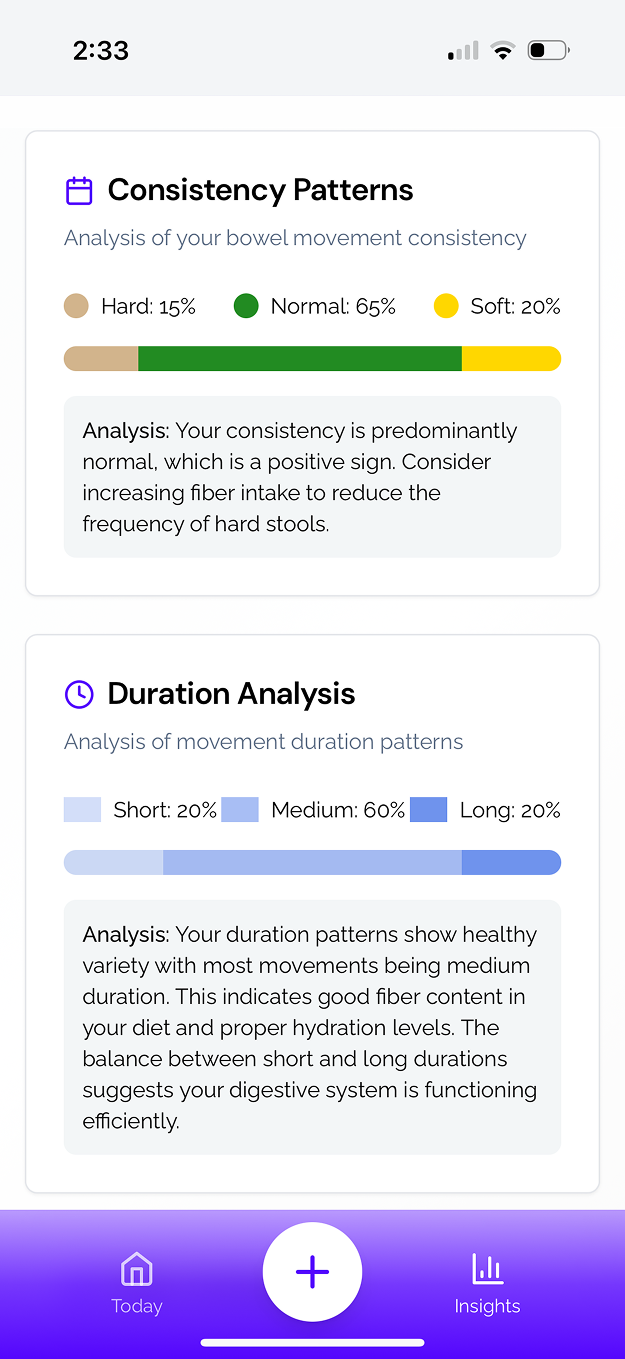
Passive monitoring of volatile organic compounds (VOCs) produced by the gut is a way of observing patterns in your own digestive activity over time. VOC analysis has a long history in laboratory research on gastrointestinal function, and the appeal of bringing it home is that it is continuous rather than a one-off snapshot, and objective rather than dependent on how well you remember Tuesday.
What at-home monitoring is not: it is not an allergy test. SNIFR does not detect food allergies, cannot rule out a food allergy, and is not a tool for distinguishing an allergy from a sensitivity. Nothing in the data it produces should be used to decide whether an allergy exists, or to delay or replace evaluation by an allergist. SNIFR is designed to surface patterns in gut health, not to diagnose anything.
What pattern-level tracking can reasonably support is the sensitivity side of the picture: noticing that your gut behaves differently after certain meals, in certain contexts, at certain portion sizes, and using that to have a better-informed conversation with a registered dietitian or clinician. If you want the wider view of how this fits into a nutrition strategy, our overview of food sensitivity detection through advanced gut health tracking lays out the full framework.
Dynamic patterns instead of static snapshots
Continuous observation is better suited than a single test to questions like these:
- Is there a portion size at which this food stops agreeing with me?
- Does this food behave differently when it is eaten with others?
- Does time of day change how I handle it?
- Do my patterns shift during stressful weeks?
- Are things trending in a better direction over months?
Personalized insights instead of generic food lists
Nutrition research has repeatedly shown that individuals respond quite differently to the same meal, and the effect sizes are not small. In a 2015 Cell study, researchers at the Weizmann Institute continuously monitored week-long glucose in 800 people across 46,898 meals and found high variability in the response to identical meals, enough to conclude that universal dietary recommendations have limited utility (Zeevi et al., Cell, 2015).
The PREDICT 1 study extended this to 1,002 twins and unrelated healthy adults in the UK. Following identical meals, between-person variability was 68 percent for glucose, 59 percent for insulin, and 103 percent for blood triglyceride. For the fat response, the gut microbiome explained more of the variation (7.1 percent) than the macronutrient content of the meal itself (3.6 percent), while genetics had a modest role (Berry et al., Nature Medicine, 2020).
That is the strongest argument against standardized "foods to avoid" lists, and the strongest argument for building your own picture from your own data, ideally alongside a professional.
A Sensible Way to Work Through This
If allergy has been ruled out by a clinician and you are working on sensitivities, a measured approach tends to work better than a dramatic one.
- Establish a baseline. Spend a couple of weeks observing your normal before you change anything. You cannot detect a signal without knowing what background noise looks like.
- Introduce systematically rather than eliminate indiscriminately. Test foods in different contexts, portions, and preparations rather than cutting out large categories at once.
- Look for thresholds, not verdicts. Most food reactions are a spectrum. The useful question is usually how much and under what conditions, not yes or no.
- Ask what is underneath. Rather than treating a trigger as permanent, work with a clinician on whether bacterial diversity, fiber intake, stress, or sleep are contributing.
- Track change over time. Tolerance is not necessarily fixed. Re-checking periodically is more informative than assuming a food is off the table forever.
Hypothetical scenario. As an illustrative example, imagine someone who reacts badly to a bowl of ice cream after dinner but has milk in her coffee every morning without a second thought. She assumes she is allergic to dairy and cuts it entirely. An allergist finds no evidence of IgE-mediated milk allergy. A lactose breath test, ordered by her physician, is positive. The mechanism is enzymatic: her lactase output cannot keep up with a large evening dose of lactose, while the splash in her coffee stays comfortably under her threshold. The useful outcome is not a dairy-free life. It is knowing where her threshold sits, and that hard aged cheeses and lactase supplements both sit on the manageable side of it. This scenario is constructed to illustrate the dose-dependent mechanism described above, and is not a real patient.
Beyond Avoidance
The most encouraging thing about food sensitivities, and one of the biggest contrasts with allergy, is that they are often not permanent. Where allergy generally calls for strict, lifelong avoidance under medical guidance, sensitivity often responds to work on the underlying terrain.
Research into targeted probiotic strains, personalized prebiotic approaches, and nutrients that support the gut lining is genuinely promising, though it is early and individual responses vary widely. None of it should be self-prescribed. A registered dietitian can help you sequence any of it safely.
The realistic goal is not a shorter food list. It is a better understanding of why certain foods are difficult right now, and a plan, built with a professional, for widening the diet again over time.
The Bottom Line
Allergy and sensitivity are different problems that need different responses. Allergy is a potentially life-threatening immune condition that requires diagnosis and management by a qualified allergist, and no consumer monitoring product can identify or exclude it. Sensitivity is a more variable, more context-dependent picture, and it is the area where thoughtful, longitudinal observation of your own gut patterns can genuinely help.
Know which conversation you are having, and start it with the right professional.
Frequently Asked Questions
What is the difference between a food allergy and a food sensitivity?
A food allergy is an IgE-mediated immune reaction that can be life-threatening and requires diagnosis by an allergist. A food sensitivity involves other mechanisms, such as enzyme shortfalls or carbohydrate fermentation, and usually causes delayed, dose-dependent digestive symptoms. Allergy is fast and can be dangerous. Sensitivity is slower, more variable, and rarely acutely risky.
How common is food allergy compared with what people think they have?
In a survey of more than 40,000 US adults published in JAMA Network Open in 2019, 19 percent believed they had a food allergy, but only 10.8 percent described symptoms convincing for a genuine IgE-mediated allergy. Roughly half of self-reported food allergy is something else, most often an intolerance or sensitivity that needs a different diagnostic route.
Can a gut health tracker tell me if I have a food allergy?
No. SNIFR does not detect food allergies and cannot rule one out. Allergy diagnosis requires a board-certified allergist using validated skin prick testing, serum IgE testing, and where appropriate a supervised oral food challenge. At-home monitoring observes patterns in gut activity. It is not a diagnostic test for allergy or for any other medical condition.
How to identify food sensitivities without an elimination diet?
Start by establishing a baseline of your normal patterns for two weeks before changing anything, then reintroduce and observe foods systematically in different portions and contexts. Working with a registered dietitian helps you separate genuine triggers from stress, sleep, and timing effects. Broad self-directed elimination often creates nutritional gaps without producing clear answers.
Why do my food reactions change from week to week?
Because your gut is not a fixed system. Bacterial balance, recent antibiotic use, stress, sleep quality, what else was on the plate, and your overall inflammatory state all shift how a given food is handled. In the PREDICT 1 study, between-person variability after identical meals reached 68 percent for glucose and 103 percent for triglyceride, which is why single point-in-time tests struggle.
When should I see an allergist about food reactions?
See an allergist promptly if you have ever experienced hives, swelling of the lips, tongue, or throat, wheezing, trouble breathing, or a sudden whole-body reaction after eating. Those symptoms suggest an IgE-mediated allergy and need urgent medical evaluation. Do not use tracking tools, apps, or self-testing to decide whether an allergy is present.
References
- Gupta RS, Warren CM, Smith BM, et al. Prevalence and severity of food allergies among US adults. JAMA Network Open. 2019;2(1):e185630. doi:10.1001/jamanetworkopen.2018.5630
- Santos AF, Riggioni C, Agache I, et al. EAACI guidelines on the diagnosis of IgE-mediated food allergy. Allergy. 2023;78(12):3057-3076. doi:10.1111/all.15902
- Misselwitz B, Butter M, Verbeke K, Fox MR. Update on lactose malabsorption and intolerance: pathogenesis, diagnosis and clinical management. Gut. 2019;68(11):2080-2091. doi:10.1136/gutjnl-2019-318404
- Zeevi D, Korem T, Zmora N, et al. Personalized nutrition by prediction of glycemic responses. Cell. 2015;163(5):1079-1094. doi:10.1016/j.cell.2015.11.001
- Berry SE, Valdes AM, Drew DA, et al. Human postprandial responses to food and potential for precision nutrition. Nature Medicine. 2020;26(6):964-973. doi:10.1038/s41591-020-0934-0
- Kolodziejczyk AA, Zheng D, Elinav E. Diet-microbiota interactions and personalized nutrition. Nature Reviews Microbiology. 2019;17(12):742-753. doi:10.1038/s41579-019-0256-8
- Zeng Q, Feng X, Hu Y, Su S. The human gut microbiota is associated with host lifestyle: a comprehensive narrative review. Frontiers in Microbiology. 2025;16. doi:10.3389/fmicb.2025.1549160
- American Academy of Allergy, Asthma and Immunology. Food allergy versus food intolerance. Conditions Library.
SNIFR is designed to provide insights about gut health patterns, not to diagnose or treat medical conditions. Individual results may vary as gut health is influenced by numerous factors including diet, stress, sleep, and genetics. SNIFR is currently in development, and features described may evolve before commercial release.
Other Posts



Be first to try SNIFR. Beta coming soon.
Join our waitlist to get notified when the app launches. Start understanding your gut health sooner.