
Stress, Gut Health, and the Vagus Nerve: A Natural Guide
How chronic stress reshapes the gut microbiome through the vagus nerve and HPA axis, which vagal practices help, and the adaptogen doses trials actually used
If you have felt butterflies before a difficult conversation, or sudden urgency during an anxious moment, you have felt the gut-brain axis at work. That is not imagination. It is neurobiology.
The pattern I see most often in practice is not primarily a gut problem. It is a nervous system that has been running in threat mode long enough that digestion has been deprioritized. No amount of fiber or probiotics fully compensates for that while the underlying signal remains unchanged.
The good news is that the connection runs both ways. What follows names the trials behind the botanicals commonly used here, including the amounts participants actually received, alongside the interactions that make clinician oversight non-negotiable.
The Vagus Nerve and the Gut-Brain Axis
The vagus nerve is the tenth cranial nerve and the longest in the body, running from the brainstem through the neck and chest into the abdomen, where it reaches nearly every organ involved in digestion.
Roughly eighty percent of vagal fibers are afferent, meaning they carry information from the gut to the brain rather than the other way around. Your gut is constantly reporting upward, influencing mood, stress perception and immune function.
That signaling runs in both directions. When the digestive system is inflamed or dysregulated, those signals travel to brain regions involved in emotion and stress perception. When the brain perceives threat, outgoing vagal signals suppress digestive secretion, reduce motility and alter the microbial environment.
The vagus is also the principal component of the parasympathetic nervous system, often described as rest and digest. When vagal tone is good, the body moves efficiently between sympathetic arousal for genuine challenges and parasympathetic calm for digestion, immune function and repair. When vagal tone is low from chronic stress, that flexibility narrows and digestion pays for it.
Traditional systems described versions of this long before the anatomy was mapped. Contemporary polyvagal theory, developed by Stephen Porges, provides a neurophysiological framework linking vagal state to emotional regulation, social engagement and organ function.
How Chronic Stress Shapes the Microbiome
Chronic stress does not only feel bad. It changes the microbial environment through describable mechanisms.
When you encounter a stressor, the hypothalamus releases corticotropin-releasing hormone, the pituitary releases adrenocorticotropic hormone, and the adrenal glands release cortisol and catecholamines. In acute stress this is appropriate. Glucose is mobilized, alertness rises, and non-urgent functions including digestion are suppressed.
Sustained over months and years, the same cascade becomes damaging. A 2023 review in Frontiers in Endocrinology mapping the relationship between the gut microbiota and the hypothalamic-pituitary-adrenal axis describes the loop in both directions: HPA activation alters microbial composition, and microbial signals in turn modulate HPA reactivity (Rusch, Layden and Dugas, 2023). Elevated cortisol has been shown to affect the tight junction proteins that seal the intestinal barrier, increasing permeability. Stress hormones also appear to favor certain bacterial populations over others, including reductions in short-chain fatty acid producers such as Faecalibacterium and Akkermansia that support barrier integrity.
Research published in Cell described how psychological stress inhibits vagal signaling to the Brunner glands in the small intestine, reducing bicarbonate and protective mucus secretion. Less mucus means a less hospitable environment for the protective bacterial populations that depend on it.
The loop is self-reinforcing. Fewer short-chain fatty acid producers means less butyrate for intestinal cells. The barrier weakens. Inflammatory signaling rises. The HPA axis becomes more reactive. Baseline cortisol climbs and its daily rhythm flattens.
Feeding rhythm sits alongside this. Work in mice and humans has shown that intestinal microbiota exhibit diurnal oscillations driven substantially by feeding timing, and that disrupting the host clock or inducing jet lag produces aberrant fluctuation and dysbiosis with transferable metabolic consequences (Thaiss et al., Cell, 2014). Stress that wrecks your sleep and meal timing is acting on the microbiome through that route as well.
This is not a permanent state, but it explains why supplements alone often disappoint. You cannot supplement your way out of a nervous system pattern.
Vagal Tone and How It Is Measured
Vagal tone refers to the baseline activity of the vagus nerve, and it is measurable.
The most practical measure is heart rate variability, the variation in intervals between heartbeats. Counterintuitively, more variation is generally better. A heart that speeds slightly on inhalation and slows on exhalation reflects healthy parasympathetic control, a phenomenon called respiratory sinus arrhythmia that is modulated directly by the vagus nerve.
Higher heart rate variability broadly correlates with better stress recovery and emotional resilience. Lower variability is associated with heightened stress sensitivity. Consumer devices now make this accessible, though readings vary by device and by measurement conditions, so trends over weeks are more meaningful than any single number.
Constitutional Variation in Stress Response
Not everyone experiences stress the same way, and traditional constitutional frameworks offer useful language for those differences. As always, these are historical descriptive models rather than validated diagnostics.
- The anxiety pattern: quick, reactive nervous systems. Under stress: scattered thinking, irregular appetite, alternating constipation and looser stools, erratic motility, gas and bloating. Needs grounding and stability.
- The inflammation pattern: driven and metabolically intense. Under stress: irritability, pushing harder, sleeping less, reflux, urgency and inflammatory symptoms. Needs cooling and reduced intensity.
- The withdrawal pattern: naturally steady and resilient. Under prolonged stress: heaviness, low motivation, digestive stagnation, overeating and underactivity. Needs stimulation and mobilization.
Knowing which direction you tend to go under pressure helps you choose practices that suit you rather than working against your own grain.
Botanical Support, With Real Caveats
Naturopathic practice uses two broad categories of herb here. Adaptogens modulate HPA axis sensitivity over time. Nervines act more acutely on nervous system agitation.
Three of these have trials specific enough to name the amount used.
Ashwagandha (Withania somnifera). In a single-centre, prospective, double-blind, randomized, placebo-controlled trial, 64 adults with a history of chronic stress took one capsule twice daily for 60 days. Each capsule in the active arm contained 300 mg of a high-concentration full-spectrum ashwagandha root extract. The treatment group showed significant reductions on all stress-assessment scales at day 60 compared with placebo, and serum cortisol was substantially reduced. Adverse effects were mild and comparable between groups (Chandrasekhar, Kapoor and Anishetty, Indian Journal of Psychological Medicine, 2012).
Holy basil, or tulsi (Ocimum tenuiflorum). In a two-arm, parallel-group, 8-week randomized, double-blind, placebo-controlled trial, 100 adults aged 18 to 65 experiencing stress received either 125 mg of a standardized Ocimum tenuiflorum extract twice daily or placebo. The Perceived Stress Scale was the primary outcome, with mood and sleep measures secondary (Lopresti et al., Frontiers in Nutrition, 2022).
Chamomile (Matricaria chamomilla). In a two-phase trial in outpatients with moderate to severe generalized anxiety disorder, participants received 1,500 mg daily of pharmaceutical-grade chamomile extract, given as 500 mg three times daily, for 12 weeks of open-label therapy, after which responders were randomized to continuation or placebo substitution for 26 weeks (Mao et al., Phytomedicine, 2016).
Rhodiola, eleuthero, passionflower and skullcap all have traditional use and some contemporary research, but the trials are heterogeneous in extract, standardization and population, and this article does not name amounts for them because no single dose can be attributed cleanly to a well-conducted human trial in this context. That absence is itself information.
Now the part that matters more than any list. These are pharmacologically active plants with real safety profiles:
- Ashwagandha interacts with thyroid medication and sedatives, may not suit autoimmune conditions, is avoided in pregnancy and nursing, and has been the subject of published case reports of liver injury including cases requiring hospitalization. Anyone with existing liver disease, or who develops jaundice, dark urine or persistent nausea while taking it, should stop and seek medical assessment.
- Rhodiola can disrupt sleep and interacts with stimulants and some psychiatric medications.
- Holy basil may lower blood sugar and is avoided in pregnancy and lactation.
- Eleuthero is not recommended with uncontrolled hypertension and interacts with some psychiatric medications.
- Passionflower and skullcap can have additive sedative effects with benzodiazepines, z-drugs, opioids and alcohol.
- Chamomile can trigger reactions in people sensitive to ragweed and related plants, and can add to the effect of sedative medication.
| Botanical | Trial design and size | Amount used in the trial | Duration | Key caution |
|---|---|---|---|---|
| Ashwagandha root extract | Double-blind, randomized, placebo-controlled, 64 adults with chronic stress (Chandrasekhar 2012) | 300 mg high-concentration full-spectrum extract, twice daily | 60 days | Thyroid medication and sedative interaction; avoided in pregnancy and nursing; hepatotoxicity case reports |
| Holy basil (Ocimum tenuiflorum) extract | Randomized, double-blind, placebo-controlled, 100 stressed adults (Lopresti 2022) | 125 mg standardized extract, twice daily | 8 weeks | May lower blood glucose; avoided in pregnancy and lactation |
| Chamomile extract | Open-label phase then randomized placebo substitution, outpatients with moderate to severe GAD (Mao 2016) | 1,500 mg daily as 500 mg three times daily | 12 weeks open-label, then 26 weeks | Asteraceae and ragweed cross-reactivity; additive sedation |
| Rhodiola, eleuthero, passionflower, skullcap | Heterogeneous trials; no single well-attributed dose | Not stated here | Not applicable | Rhodiola disrupts sleep and interacts with stimulants; passionflower and skullcap add to sedatives; eleuthero unsuitable in uncontrolled hypertension |
The amounts above describe what supervised trial participants received. Which herb, in what form, at what amount and for how long is a decision for a licensed clinician who has your full medication list. If you take any psychiatric medication, that conversation is not optional.
Vagus Nerve Practices You Can Start Today
These require no product and have measurable effects on heart rate variability. They belong in a daily routine.
Slow Breathing With a Longer Exhale
Breathing is the only autonomic function you can consciously control. Inhale through the nose for a count of four, exhale through the mouth for six or eight. Do not strain; shorten the count if it is uncomfortable. Continue five to ten minutes.
Lengthening the exhale engages the vagal brake, slowing heart rate and raising variability. Use it before meals to prime digestion, or whenever tension rises.
Gargling
Gargling activates vagal pathways through the pharyngeal muscles. Warm water, thirty to sixty seconds, repeated a few times. Some people find doing this before meals helps prime a parasympathetic state for eating. It carries essentially no risk.
Singing, Humming and Chanting
The vagus innervates the vocal cords, so vocalization engages it directly. Take a full breath into the belly and produce a sustained tone on the exhale, feeling vibration in throat and chest. Five to ten minutes. Group singing adds a social dimension that appears to compound the effect.
Cold Water on the Face
Cold contact with the face activates a brainstem reflex that engages the vagus nerve. Brief cold water on the face, or a cool splash, is the accessible version. Research protocols have used face immersion in water around 10 to 12 degrees Celsius for periods of roughly 15 to 30 seconds.
An important caution: this reflex produces temporary heart rate slowing. Do not use cold face immersion if you have uncontrolled hypertension, arrhythmia or cardiovascular disease without clearance from your physician. If you have any cardiac history at all, ask first.
Yoga, Tai Chi and Meditation
Slow styles of yoga such as yin and restorative downregulate sympathetic activity. Tai chi has been studied for effects on heart rate variability and cortisol.
Meditation research has extended into microbiome measures. In a single-arm pilot clinical trial, 24 practitioners were sampled at the start, middle and end of a 9-day intensive Arhatic Yoga meditation retreat with a vegetarian diet. Oral and faecal 16S rRNA sequencing showed measurable changes in both microbiome profiles across the nine days, including a significant difference in oral species richness and evenness by the end (Swarup et al., BMC Complementary Medicine and Therapies, 2025). Note the design honestly: single-arm, 24 participants, no control group, and a dietary change confounded with the meditation itself. It is a hypothesis-generating pilot, not proof that meditation reshapes the microbiome.
Twenty to thirty minutes, five or more days weekly, is a reasonable target. Consistency matters more than intensity.
How This Unfolds Over Time
The following is a constructed illustration, not a client. No outcome here is attributed to any product.
Hypothetical scenario. Imagine a senior professional in their late forties with three years of bloating, unpredictable bowel habit and a physician-confirmed IBS diagnosis after coeliac disease and inflammatory bowel disease were excluded. Screens are on until midnight, the working week is high-stakes, and self-rated stress has been at the top of the scale for years.
The plausible mechanism runs through the HPA and vagal pathways described above rather than through food alone. Sustained cortisol elevation affects tight junction integrity and shifts the microbial environment; reduced vagal outflow reduces the protective mucus layer; disrupted sleep and irregular eating flatten the feeding-driven microbial rhythms that the Thaiss work identified.
A reasonable sequence starts with the free interventions, because they address the driver: ten minutes of extended-exhale breathing morning and evening, a fixed sleep and wake time, screens off an hour before bed, and eating without a laptop. Heart rate variability trends over weeks, not days, are the sensible feedback signal. If a botanical were considered, the specific question would be which medications are on board, since ashwagandha interacts with thyroid drugs and sedatives and carries hepatotoxicity reports, and that review comes before any dose discussion. The realistic horizon is months.
Watching the Pattern Change
Nervous system work is slow and often feels abstract, which is why people abandon it early. Objective feedback helps.
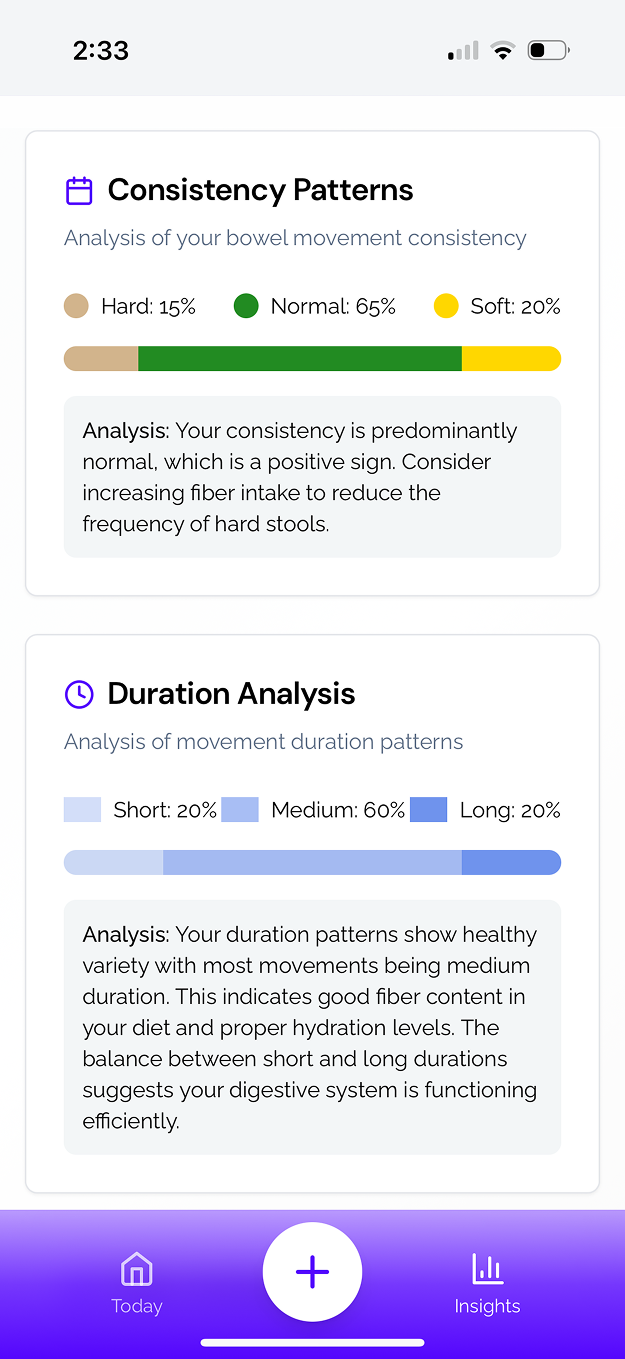
Heart rate variability trends are one source. Passive at-home monitoring of the volatile organic compounds produced by gut microbial activity in stool is another, offering a view of how your gut patterns move over weeks as your nervous system practices accumulate.
What is realistic to expect: shifts in these measures typically lag behind the practice rather than appearing immediately, and week-to-week variation is normal. Monitoring shows patterns; it does not diagnose conditions or confirm that a specific intervention caused a specific change. For the broader naturopathic framework this fits within, see our guide to IBS-focused digestive wellness through naturopathic gut microbiome support.
Building It Into a Day
A workable structure, adapted to your own pattern and circumstances:
- Morning: a few minutes of slow breathing before getting up, then gentle movement such as yoga, tai chi or stretching coordinated with breath.
- Midday: when tension rises, gargling and several minutes of slow breathing. A short walk outdoors if possible.
- Late afternoon: singing, humming or extended-exhale breathing during the stretch when stress typically peaks.
- Before dinner: prime the parasympathetic state before eating, then eat without screens, chewing properly.
- Before bed: screens off an hour before sleep, then meditation, restorative yoga or slow breathwork. Consistent sleep and wake times.
- Weekly: moderate exercise several times, time outdoors in green space, and genuine social connection.
You will miss days. That is fine. What matters is returning to the practice consistently over months.
When to Seek Professional Care
Some presentations need evaluation rather than self-directed practice. Seek professional care if you have severe or persistent abdominal pain, particularly pain that wakes you or occurs with blood in stool; significant unintended weight loss; persistent fever or night sweats; a family history of inflammatory bowel disease, celiac disease or colorectal cancer; suicidal thoughts, severe depression or anxiety that interferes with daily function; digestive symptoms that persist despite twelve weeks of consistent practice; or if you take psychiatric medication and are considering herbal additions.
If you are having thoughts of suicide or self-harm, this article is not the right resource and no botanical is either. Contact emergency services, go to an emergency department, or reach a crisis line. In the United States and Canada, call or text 988. In the United Kingdom and Ireland, call Samaritans on 116 123. Elsewhere, findahelpline.com lists local services. Please reach out to a person rather than working through a wellness protocol.
Naturopathic approaches to stress and gut health are genuinely useful and genuinely insufficient on their own for some people. Collaborative care with gastroenterology, primary care or mental health professionals is often the right answer.
Pulling It Together
The stress-gut-brain axis is not a metaphor. It is a measurable system in which nervous system state influences microbial composition, which in turn influences resilience, immune function and digestive capacity.
The practical implication is that stress regulation is a foundational digestive intervention, not a luxury. Breathing, movement, sleep and social connection are legitimate gut health tools, and they cost nothing.
Start with the breath. Add the rest gradually. Give it months rather than days.
References
- Rusch JA, Layden BT, Dugas LR. Signalling cognition: the gut microbiota and hypothalamic-pituitary-adrenal axis. Frontiers in Endocrinology. 2023;14:1130689. doi:10.3389/fendo.2023.1130689
- Thaiss CA, Zeevi D, Levy M, et al. Transkingdom Control of Microbiota Diurnal Oscillations Promotes Metabolic Homeostasis. Cell. 2014;159(3):514-529. doi:10.1016/j.cell.2014.09.048
- Chandrasekhar K, Kapoor J, Anishetty S. A Prospective, Randomized Double-Blind, Placebo-Controlled Study of Safety and Efficacy of a High-Concentration Full-Spectrum Extract of Ashwagandha Root in Reducing Stress and Anxiety in Adults. Indian Journal of Psychological Medicine. 2012;34(3):255-262. doi:10.4103/0253-7176.106022
- Lopresti AL, Smith SJ, Metse AP, Drummond PD. A randomized, double-blind, placebo-controlled trial investigating the effects of an Ocimum tenuiflorum (Holy Basil) extract (Holixer) on stress, mood, and sleep in adults experiencing stress. Frontiers in Nutrition. 2022;9:965130. doi:10.3389/fnut.2022.965130
- Mao JJ, Xie SX, Keefe JR, Soeller I, Li QS, Amsterdam JD. Long-term chamomile (Matricaria chamomilla L.) treatment for generalized anxiety disorder: A randomized clinical trial. Phytomedicine. 2016;23(14):1735-1742. doi:10.1016/j.phymed.2016.10.012
- Swarup S, Gupta A, Chung M, et al. Rapid shift of gut microbiome and enrichment of beneficial microbes during arhatic yoga meditation retreat in a single-arm pilot study. BMC Complementary Medicine and Therapies. 2025;25(1):51. doi:10.1186/s12906-025-04783-4
- Safarchi A, Al-Qadami G, Tran CD, Conlon M. Understanding dysbiosis and resilience in the human gut microbiome: biomarkers, interventions, and challenges. Frontiers in Microbiology. 2025;16:1559521. doi:10.3389/fmicb.2025.1559521
- Qadri H, Shah AH, Almilaibary A, Mir MA. Microbiota, natural products, and human health: exploring interactions for therapeutic insights. Frontiers in Cellular and Infection Microbiology. 2024;14:1371312. doi:10.3389/fcimb.2024.1371312
Frequently Asked Questions
Can stress really cause digestive problems?
Yes, through well-described pathways. Chronic stress activates the HPA axis, raises cortisol, and suppresses vagal signaling to the digestive tract. That combination reduces protective mucus, affects barrier function and shifts microbial composition, a bidirectional loop mapped in detail in a 2023 review in Frontiers in Endocrinology. This is measurable physiology, not a psychological explanation for real symptoms.
How do I stimulate my vagus nerve naturally?
Slow breathing with a longer exhale than inhale is the simplest and most reliable method. Gargling, humming and singing activate vagal pathways through the throat muscles. Gentle yoga and tai chi raise parasympathetic tone over time. Consistency across weeks matters far more than intensity in any single session.
What is the stress gut connection in naturopathy?
Naturopathic practice treats stress regulation as a foundational digestive intervention rather than a side note. The reasoning is that a nervous system stuck in threat mode suppresses digestion directly, so supplements and dietary changes work against a headwind until nervous system regulation improves alongside them.
Do adaptogenic herbs help with stress and gut health?
Several have specific trial evidence. Ashwagandha was studied at 300 mg of full-spectrum root extract twice daily for 60 days in 64 adults, with significant reductions in stress scores and serum cortisol against placebo. Holy basil was studied at 125 mg twice daily for 8 weeks in 100 adults. They are not harmless: ashwagandha interacts with thyroid and sedative medications and carries hepatotoxicity case reports. Which one and how much is a clinician decision.
What is heart rate variability and why does it matter for digestion?
Heart rate variability measures the variation in time between heartbeats and serves as a practical indicator of vagal tone. Higher variability generally corresponds to better stress recovery and parasympathetic function, the state in which digestion works best. Tracking it can show whether nervous system practices are having an effect, though trends over weeks matter more than single readings.
How long does it take to improve vagal tone?
Expect weeks to months rather than days. Individual sessions of breathwork or cold exposure produce short-term changes in heart rate variability, but shifting your baseline takes consistent daily practice over several weeks. Digestive change generally follows nervous system change rather than preceding it.
Does meditation change the gut microbiome?
The evidence is early and should be read carefully. A single-arm pilot sampled 24 practitioners at three points across a 9-day intensive meditation retreat and found measurable shifts in oral and gut microbiome profiles, including changes in oral species richness. There was no control group and the retreat also involved a vegetarian diet, so meditation cannot be isolated as the cause. Hypothesis-generating, not proof.
SNIFR is designed to provide insights about gut health patterns, not to diagnose or treat medical conditions. Individual results may vary as gut health is influenced by numerous factors including diet, stress, sleep, and genetics. SNIFR is currently in development, and features described may evolve before commercial release.
Other Posts

Be first to try SNIFR. Beta coming soon.
Join our waitlist to get notified when the app launches. Start understanding your gut health sooner.