
Seasonal Digestive Health: Your Gut Microbiome Year-Round
How the gut microbiome shifts across the year, what the seasonal and light-exposure research actually found, and how to eat and sleep with the seasons safely

One of the most useful things a patient ever said to me was almost an aside: my symptoms seem to follow the seasons. Mild in winter, tolerable in spring, worse through summer, and then weeks of fatigue and sluggish digestion by autumn.
That observation is worth taking seriously, and it is not unusual. Modern research increasingly confirms what traditional healing systems described for centuries. Your gut microbiome is not static. It is dynamic, responsive and measurably attuned to seasonal change.
Aligning your eating and daily rhythms with those shifts is one of the more accessible things you can do for year-round digestive wellness. What follows names the studies, their sizes and what they actually found.
The Science of Seasonal Shifts
Circadian Rhythms and Digestion
Your gut does not only respond to what you eat. It runs on internal clocks synchronized to light, temperature and meal timing. Work in both mice and humans has shown that the intestinal microbiota exhibits diurnal oscillations, that these are driven substantially by feeding rhythms, and that ablating host clock components or inducing jet lag produces aberrant fluctuation and dysbiosis. In that study, jet-lag-induced dysbiosis promoted glucose intolerance and obesity that transferred to germ-free mice on faecal transplantation (Thaiss et al., Cell, 2014).
Those rhythms have downstream effects. Bacterial metabolites including short-chain fatty acids, modified bile acids and tryptophan derivatives appear to influence the expression of core clock genes, a two-way arrangement described in a 2025 integrated review in Frontiers in Microbiology (Zheng et al., 2025). In effect, what your microbes produce helps tell your body what time it is.
The pattern is not unique to humans. A review in Functional Ecology covering circadian rhythms of hosts and their gut microbiomes across animal species describes the same coupling of host clock, feeding rhythm and microbial oscillation, which suggests this is a deeply conserved arrangement rather than a quirk of modern life (Schmid et al., 2023).
When circadian rhythm and microbial rhythm fall out of alignment, published work associates that desynchronization with altered microbiota function and increased risk across several conditions. For people with IBS, circadian disruption can intensify symptoms noticeably.
Seasonal Composition Changes
Your microbiome in February is not your microbiome in July, and two studies make that unusually concrete.
The Hadza hunter-gatherers of Tanzania were sampled longitudinally, 350 stool samples collected over more than a year. The data showed annual cyclic reconfiguration of the microbiome, in which some taxa became undetectable in one season and reappeared in a later one. Comparison against 18 populations across 16 countries found that the taxa most seasonally volatile among the Hadza were the same ones that distinguish industrialized from traditional populations, and that these lineages have declined in prevalence and abundance in modernized populations (Smits et al., Science, 2017).
In a rural Indian agrarian cohort, 78 healthy adults were sampled across hot-humid summer, autumn and dry winter. The study found seasonal shifts between Prevotella-driven and Bifidobacterium/Ruminococcus-driven community types, with a bimodal change in Bacteroidota community structure during summer that was most pronounced in fermented milk consumers. Long-term habitual fermented food consumption was associated with reduced overall diversity and bacterial load but greater seasonal stability (Jeyaram et al., Nature Communications, 2025).
These shifts are not random. They appear to be adaptive responses to seasonal diet, light and temperature. Eating more fresh vegetables in summer feeds fiber-fermenting populations. Shifting toward warming, starchier foods in winter selects for different species.
Light, Vitamin D and the Skin-Gut Link
Light appears to play a more direct role than most people expect. In a clinical pilot study, 21 healthy women received three narrow-band ultraviolet B light sessions over one week. Serum vitamin D rose, and gut microbial alpha diversity increased, with the effect most apparent in the participants who had not taken vitamin D supplements over the preceding winter. The authors describe this as evidence for a skin-to-gut signalling route with vitamin D as a plausible mediator (Bosman et al., Frontiers in Microbiology, 2019).
Twenty-one participants in a single-week pilot is a small study, and it has not been replicated at scale. It is also emphatically not a recommendation to pursue deliberate ultraviolet exposure. Ultraviolet radiation is a established human carcinogen and the principal modifiable cause of melanoma and non-melanoma skin cancer. Narrow-band UVB in that study was delivered in a clinical phototherapy setting under medical supervision, which is a different thing entirely from a sunbed or an unprotected afternoon.
What the finding does support is valuing ordinary daylight and outdoor time, and having vitamin D status assessed by your clinician if you live at a latitude where winter deficiency is common. Correcting a measured deficiency with a supplement carries none of the carcinogenic risk of chasing the same effect through the skin.
Seasonal Fiber and Fermentation
Each season offers different plant foods with different fiber compositions. Spring greens ferment differently than summer stone fruit, which differs again from autumn squash and winter roots. A 2025 review in The FASEB Journal examining dietary patterns and the gut microbiome describes how fiber type and quantity, more than any single food, determine short-chain fatty acid output and community composition (Muigano et al., 2025). Starchy autumn and winter vegetables supply resistant starch, a substrate that fermentation research consistently links to butyrate production.
Seasonal Symptom Patterns
The symptom side has data too. A multicenter study using the OMOP common data model in Korea found the incidence of IBS highest in autumn, followed by summer, and lowest in spring and winter (Hong et al., Frontiers in Public Health, 2026).
Allergy is one plausible contributor. In a retrospective analysis of 61 adult IBS patients evaluated between 2021 and 2024, of whom 38 (62.8 percent) had diarrhoea-predominant IBS, symptom burden was compared outside pollen season and during it. Symptom severity increased significantly during pollination in grass-sensitised patients, and the effect was present only in the IBS-D subgroup (Rossi et al., Frontiers in Allergy, 2025). A summer flare is not always about food.
Traditional Frameworks for Seasonal Digestion
The insight is old even where the research is new. Traditional systems across cultures developed seasonal protocols from direct observation.
Ayurvedic Seasonal Practice
Ayurveda offers one of the more elaborated models. Rather than treating all digestive complaints alike, it describes constitutional patterns whose vulnerabilities intensify in particular seasons. Nervous, irregular patterns tend to struggle most in autumn and early winter. Inflammatory patterns face their hardest stretch in summer heat. Sluggish, damp patterns tend to have the most difficulty in late winter and spring.
The principle of ritucharya, or seasonal conduct, holds that each season calls for different foods, spices and routines. This is a traditional framework offering historical and philosophical context, not a validated diagnostic system. A 2025 critical review of prakriti assessment instruments concluded that the tools themselves are still being validated and that microbiome correlations reported so far need replication in larger cohorts (Venkatesh et al., Frontiers in Medicine, 2025). No device determines your constitutional type.
Traditional Chinese Medicine
Traditional Chinese Medicine similarly pairs seasons with organ systems and dietary emphases: spring with liver and gallbladder and lighter fresh foods, summer with cooling foods, autumn with warming foods supporting elimination, and winter with deeply nourishing preparations. Its emphasis on warm cooked food supporting digestive capacity maps loosely onto modern understanding of how cooking affects fermentation and nutrient availability.
Naturopathic Seasonal Practice
Naturopathic practice draws on both. Spring is traditionally associated with bitter herbs that stimulate digestive secretions. Summer emphasizes soothing and cooling botanicals. Autumn favors warming preparations. Winter uses long-simmered nourishing decoctions.
These traditional associations are useful for organizing an approach. Culinary amounts of familiar herbs and spices are low risk. Concentrated extracts are not, and should be selected by a licensed clinician. Whole-root licorice, a classic autumn and winter demulcent, supplies glycyrrhizin and can raise blood pressure and deplete potassium; the deglycyrrhizinated form does not. Concentrated peppermint oil, the classic summer carminative, worsens reflux and needs an enteric coating.
A Four-Season Framework
What follows are general frameworks. Your individual approach should account for your health status, medications and symptoms, and significant dietary or botanical changes are worth discussing with a qualified practitioner.
Spring: Lighter, Bitter, Stimulating
After winter, the digestive system generally does well with lighter food and gentle stimulation. Emphasize fresh leafy greens including dandelion greens, arugula and spring lettuces, along with asparagus, peas, artichokes and fresh herbs. Ease back on the heavier fats and proteins that carried you through winter.
Bitter flavors are spring signature. Bitter compounds activate taste receptors that trigger digestive secretion, which is why cultures across the world reached for bitter greens at this time of year. Dandelion, gentian and milk thistle all have traditional standing here. Cruciferous vegetables belong in this season too, and their glucosinolates are the precursor of sulforaphane, a compound with a substantial clinical literature: a 2025 analysis of trials registered on ClinicalTrials.gov identified 84 sulforaphane or broccoli-extract trials, 39 of them published, with mechanistic work centred on the Keap1/Nrf2 axis that regulates phase II detoxification enzymes (Saito et al., Journal of Nutritional Science, 2025).
Spring also invites more movement and more daylight, both of which support circadian alignment and motility.
Summer: Cooling and Hydrating
Summer heat tends to intensify inflammatory digestive patterns. Emphasize fresh fruit, cooling vegetables such as cucumber and zucchini, lighter grains, and hydrating legumes. Ease back on heavy spice, alcohol and heating foods.
Summer produce variety is genuinely valuable. Each fruit and vegetable feeds different bacterial populations, and regular consumption of varied seasonal produce is associated with greater microbiome diversity.
Worth noting: some people find their digestive symptoms worsen during peak pollen season, and the Rossi data gives that observation a number. In 61 IBS patients, symptom severity rose significantly during pollination among grass-sensitised participants, and only in the diarrhoea-predominant subgroup.
Chamomile and peppermint are the classic summer digestive herbs, both traditionally taken as simple infusions. Concentrated forms are a different question: enteric-coated peppermint oil in the 180 to 225 mg range two to three times daily is the form studied in IBS trials, and reflux is its commonest adverse effect.
Autumn: Grounding and Preparing
As daylight decreases, the system generally does better with warming, more substantial food. Root vegetables, winter squash, warming grains and warming spices such as cinnamon, nutmeg and ginger fit the season.
Autumn produce also brings a shift in fiber type. Root vegetables supply resistant starch, which research associates with butyrate production and intestinal lining support. That seasonal shift toward starch is not a departure from gut health. It is part of it.
Autumn is also when IBS incidence peaks in the Korean population data, which makes it a sensible moment to establish tracking and gather baseline before winter changes your diet and activity substantially.
Winter: Nourishing and Restorative
Winter favors warming, grounding, well-cooked food: soups and stews, root vegetables, warming grains, bone broths and well-cooked legumes. Raw salads and cold preparations are harder work for a system already contending with cold and low light.
Sleep matters especially here. Consistent sleep and wake times support the circadian synchronization your microbiota depends on, and the Thaiss jet-lag data illustrates how quickly that can be disrupted. Holidays are precisely when that consistency tends to collapse.
Winter is also when vitamin D status is lowest at higher latitudes. If that is relevant to you, ask your clinician for a blood level rather than seeking ultraviolet exposure.
| Season | Dietary emphasis | Dominant fiber type | Traditional botanical association | What the research notes |
|---|---|---|---|---|
| Spring | Bitter greens, asparagus, peas, artichoke, cruciferous vegetables | Mixed soluble fiber, glucosinolates | Bitters: dandelion, gentian, milk thistle | Glucosinolate-derived sulforaphane regulates phase II enzymes via Keap1/Nrf2; 84 registered trials, 39 published (Saito 2025) |
| Summer | Fresh fruit, cucumber, zucchini, lighter grains, hydrating legumes | High water, varied plant fiber | Chamomile, peppermint as infusions | Pollen-season symptom increase in grass-sensitised IBS-D patients, 61-patient cohort (Rossi 2025) |
| Autumn | Root vegetables, winter squash, warming grains and spices | Resistant starch | Ginger, cinnamon, warming preparations | Highest seasonal IBS incidence in Korean population data (Hong 2026); resistant starch linked to butyrate production |
| Winter | Soups, stews, roots, bone broths, well-cooked legumes | Cooked starch and soluble fiber | Long-simmered decoctions; whole-root licorice traditionally | Lowest vitamin D status at higher latitudes; licorice glycyrrhizin raises blood pressure, DGL form does not |
Tracking Your Own Seasonal Signature
Generic seasonal advice only goes so far. The real value comes from identifying your individual pattern, which takes at least one full year of observation. The Hadza study needed more than a year of longitudinal sampling to resolve annual cycling; a single snapshot would have shown none of it.
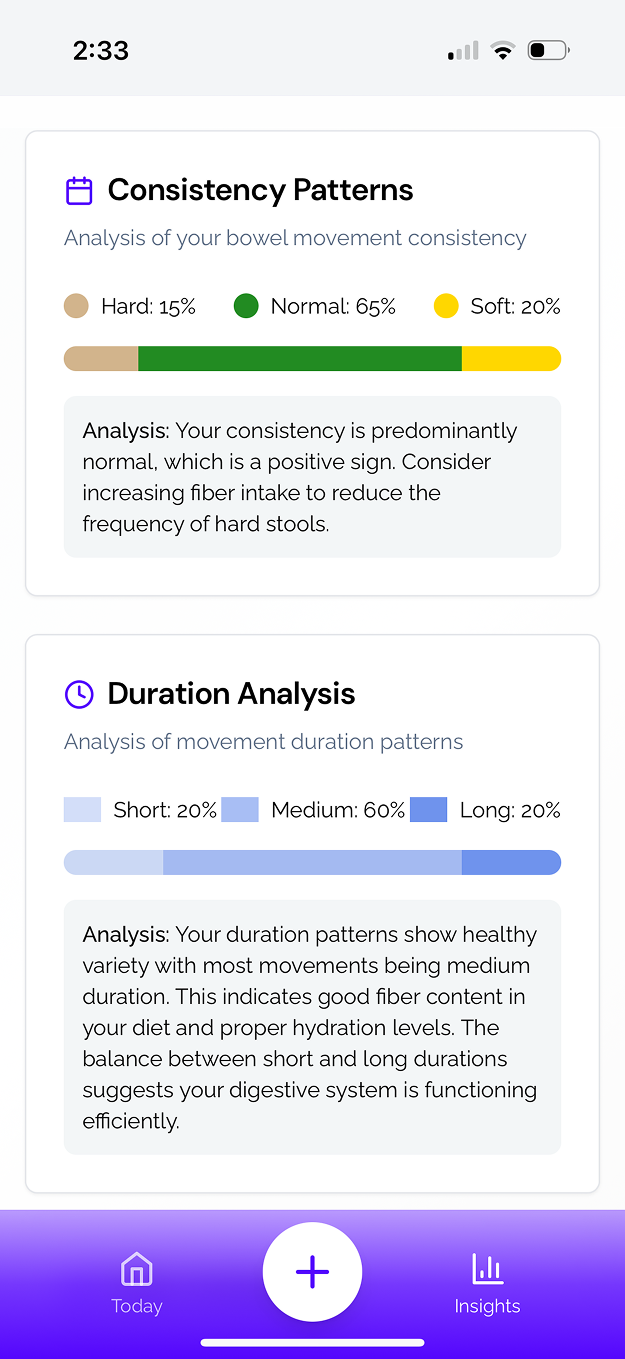
Passive at-home monitoring of the volatile organic compounds your gut produces in stool can provide continuous insight into how your patterns move through seasonal transitions, without invasive testing. Alongside that, four things are worth recording:
- Symptom patterns. When does bloating, constipation or loose stool appear across the year? Population data shows seasonal variation in IBS incidence, with autumn highest.
- Food responses. Tolerance shifts. Foods that sit well in spring may not in winter.
- Energy and digestion quality. Transit speed, stool consistency, general vitality. These often shift before specific symptoms do.
- Environmental factors. Daylight hours, outdoor time, temperature, activity level and, if you are allergic, pollen counts.
Combining that record with the wider naturopathic framework in our guide to IBS-focused digestive wellness through naturopathic gut microbiome support moves you from generic seasonal advice toward something genuinely personalized. Monitoring shows patterns; it does not diagnose conditions or determine treatment.
How a Seasonal Pattern Resolves
The following is a constructed illustration and not a client. No outcome here is attributed to any product.
Hypothetical scenario. Imagine someone with physician-diagnosed diarrhoea-predominant IBS whose symptoms reliably worsen from late spring through midsummer, then settle. Elimination diets have not explained the pattern, because the offending variable is not on the plate.
The Rossi data offers a plausible mechanism: in 61 IBS patients, grass-sensitised individuals showed a significant rise in symptom burden during pollination, and only those with the diarrhoea-predominant subtype. If this person is grass-sensitised, the seasonal flare may be an allergic phenomenon expressing itself in the gut rather than a food intolerance.
That reframing changes what to do. Allergy testing through a physician becomes the useful next step rather than a fourth elimination diet. Cooling, hydrating summer eating remains sensible, and enteric-coated peppermint oil for abdominal pain stays a clinician conversation. The record that made the pattern visible was simply a year of dated symptom notes alongside daylight, outdoor time and season, which is exactly the kind of longitudinal observation single tests cannot supply.
The Stress and Season Connection
Seasonal transitions bring their own stressors: reduced daylight affecting mood, holiday scheduling chaos, disrupted summer routines. That stress reaches the gut through the vagus nerve, and stress-driven dysregulation can override otherwise sensible dietary changes.
Practices that hold steady through seasonal disruption matter more than any single food choice. Consistent sleep and wake times, a few minutes of daily breathwork, and gentle movement all support vagal tone and reinforce circadian synchronization.
When to Seek Professional Guidance
Consult a qualified healthcare provider if you experience severe seasonal digestive change that affects quality of life or nutrition, no improvement after consistent seasonal practice across several cycles, seasonal digestive change alongside mood, sleep or energy disruption which may indicate seasonal affective disorder, existing diagnoses of IBS, inflammatory bowel disease or small intestinal bacterial overgrowth, or if you are considering botanical preparations while taking any medication.
Seasonal approaches complement medical care. They do not replace it.
Living in Rhythm
What the research on seasonal microbiome shifts ultimately points to is something fairly simple. We are not separate from natural cycles. We are embedded in them. The Hadza data makes that point sharply: the microbial lineages that cycle most strongly with the seasons in a foraging population are the same ones that have thinned out in industrialized ones.
Many people report that seasonal eating shifts something beyond digestion. They stop fighting their winter appetite for warm soups. They stop forcing raw salads in January. Working with the season rather than against it turns out to be less effortful and, for a good number of people, more comfortable.
Start where you are. Observe your own pattern. Adjust gradually. Small consistent changes compound.
References
- Thaiss CA, Zeevi D, Levy M, et al. Transkingdom Control of Microbiota Diurnal Oscillations Promotes Metabolic Homeostasis. Cell. 2014;159(3):514-529. doi:10.1016/j.cell.2014.09.048
- Zheng B, Wang L, Sun S, Yuan X, Liang Q. The molecular interplay between the gut microbiome and circadian rhythms: an integrated review. Frontiers in Microbiology. 2025;16:1712516. doi:10.3389/fmicb.2025.1712516
- Schmid DW, Capilla-Lasheras P, Dominoni DM, Muller-Klein N, Sommer S. Circadian rhythms of hosts and their gut microbiomes: Implications for animal physiology and ecology. Functional Ecology. 2023;37(3):476-487. doi:10.1111/1365-2435.14255
- Smits SA, Leach J, Sonnenburg ED, et al. Seasonal cycling in the gut microbiome of the Hadza hunter-gatherers of Tanzania. Science. 2017;357(6353):802-806. doi:10.1126/science.aan4834
- Jeyaram K, Lahti L, Tims S, et al. Fermented foods affect the seasonal stability of gut bacteria in an Indian rural population. Nature Communications. 2025;16(1):771. doi:10.1038/s41467-025-56014-6
- Bosman ES, Albert AY, Lui H, Dutz JP, Vallance BA. Skin Exposure to Narrow Band Ultraviolet (UVB) Light Modulates the Human Intestinal Microbiome. Frontiers in Microbiology. 2019;10:2410. doi:10.3389/fmicb.2019.02410
- Muigano MN, Liu J, Liu X, Luo P, Li Z. The Impact of Dietary Patterns on the Human Gut Microbiome and Its Health Significance: A Review. The FASEB Journal. 2025;39(19):e71072. doi:10.1096/fj.202502040R
- Hong SH, Jeong N, Park JW, et al. Trends and seasonal variation in the incidence and prevalence of irritable bowel syndrome in Korea: a multicenter OMOP CDM study. Frontiers in Public Health. 2026;14:1711919. doi:10.3389/fpubh.2026.1711919
- Rossi CM, Lenti MV, Merli S, et al. Effect of seasonal exposure in aeroallergen-sensitised patients with irritable bowel syndrome-diarrhoea. Frontiers in Allergy. 2025;6:1568595. doi:10.3389/falgy.2025.1568595
- Saito A, Ishikawa S, Yang K, Sawa A, Ishizuka K. Sulforaphane as a potential therapeutic agent: a comprehensive analysis of clinical trials and mechanistic insights. Journal of Nutritional Science. 2025;14:e65. doi:10.1017/jns.2025.10033
- Venkatesh A, Johansson L, Sivanandan PV, Gopakumar SP, Sankaranarayanan K, Kessler C. Prakriti (constitutional typology) in Ayurveda: a critical review of Prakriti assessment tools and their scientific validity. Frontiers in Medicine. 2025;12:1656249. doi:10.3389/fmed.2025.1656249
- Safarchi A, Al-Qadami G, Tran CD, Conlon M. Understanding dysbiosis and resilience in the human gut microbiome: biomarkers, interventions, and challenges. Frontiers in Microbiology. 2025;16:1559521. doi:10.3389/fmicb.2025.1559521
Frequently Asked Questions
Does your gut microbiome really change with the seasons?
Yes. Longitudinal sampling of 350 stool samples over more than a year in the Hadza found annual cyclic reconfiguration, with some taxa becoming undetectable in one season and reappearing later. A separate study of 78 rural Indian adults found seasonal switching between Prevotella-driven and Bifidobacterium/Ruminococcus-driven community types. These shifts appear adaptive rather than problematic.
Why do my IBS symptoms get worse at certain times of year?
Seasonal changes in diet, daylight, activity and stress all influence gut function. Population data from Korea found IBS incidence highest in autumn and lowest in spring and winter. Allergy may contribute too: in 61 IBS patients, symptom severity rose significantly during pollination season among grass-sensitised individuals, and only in the diarrhoea-predominant subgroup.
What is seasonal eating for digestive health?
Seasonal eating means matching food choices to what grows and what your body needs at that time of year: lighter bitter greens in spring, cooling produce in summer, warming roots in autumn, and slow-cooked nourishing foods in winter. Each season brings different fiber types, which feed different bacterial populations and produce different short-chain fatty acid profiles.
Does sunlight affect gut bacteria?
There is preliminary evidence that it may. In a pilot study, 21 healthy women given three narrow-band UVB sessions over one week showed increased gut microbial diversity alongside rising serum vitamin D, most clearly in those not already supplementing. This should not be read as a reason to seek sun or sunbed exposure, which is an established cause of skin cancer. Ask your clinician about testing vitamin D instead.
How should I adjust my diet for winter digestion?
Winter generally suits warming, well-cooked foods: soups and stews, root vegetables, warming grains and slow-cooked legumes, with fewer raw and cold preparations. Root vegetables also supply resistant starch, which fermentation research links to butyrate production. Keep sleep and meal timing consistent, since feeding rhythm is one of the strongest drivers of microbial rhythmicity.
Can seasonal herbs help digestive wellness?
Traditional practice pairs certain botanicals with certain seasons, such as bitter herbs in spring and warming spices in winter. Culinary amounts of familiar spices are generally low risk. Concentrated extracts are a different matter: whole-root licorice raises blood pressure through glycyrrhizin, and concentrated peppermint oil worsens reflux unless enteric coated. A licensed clinician should choose these.
Should I take vitamin D for gut health in winter?
Only on the basis of a measured blood level. The UVB pilot study that linked light exposure to gut microbial diversity suggested vitamin D as a mediating pathway, but 21 participants over one week is preliminary. Correcting a documented deficiency is reasonable and carries none of the skin cancer risk of pursuing ultraviolet exposure. Ask your clinician to test rather than guessing.
SNIFR is designed to provide insights about gut health patterns, not to diagnose or treat medical conditions. Individual results may vary as gut health is influenced by numerous factors including diet, stress, sleep, and genetics. SNIFR is currently in development, and features described may evolve before commercial release.
Other Posts



Be first to try SNIFR. Beta coming soon.
Join our waitlist to get notified when the app launches. Start understanding your gut health sooner.