
Gut Microbiome Healing: Naturopathic and Conventional Care
How naturopathic and conventional gut healing compare on the actual evidence, where the two converge, and how to build an integrative plan with both clinicians

People arrive in naturopathic practice carrying two things: a stack of test results, and a question their previous appointments did not have time to answer. Not what medication controls this, but why did my gut become imbalanced in the first place.
Both questions deserve answers, and they come from different traditions. The most durable gut healing I have seen does not come from choosing a side. It comes from knowing what each approach does well and refusing to treat them as opponents. This article names the specific guidelines and trials on both sides, because the honest comparison is more useful than the tribal one.
What Conventional Gastroenterology Does Well
Let us be clear about the strengths, because they are considerable.
When someone presents with severe diarrhea, abdominal pain or bleeding, conventional medicine is where you go. The diagnostic infrastructure is sophisticated. Colonoscopy can rule out serious pathology. Stool testing identifies specific infections. Bloodwork reveals nutritional deficiency and inflammatory markers. None of that has a naturopathic equivalent.
For IBS specifically, conventional treatment has become considerably more nuanced, and the guidelines are explicit about their own uncertainty. The 2022 American Gastroenterological Association guideline for constipation-predominant IBS made nine recommendations: a strong recommendation for linaclotide with high certainty of evidence, conditional recommendations for tenapanor, plecanatide, tegaserod and lubiprostone at moderate certainty, and conditional recommendations for polyethylene glycol laxatives, tricyclic antidepressants and antispasmodics at low certainty. It recommended against selective serotonin reuptake inhibitors (Chang et al., Gastroenterology, 2022).
The companion guideline for diarrhoea-predominant IBS made eight recommendations, all conditional: eluxadoline, rifaximin and alosetron at moderate certainty, loperamide at very low certainty, and tricyclic antidepressants and antispasmodics at low certainty, again recommending against SSRIs (Lembo et al., Gastroenterology, 2022).
Read that carefully. One strong recommendation across both documents. Everything else is conditional, and much of it rests on low or very low certainty evidence. Conventional gastroenterology is not the fortress of certainty that natural health marketing sometimes portrays, and it does not claim to be. These are real options that provide real relief for many people. If you are on one of them and it is helping, that is not a failure of natural medicine. That is medicine working.
Where the conventional model struggles is less about what it does than what the system has time for. Insurance reimburses procedures and prescriptions. A fifteen-minute appointment cannot map a decade of food history, antibiotic exposure and stress. That is a structural constraint, not a criticism of individual clinicians, most of whom would happily take the ninety minutes if the system allowed it.
What Naturopathic Practice Adds, and Where It Falls Short
Naturopathic medicine starts from the question of cause. It treats symptoms as information about something upstream.
In practice that means a long intake. How much antibiotic exposure have you had. What does your stress actually look like. When did symptoms start relative to a life transition. What are you eating, sleeping, moving. What patterns show up when you are well.
The toolkit is real and partly research-supported, and the size of that support is worth quantifying. A systematic review and meta-analysis of Western herbal medicines in IBS identified 33 double-blind placebo-controlled trials meeting eligibility criteria. Seventeen of those 33 evaluated peppermint oil (Hawrelak et al., Complementary Therapies in Medicine, 2020). That is a meaningful evidence base for one botanical and a thin one for most others.
Peppermint oil itself holds up. A 2022 meta-analysis of 10 randomized trials covering 1,030 patients found a relative risk of global symptoms not improving of 0.65 with a number needed to treat of 4, and abdominal pain relative risk 0.76 with a number needed to treat of 7, alongside significantly more adverse events, relative risk 1.57, and very low overall evidence quality (Ingrosso et al., Alimentary Pharmacology and Therapeutics, 2022). Compare that number needed to treat of 4 against the AGA guideline recommendations above and the two traditions look considerably more similar than either camp usually admits.
Reviews of medicinal plants including chamomile, ginger, garlic and dandelion describe anti-inflammatory, antimicrobial and prebiotic effects, largely from preclinical work (Qadri et al., Frontiers in Cellular and Infection Microbiology, 2024). Dietary intervention is more central in naturopathic practice than in most conventional practice, and food is treated as the primary tool rather than a footnote.
Now the limitations, stated with equal honesty.
The research base is smaller and more heterogeneous. Many of the most compelling studies involve small samples or appear in lower-impact journals. Some protocols rest on tradition and clinical observation rather than controlled trials. That does not mean they do not work. It means the evidence looks different, and you deserve to be told which kind you are getting.
The economics create their own pressures. Extended consultations cost money. Individualized formulas cost money. Practitioners without rigorous training can recommend expensive supplement stacks with no evidence of need. That approach wastes resources and can genuinely complicate healing.
There is also a real risk in this field of disparaging conventional medicine while presenting natural products as inherently safe. That framing is wrong on both counts. Botanicals are potent, and some carry serious interaction and toxicity risks. Berberine-containing plants inhibit CYP3A4 and P-glycoprotein, which raises blood levels of many common medications, and berberine adds to the glucose-lowering effect of metformin. Whole-root licorice supplies glycyrrhizin, which causes pseudohyperaldosteronism with raised blood pressure and potassium loss; the deglycyrrhizinated form does not. Antibiotics, when genuinely needed, save lives. And without proper diagnostics, a practitioner can miss inflammatory bowel disease, celiac disease or infection while treating what looks like IBS.
| Conventional gastroenterology | Naturopathic practice | |
|---|---|---|
| Primary question | What controls the symptom, and what must be excluded | What upstream factors produced the pattern |
| Diagnostic capability | Colonoscopy, endoscopy, imaging, histology, infection and inflammatory testing | History, dietary assessment; no equivalent structural diagnostics |
| Evidence base for IBS | AGA 2022: one strong recommendation (linaclotide, high certainty); the rest conditional at low to moderate certainty | 33 double-blind placebo-controlled herbal trials, 17 of them peppermint oil; peppermint NNT 4 for global symptoms |
| Consultation time | Typically constrained by reimbursement structures | Typically 60 to 90 minutes at intake, paid out of pocket |
| Main failure mode | Insufficient time for cause-finding; microbiota under-addressed | Missed pathology without diagnostics; expensive supplement stacking without indication |
| Where it is indispensable | Alarm symptoms, structural disease, infection, medication management | Dietary personalization, fiber strategy, sleep and stress work, long-term follow-through |
Where the Two Approaches Actually Agree
The most interesting development in gut health is not one tradition defeating the other. It is convergence.
Both now take the microbiota seriously. Conventional medicine has moved from treating it as background noise to treating it as foundational. Its role in immune function, metabolism and inflammation is documented extensively (Safarchi et al., Frontiers in Microbiology, 2025).
Both recognize the gut-brain axis. Gastroenterologists and psychiatrists increasingly understand that stress dysregulates digestion and that digestive dysfunction produces psychological symptoms. Naturopathic practice has centered that for decades. Note that both AGA guidelines include tricyclic antidepressants as neuromodulators for gut symptoms rather than for mood, which is the same insight from the other direction.
Both accept that pharmaceutical and natural approaches are not opposed. Conventional practitioners commonly recommend probiotics alongside medication. In a 2 x 2 factorial randomized trial of 104 IBS patients, a multi-strain probiotic restored the Bifidobacterium species that a four-week low-FODMAP diet depleted, without reducing the symptom benefit (Staudacher et al., Gastroenterology, 2017). That is dietetics and probiotics working together, designed by a conventional research group.
Both recognize that food matters. The low-FODMAP diet came out of conventional dietetics. A 2025 systematic review and meta-analysis of low-FODMAP diets maintained six months or longer found sustained symptom benefit while flagging nutritional adequacy and microbial diversity as the outstanding concerns (Pouladi et al., Journal of Human Nutrition and Dietetics, 2025). Naturopathic assessment goes further into individual sensitivity and digestive capacity, but the underlying insight converges.
Both accept lifestyle as causal. Sleep quality, stress, movement and environmental exposure all influence the microbiota measurably, and integrative research treats these as comparable in importance to pharmacological intervention.
An Integrative Roadmap
Phase One: Diagnosis
Start with conventional diagnostics when indicated. See a gastroenterologist if you have never had appropriate screening for your age, or if you have alarm symptoms such as blood in stool, unintended weight loss, fever or severe pain. Stool testing for infection and parasites and basic bloodwork for inflammation, nutrient status and thyroid function provide context nothing else can.
In parallel, build the narrative. Map your symptom timeline. What changed. What preceded onset. That history is where personalization comes from.
Phase Two: Foundation
Food comes first, and it does not need to be extreme. Remove the clearest inflammatory triggers: ultra-processed foods, refined sugar, known personal triggers, and fermentable carbohydrates if your pattern suggests them. Current reviews of the low-FODMAP approach favor gentler, less restrictive iterations precisely to avoid depleting the microbiome through extended elimination, and the Staudacher data explains why: bifidobacteria fell measurably over four weeks of restriction.
Then add. Bone broths, omega-3 rich fish, fermented foods, and diverse plant matter including vegetables, legumes, nuts and seeds as tolerated. In a 17-week randomized trial, a high fermented food diet increased microbiota diversity and lowered inflammatory markers (Wastyk et al., Cell, 2021). Real food should be the primary intervention.
Sleep and stress are not optional add-ons. A microbiota disrupted by chronic stress and poor sleep will not recover through supplements. Invest here first.
Phase Three: Microbiota Support
After several weeks of dietary and lifestyle foundation, targeted support may be added. Probiotics with evidence for your specific presentation: Lactobacillus plantarum 299v, for instance, has a 214-patient double-blind placebo-controlled IBS trial in which 78.1 percent rated the response good or excellent against 8.1 percent on placebo (Ducrotte et al., World Journal of Gastroenterology, 2012). Prebiotic fibers such as inulin and fructooligosaccharides have clinical evidence and should be introduced slowly to minimize bloating; a 2025 network meta-analysis ranked fiber and prebiotic interventions among the more effective functional food options in constipation-predominant IBS while noting substantial between-study heterogeneity (Mou et al., Nutrition Reviews, 2025).
A 2025 overview of probiotic, prebiotic and synbiotic trials in inflammatory bowel disease reaches a similar conclusion: effects are strain and formulation specific, and pooling across products obscures more than it reveals (Yassine, Najm and Bilen, Frontiers in Systems Biology, 2025).
A word about botanicals that deserves emphasis. A cup of chamomile tea and a standardized extract are not the same intervention. The research doses named across this pillar, such as enteric-coated peppermint oil at roughly 180 to 225 mg two to three times daily or berberine hydrochloride at 400 mg daily in the Chen trial, describe what supervised trial participants received. Herbs including licorice, berberine-containing plants, aloe and concentrated oils have genuine interaction and toxicity profiles. Which botanical, in what form, in what amount and for how long is a decision for a licensed clinician trained in botanical medicine who has seen your medication list.
Phase Four: Tracking and Personalization
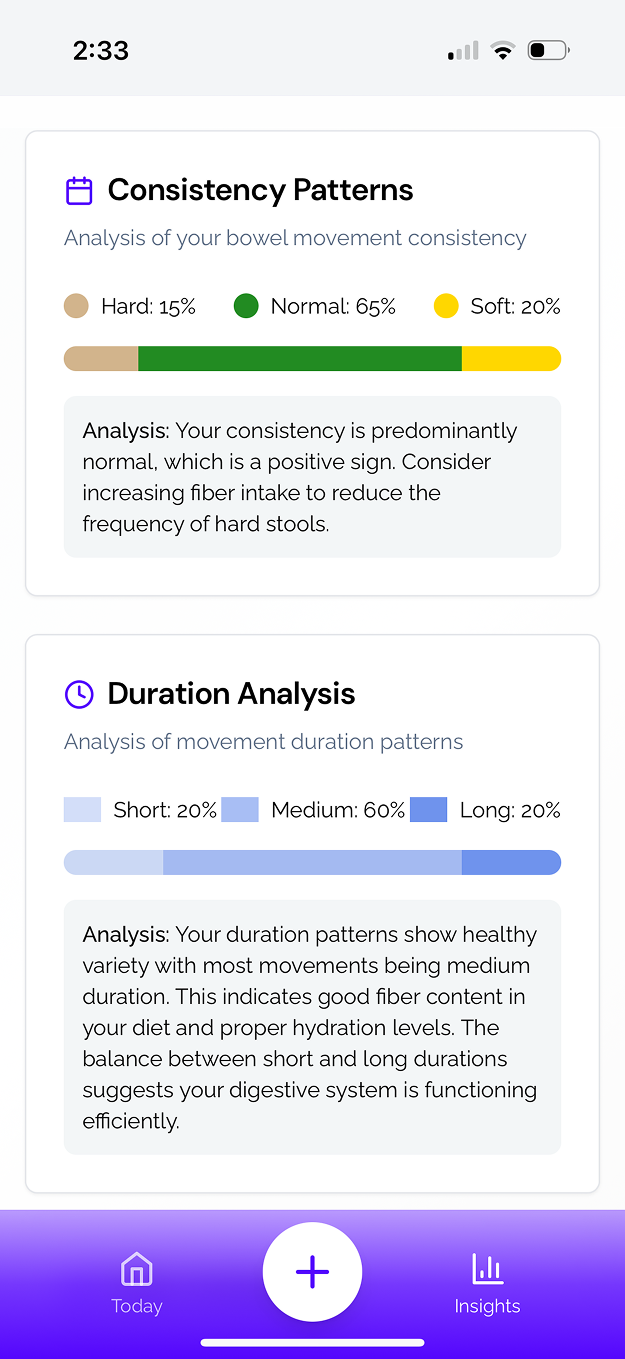
This is where observation earns its place. Passive at-home monitoring using volatile organic compound analysis of stool gas lets you see how specific foods and changes affect your patterns over time, rather than guessing from memory. Reintroduce eliminated foods methodically and watch what happens.
Used properly, tracking prevents endless supplement cycling and prevents the opposite error of assuming something is working when it is not. It is pattern recognition and it informs conversations with your clinician; it is not a diagnostic. For the wider naturopathic framework, see our overview of IBS-focused digestive wellness through naturopathic gut microbiome support.
Phase Five: Maintenance
Long term, most people need considerably less intervention than the active phase required. The goal is resilience, not perfection. Solid nutrition, adequate sleep, manageable stress, movement and periodic reassessment take far less effort than active healing.
What Integration Looks Like in Practice
The following is a constructed illustration, not a client, and no outcome is attributed to any product.
Hypothetical scenario. Imagine someone with diarrhoea-predominant IBS confirmed by a gastroenterologist after appropriate exclusion of coeliac disease and inflammatory bowel disease. They have completed a course of rifaximin, which helped for a period and then plateaued, and they have been told to manage the condition long-term.
An integrative reading of that situation is not that the rifaximin failed. The AGA guideline lists rifaximin as a conditional recommendation at moderate certainty, which is exactly the kind of partial, time-limited benefit the trials describe. The question is what fills the space it opened.
The evidence-supported additions are unglamorous: a supervised low-FODMAP phase with planned reintroduction, with a probiotic considered alongside it given the Staudacher finding on bifidobacteria; consistent sleep and daily slow breathing for the gut-brain component that both traditions now accept; and, if abdominal pain remained dominant, enteric-coated peppermint oil, whose number needed to treat of 4 is competitive with much of the conventional list.
Crucially, the gastroenterologist stays in the picture. Nothing here is a reason to stop a prescribed treatment, and any botanical goes through a medication review first. The judgement point is eight to twelve weeks, not two.
When to See Which Practitioner
See conventional gastroenterology when
- You have alarm symptoms: blood in stool, unintended weight loss, severe pain, persistent vomiting, fever or inability to maintain nutrition
- You need diagnostics: colonoscopy, endoscopy, imaging, infection testing or bloodwork
- You may need medication for bacterial overgrowth, motility or pain
- Symptoms have not improved after eight to twelve weeks of dietary and lifestyle work
See naturopathic medicine when
- You want to investigate contributing factors behind a confirmed diagnosis
- You want structured dietary, botanical and lifestyle support
- You want an individualized approach rather than a standard protocol
- You are interested in preventive digestive wellness
See both when
- Your case is complex and needs both diagnostic clarity and root-cause investigation
- You want to support microbiota health alongside medical treatment you are already receiving
Whatever you decide, do not stop a prescribed treatment without talking to the clinician who prescribed it.
The Future Is Integration
The most capable practitioners working today are neither purely conventional nor purely naturopathic. They understand microbiology, botanical medicine and pharmaceutical options. They know when to refer out. They see a whole person in a whole life.
The research increasingly supports that stance. Microbiome therapeutics delivered through prescription, botanical, dietary change or lifestyle intervention appear to work through overlapping mechanisms: rebalancing the microbial ecosystem, supporting barrier function and reducing inflammation.
The useful question is not which system is better. It is what does this person need. Sometimes that is a medication. Sometimes it is six weeks of dietary work. Usually it is a combination, personalized to the individual in front of you.
References
- Chang L, Sultan S, Lembo A, Verne GN, Smalley W, Heidelbaugh JJ. AGA Clinical Practice Guideline on the Pharmacological Management of Irritable Bowel Syndrome With Constipation. Gastroenterology. 2022;163(1):118-136. doi:10.1053/j.gastro.2022.04.016
- Lembo A, Sultan S, Chang L, Heidelbaugh JJ, Smalley W, Verne GN. AGA Clinical Practice Guideline on the Pharmacological Management of Irritable Bowel Syndrome With Diarrhea. Gastroenterology. 2022;163(1):137-151. doi:10.1053/j.gastro.2022.04.017
- Hawrelak JA, Wohlmuth H, Pattinson M, et al. Western herbal medicines in the treatment of irritable bowel syndrome: A systematic review and meta-analysis. Complementary Therapies in Medicine. 2020;48:102233. doi:10.1016/j.ctim.2019.102233
- Ingrosso MR, Ianiro G, Nee J, et al. Systematic review and meta-analysis: efficacy of peppermint oil in irritable bowel syndrome. Alimentary Pharmacology and Therapeutics. 2022;56(6):932-941. doi:10.1111/apt.17179
- Qadri H, Shah AH, Almilaibary A, Mir MA. Microbiota, natural products, and human health: exploring interactions for therapeutic insights. Frontiers in Cellular and Infection Microbiology. 2024;14:1371312. doi:10.3389/fcimb.2024.1371312
- Li X, Yuan Q, Huang H, Wang L. Gut microbiota in irritable bowel syndrome: a narrative review of mechanisms and microbiome-based therapies. Frontiers in Immunology. 2025;16:1695321. doi:10.3389/fimmu.2025.1695321
- Staudacher HM, Lomer MCE, Farquharson FM, et al. A Diet Low in FODMAPs Reduces Symptoms in Patients With Irritable Bowel Syndrome and A Probiotic Restores Bifidobacterium Species: A Randomized Controlled Trial. Gastroenterology. 2017;153(4):936-947. doi:10.1053/j.gastro.2017.06.010
- Pouladi A, Arabpour E, Bahrami O, et al. Impacts of the Long-Term Low-FODMAP Diet in Patients With Irritable Bowel Syndrome: A Systematic Review and Meta-Analysis. Journal of Human Nutrition and Dietetics. 2025;38(4):e70105. doi:10.1111/jhn.70105
- Ducrotte P, Sawant P, Jayanthi V. Clinical trial: Lactobacillus plantarum 299v (DSM 9843) improves symptoms of irritable bowel syndrome. World Journal of Gastroenterology. 2012;18(30):4012-4018. doi:10.3748/wjg.v18.i30.4012
- Yassine F, Najm A, Bilen M. The role of probiotics, prebiotics, and synbiotics in the treatment of inflammatory bowel diseases: an overview of recent clinical trials. Frontiers in Systems Biology. 2025;5:1561047. doi:10.3389/fsysb.2025.1561047
- Mou J, Xu L, Luo Y, et al. Assessing the Efficacy of Functional Food as Treatment for Irritable Bowel Syndrome with Constipation: A Systematic Review and Network Meta-Analysis. Nutrition Reviews. 2025;84(8):1590-1599. doi:10.1093/nutrit/nuaf204
- Wastyk HC, Fragiadakis GK, Perelman D, et al. Gut-microbiota-targeted diets modulate human immune status. Cell. 2021;184(16):4137-4153.e14. doi:10.1016/j.cell.2021.06.019
- Safarchi A, Al-Qadami G, Tran CD, Conlon M. Understanding dysbiosis and resilience in the human gut microbiome: biomarkers, interventions, and challenges. Frontiers in Microbiology. 2025;16:1559521. doi:10.3389/fmicb.2025.1559521
Frequently Asked Questions
Should I see a naturopath or a gastroenterologist for gut problems?
For most people the answer is both, in the right order. See a physician or gastroenterologist first for diagnosis, especially if you have alarm symptoms, because several serious conditions can look like IBS. Naturopathic care then adds dietary, botanical and lifestyle work around that diagnosis rather than replacing it.
What does naturopathic medicine do differently for gut health?
It asks why the imbalance developed rather than only which treatment controls the symptom. That usually means a longer intake covering food history, antibiotic exposure, stress and sleep, followed by dietary and lifestyle intervention as the primary tools. It works best as a complement to medical diagnosis, not a substitute.
Is naturopathic medicine evidence-based?
Parts of it are, and parts rest on tradition and clinical observation. A meta-analysis of Western herbal medicine in IBS found 33 eligible double-blind placebo-controlled trials, 17 of them on peppermint oil alone, which tells you where the evidence concentrates. Dietary intervention, fiber, sleep and stress work have solid support. An honest naturopathic doctor will tell you which category a recommendation falls into.
Can I take herbal supplements with my IBS medication?
Not without checking. Berberine-containing plants inhibit CYP3A4 and P-glycoprotein, raising blood levels of many common drugs, and add to metformin's glucose-lowering effect. Whole-root licorice raises blood pressure and lowers potassium. Bring your full medication and supplement list to a licensed clinician or pharmacist before adding anything, and do not stop a prescribed treatment on your own.
What is an integrative approach to gut healing?
An integrative approach combines conventional diagnostics with naturopathic dietary and lifestyle work. In practice that means ruling out serious pathology first, building a food and sleep foundation, adding microbiota support with clinician guidance, and using tracking to see whether changes are actually moving your patterns.
How long before I know if a gut healing approach is working?
Give dietary and lifestyle changes at least eight to twelve weeks before judging them. Barrier and microbial changes are slow, and week-to-week variation is normal. If symptoms have not improved after that consistent effort, that is the point to return to your physician rather than intensify a self-directed plan.
How strong is the conventional evidence for IBS medication?
More modest than most people assume. Across the two 2022 AGA guidelines for IBS-C and IBS-D there is a single strong recommendation, linaclotide for constipation-predominant IBS at high certainty. Every other recommendation is conditional, several at low or very low certainty. That is not a criticism of the guidelines; it is an honest reflection of a difficult condition.
SNIFR is designed to provide insights about gut health patterns, not to diagnose or treat medical conditions. Individual results may vary as gut health is influenced by numerous factors including diet, stress, sleep, and genetics. SNIFR is currently in development, and features described may evolve before commercial release.
Other Posts



Be first to try SNIFR. Beta coming soon.
Join our waitlist to get notified when the app launches. Start understanding your gut health sooner.