
Gut Microbiome Restoration: Naturopathic Support for IBS
Naturopathic gut microbiome restoration for IBS: trial-level data on peppermint oil, berberine and strain-specific probiotics, with interactions and cautions kept

In naturopathic medicine we work from the position that digestive health comes from supporting the body rather than silencing it. Irritable bowel syndrome tests that position honestly, because IBS is genuinely difficult, genuinely variable, and genuinely worth approaching from more than one angle.
What follows is not a promise of relief. IBS is a clinician-diagnosed condition, and no article can predict how any individual will respond. What this does offer is a map of what the microbiome research suggests, where naturopathic strategies fit, what the trials actually measured, and where you need a licensed practitioner in the room. Where a botanical or probiotic has been tested in humans, the amount used in that trial is named. Naming a research dose is reporting, not prescribing.
The Microbiome and IBS: What the Research Describes
Irritable bowel syndrome is common. The Rome Foundation Global Study surveyed 73,076 adults across 33 countries and found IBS in 4.1 percent of internet respondents under Rome IV criteria and 1.5 percent in household interviews, with markedly higher figures under the older and broader Rome III criteria (Sperber et al., Gastroenterology, 2021). The commonly quoted figure of roughly one in ten reflects those looser criteria. Whichever definition you use, treatment response varies widely and a meaningful proportion of people continue to have symptoms after standard care.
Research increasingly points to gut microbiome differences as one factor in IBS, though the relationship is associative and not yet established as causal in individuals (Li et al., Frontiers in Immunology, 2025).
Patterns of Microbial Imbalance
Systematic reviews comparing microbiome composition across IBS subtypes have reported recurring patterns:
- Reduced microbial diversity and richness across subtypes
- Lower levels of butyrate-producing bacteria such as Faecalibacterium prausnitzii
- Higher relative abundance of pro-inflammatory Proteobacteria
- Shifts in the Firmicutes to Bacteroidetes ratio
A 2024 review in Frontiers in Medicine surveying gut microbiota in IBS reaches the same broad conclusion: the signals are consistent enough to be interesting and variable enough that no single profile defines the condition (Cheng et al., 2024).
Inflammation and Visceral Sensitivity
Published work has described low-grade intestinal inflammation in subsets of people with IBS, which appears to sensitize gut neurons. That visceral hypersensitivity is one plausible mechanism behind the pain and urgency that define the experience for many people (Li et al., Frontiers in Immunology, 2025).
Barrier Function
Some studies correlate particular microbial patterns in IBS with increased intestinal permeability. When the barrier is more permeable, bacterial components can interact with the immune system in ways that may perpetuate symptoms.
Metabolic Activity, Not Just Composition
Perhaps the most useful shift in recent research is the focus on what microbes do rather than only which ones are present. Differences in short-chain fatty acid production, bile acid metabolism and gas generation map more closely onto bloating, pain and altered bowel habit than species lists alone.
The Ecosystem Approach
Naturopathic practice tends to work on the terrain rather than the individual symptom. That is a philosophy, and it is compatible with, not opposed to, the medical management your gastroenterologist provides.
Personalized Dietary Work
Diet shapes the microbiome powerfully, and the response is individual. The low-FODMAP diet has the best trial record among dietary approaches. In a 2 x 2 factorial randomized controlled trial of 104 patients with IBS, four weeks of a low-FODMAP diet reduced symptoms compared with a sham diet, but it also significantly reduced Bifidobacterium species. Co-administering a multi-strain probiotic restored bifidobacteria without blunting the symptom benefit (Staudacher et al., Gastroenterology, 2017).
That trade-off is the whole argument for a phased approach. A 2025 systematic review and meta-analysis specifically examining low-FODMAP diets maintained for at least six months found symptom benefit sustained but flagged nutritional adequacy and microbial diversity as the outstanding concerns with long restriction (Pouladi et al., Journal of Human Nutrition and Dietetics, 2025). The better-supported model is a short restriction phase followed by structured reintroduction, ideally guided by a dietitian. That aligns with the naturopathic instinct to widen rather than narrow the diet wherever possible.
Beyond FODMAPs, research on anti-inflammatory eating patterns in IBS has pointed toward Mediterranean-style patterns, diverse fiber sources rather than large amounts of a single fiber, adequate omega-3 intake, and reasonably consistent meal timing.
Prebiotics Chosen Rather Than Assumed
Not all prebiotics behave the same way in the same person. A 2025 network meta-analysis of functional foods in constipation-predominant IBS compared fiber, prebiotic, probiotic and synbiotic interventions across randomized trials and found meaningful differences in ranking between intervention types, with substantial heterogeneity between studies (Mou et al., Nutrition Reviews, 2025). This is a large part of why generic gut health products produce such inconsistent experiences.
Botanical Support, With Real Caution
Several botanicals have research behind them for IBS-related symptoms, and it is worth being specific about how much.
Peppermint oil has the strongest evidence base. A 2022 systematic review and meta-analysis pooled 10 randomized controlled trials covering 1,030 patients. The relative risk of global symptoms not improving was 0.65 (95 percent CI 0.43 to 0.98), giving a number needed to treat of 4; for abdominal pain the relative risk was 0.76 (95 percent CI 0.62 to 0.93), number needed to treat 7. Adverse events were significantly more frequent than placebo, relative risk 1.57, and the authors graded evidence quality as very low (Ingrosso et al., Alimentary Pharmacology and Therapeutics, 2022). Trials in this literature typically used enteric-coated capsules of roughly 180 to 225 mg two or three times daily before meals. The coating is not optional: uncoated peppermint oil relaxes the lower oesophageal sphincter and reliably provokes reflux, which is the commonest adverse event in these trials.
Berberine. In a randomized, double-blind, placebo-controlled trial, 196 patients with diarrhoea-predominant IBS were recruited and 132 randomized to berberine hydrochloride 400 mg daily, given as 200 mg twice daily, or placebo for 8 weeks with a 4-week washout. The berberine group showed significant reductions in diarrhoea frequency, abdominal pain frequency and urgency compared with placebo (Chen et al., Phytotherapy Research, 2015). A more recent real-world observational study in 146 IBS patients used a combined supplement providing 200 mg berberine plus 49 mg curcumin, two tablets daily for two months (Wade et al., Nutrients, 2024).
Berberine's safety profile is the part that matters most here. It is a potent inhibitor of CYP3A4 and also affects CYP2D6 and P-glycoprotein, which means it can raise blood levels of a long list of common medications including statins, calcium channel blockers, ciclosporin and many others. Combined with metformin it can lower blood glucose further than intended. It is not appropriate in pregnancy or breastfeeding, and it should not be given to neonates because it displaces bilirubin from albumin. Goldenseal, one of the plants people reach for as a berberine source, is also a species of conservation concern.
Artichoke leaf extract. A subset analysis of 208 adults with dyspepsia who also met criteria for IBS reported a 26.4 percent fall in IBS incidence after a two-month intervention, alongside a shift away from alternating bowel pattern (Bundy et al., Journal of Alternative and Complementary Medicine, 2004). This was an open postal study without a placebo arm, so it is suggestive rather than confirmatory.
Adaptogens. Ashwagandha and holy basil have been studied for stress physiology rather than for IBS directly. A randomized, double-blind, placebo-controlled trial of 100 stressed adults used 125 mg of a standardized Ocimum tenuiflorum extract twice daily for 8 weeks and reported improvements on the Perceived Stress Scale (Lopresti et al., Frontiers in Nutrition, 2022). Ashwagandha interacts with thyroid and sedative medications, is avoided in pregnancy, and has been the subject of published case reports of liver injury, which is why it warrants a clinician conversation rather than casual use.
The wider picture is worth stating plainly. A systematic review and meta-analysis of Western herbal medicines in IBS identified 33 eligible double-blind placebo-controlled trials, of which 17 evaluated peppermint oil. For most other single herbs, the trial base is one or two studies at best (Hawrelak et al., Complementary Therapies in Medicine, 2020).
| Botanical | Trial design and size | Amount studied | Reported effect | Key caution |
|---|---|---|---|---|
| Peppermint oil, enteric coated | Meta-analysis, 10 RCTs, 1,030 patients (Ingrosso 2022) | Approx. 180-225 mg, 2-3 times daily before meals | RR of global symptoms not improving 0.65, NNT 4; abdominal pain RR 0.76, NNT 7 | Adverse events RR 1.57; reflux; enteric coating essential |
| Berberine hydrochloride | Randomized, double-blind, placebo-controlled, 132 randomized of 196 recruited, IBS-D (Chen 2015) | 400 mg daily as 200 mg twice daily, 8 weeks | Reduced diarrhoea frequency, abdominal pain frequency and urgency versus placebo | CYP3A4 and P-glycoprotein inhibition; additive glucose lowering with metformin; avoid in pregnancy and in neonates |
| Berberine plus curcumin | Real-world observational, 146 IBS patients (Wade 2024) | 200 mg berberine + 49 mg curcumin per tablet, 2 tablets daily, 2 months | Symptom improvement reported; no placebo control | As above, plus curcumin interaction with anticoagulants |
| Artichoke leaf extract | Open postal subset analysis, 208 adults (Bundy 2004) | Two months of standardized extract | 26.4 percent fall in IBS incidence | No placebo arm; avoid with bile duct obstruction and Asteraceae allergy |
| Holy basil (Ocimum tenuiflorum) | Randomized, double-blind, placebo-controlled, 100 stressed adults (Lopresti 2022) | 125 mg standardized extract twice daily, 8 weeks | Improved Perceived Stress Scale scores | May lower blood glucose; avoided in pregnancy and lactation |
The naturopathic position is not that these are unusable. It is that a licensed clinician should choose the botanical, the form and the amount based on your history and your medication list. The doses above describe what researchers gave to trial participants under supervision.
Gut-Brain Axis Work
The bidirectional link between the gut and central nervous system is well established in IBS. Practices that raise vagal tone are low-risk and worth building in: slow diaphragmatic breathing, humming or singing, gentle yoga, and consistent sleep timing.
Mindfulness-based stress reduction has been studied for both psychological outcomes and gut measures, with some trials reporting improvements in inflammatory and barrier markers alongside symptom scores. Sleep matters here too, since gut bacteria follow circadian patterns that disrupted sleep can flatten (Thaiss et al., Cell, 2014).
Probiotics as a Targeted Tool
Generic probiotics show mixed results in IBS. Strain-specific approaches show more promise, and the trials that exist are strain-specific rather than category-wide.
In a double-blind, placebo-controlled trial of 214 patients meeting Rome III criteria, Lactobacillus plantarum 299v (DSM 9843) taken once daily for four weeks produced lower pain severity and lower daily pain frequency than placebo, with similar results for bloating. At week four, 78.1 percent of patients rated the symptomatic response as good or excellent, compared with 8.1 percent on placebo (Ducrotte et al., World Journal of Gastroenterology, 2012).
In the Staudacher trial described above, the multi-strain probiotic arm restored Bifidobacterium species that the low-FODMAP diet had depleted, which is a different and arguably more interesting role than symptom relief alone (Staudacher et al., Gastroenterology, 2017).
A 2025 overview of recent clinical trials of probiotics, prebiotics and synbiotics concluded that effects are strain-dependent and that trial heterogeneity remains the limiting factor in drawing general conclusions (Yassine, Najm and Bilen, Frontiers in Systems Biology, 2025). Which strain, how much and for how long is a clinician decision, not a shelf decision. Anyone who is immunocompromised should discuss live-culture products with their physician first.
Assessment and Pattern Tracking
Personalization requires information. Naturopathic and functional practices commonly use comprehensive stool analysis, organic acid testing and permeability markers to build a picture. Interpretation of any of these belongs with a qualified practitioner, since the tests vary in validation and clinical utility.
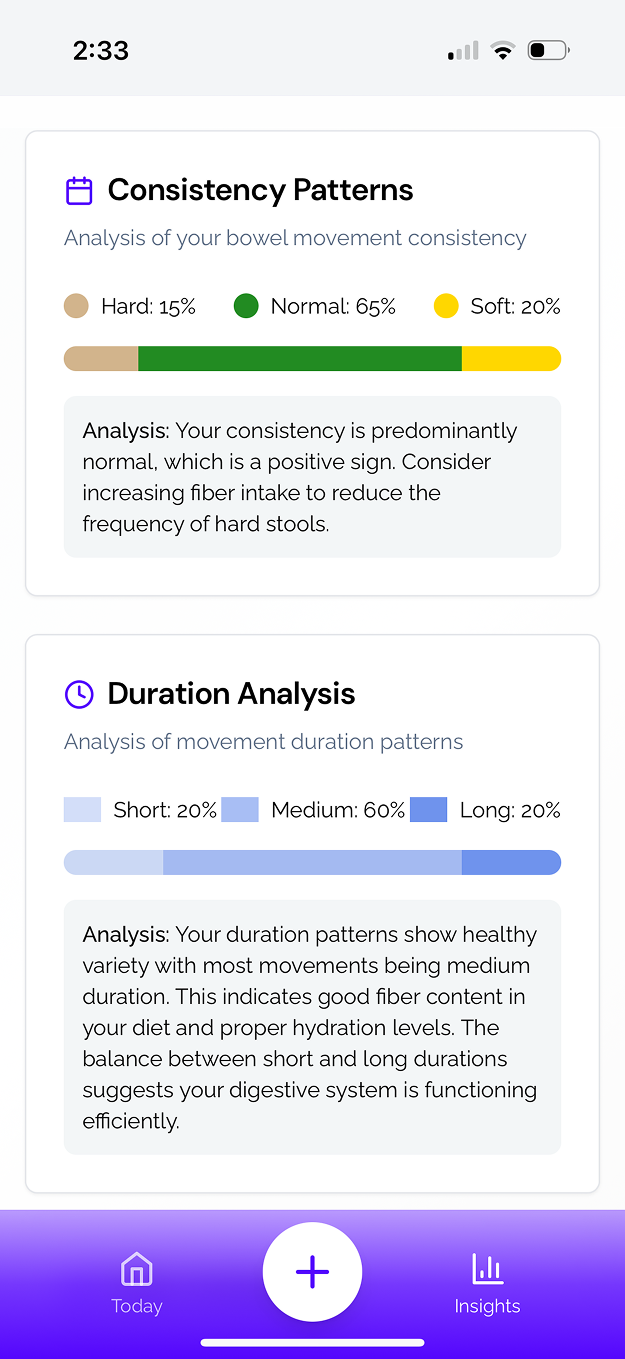
Volatile organic compound analysis adds a different kind of information: continuous, passive observation of the gases produced by microbial activity in stool. Rather than a single snapshot, it shows movement over time, which can help you and your clinician notice how your system responds to a dietary change or a period of stress.
It is worth being precise about the limits. VOC analysis is a pattern-recognition tool. It does not diagnose IBS, identify a cause, or determine treatment. For the broader naturopathic context this sits within, see our guide to IBS-focused digestive wellness through naturopathic gut microbiome support.
How the Pieces Fit Together
The following is written to show how the sequence works in practice. It is a constructed illustration, not a client, and no outcome here is attributed to any product.
Hypothetical scenario. Imagine someone in their mid-thirties with a physician-confirmed diagnosis of mixed-pattern IBS of several years standing. Coeliac disease and inflammatory bowel disease have been excluded. Bloating and alternating bowel habit are the dominant complaints, and symptoms track visibly with work pressure.
A structured sequence consistent with the evidence above might start with a supervised four-week low-FODMAP phase, since that is the window used in the Staudacher trial, with a dietitian planning reintroduction from the outset. Because that trial also showed bifidobacteria falling during restriction, a clinician might reasonably discuss a multi-strain probiotic alongside it, which is exactly the arm that restored those species.
Nervous system work runs in parallel from day one, because it is free and low-risk: ten minutes of slow breathing daily, consistent sleep and wake times. If abdominal pain remained the limiting symptom after the dietary phase, enteric-coated peppermint oil is the botanical with the best trial support, and the number needed to treat of 4 sets a realistic expectation: it helps a meaningful minority, not everyone, and reflux is the likely side effect. Berberine would only enter the conversation after a full medication review, given its CYP3A4 interactions.
Realistic timeline: the dietary phase alone occupies four weeks, reintroduction several more, and the whole sequence is judged at eight to twelve weeks rather than at week two.
What a Realistic Timeline Looks Like
People often arrive expecting either instant improvement or permanent limitation. Neither is typical.
Dietary and lifestyle changes usually take weeks before patterns become clear. Reintroduction phases take longer still, because a single trial of a single food tells you very little. Stress work compounds slowly. Setbacks during travel, illness or high-pressure periods are normal and are not evidence of failure.
What is not realistic, and what you should be sceptical of anywhere you read it, is a personal case narrative reporting a precise percentage of symptom reduction over a fixed number of weeks. Trial-level effect sizes such as a number needed to treat of 4 describe populations. They do not predict individuals, and an individual anecdote with a decimal point attached is not evidence.
When Conventional Care Is Essential
Several conditions present much like IBS, including inflammatory bowel disease, celiac disease, microscopic colitis and infection. That is why diagnosis belongs with a physician before any natural approach begins.
Seek prompt medical evaluation for blood in stool, unintended weight loss, fever, anemia, night-time symptoms that wake you, or new symptoms after age fifty. Continue any prescribed treatment unless the prescribing clinician advises otherwise. Naturopathic support is designed to work alongside that care.
Where This Is Heading
The most interesting development in IBS care is not a new supplement. It is the growing ability to observe an individual system over time rather than reasoning from population averages. Continuous monitoring, better dietary personalization and strain-level probiotic research all point in the same direction: fewer generic protocols, more individual pattern recognition.
For anyone living with IBS, that is a reasonable thing to be hopeful about. Not a cure, and not a promise, but a steadily better map.
References
- Sperber AD, Bangdiwala SI, Drossman DA, et al. Worldwide Prevalence and Burden of Functional Gastrointestinal Disorders, Results of Rome Foundation Global Study. Gastroenterology. 2021;160(1):99-114.e3. doi:10.1053/j.gastro.2020.04.014
- Li X, Yuan Q, Huang H, Wang L. Gut microbiota in irritable bowel syndrome: a narrative review of mechanisms and microbiome-based therapies. Frontiers in Immunology. 2025;16:1695321. doi:10.3389/fimmu.2025.1695321
- Cheng X, Ren C, Mei X, Jiang Y, Zhou Y. Gut microbiota and irritable bowel syndrome: status and prospect. Frontiers in Medicine. 2024;11:1429133. doi:10.3389/fmed.2024.1429133
- Staudacher HM, Lomer MCE, Farquharson FM, et al. A Diet Low in FODMAPs Reduces Symptoms in Patients With Irritable Bowel Syndrome and A Probiotic Restores Bifidobacterium Species: A Randomized Controlled Trial. Gastroenterology. 2017;153(4):936-947. doi:10.1053/j.gastro.2017.06.010
- Pouladi A, Arabpour E, Bahrami O, et al. Impacts of the Long-Term Low-FODMAP Diet in Patients With Irritable Bowel Syndrome: A Systematic Review and Meta-Analysis. Journal of Human Nutrition and Dietetics. 2025;38(4):e70105. doi:10.1111/jhn.70105
- Ingrosso MR, Ianiro G, Nee J, et al. Systematic review and meta-analysis: efficacy of peppermint oil in irritable bowel syndrome. Alimentary Pharmacology and Therapeutics. 2022;56(6):932-941. doi:10.1111/apt.17179
- Chen C, Tao C, Liu Z, et al. A Randomized Clinical Trial of Berberine Hydrochloride in Patients with Diarrhea-Predominant Irritable Bowel Syndrome. Phytotherapy Research. 2015;29(11):1822-1827. doi:10.1002/ptr.5475
- Wade U, Pascual-Figal DA, Rabbani F, et al. The Possible Synergistic Pharmacological Effect of an Oral Berberine and Curcumin Complementary Therapy Alleviates Symptoms of Irritable Bowel Syndrome. Nutrients. 2024;16(8):1204. doi:10.3390/nu16081204
- Bundy R, Walker AF, Middleton RW, Marakis G, Booth JC. Artichoke Leaf Extract Reduces Symptoms of Irritable Bowel Syndrome and Improves Quality of Life in Otherwise Healthy Volunteers Suffering from Concomitant Dyspepsia: A Subset Analysis. The Journal of Alternative and Complementary Medicine. 2004;10(4):667-669. doi:10.1089/acm.2004.10.667
- Ducrotte P, Sawant P, Jayanthi V. Clinical trial: Lactobacillus plantarum 299v (DSM 9843) improves symptoms of irritable bowel syndrome. World Journal of Gastroenterology. 2012;18(30):4012-4018. doi:10.3748/wjg.v18.i30.4012
- Hawrelak JA, Wohlmuth H, Pattinson M, et al. Western herbal medicines in the treatment of irritable bowel syndrome: A systematic review and meta-analysis. Complementary Therapies in Medicine. 2020;48:102233. doi:10.1016/j.ctim.2019.102233
- Lopresti AL, Smith SJ, Metse AP, Drummond PD. A randomized, double-blind, placebo-controlled trial investigating the effects of an Ocimum tenuiflorum (Holy Basil) extract on stress, mood, and sleep in adults experiencing stress. Frontiers in Nutrition. 2022;9:965130. doi:10.3389/fnut.2022.965130
- Yassine F, Najm A, Bilen M. The role of probiotics, prebiotics, and synbiotics in the treatment of inflammatory bowel diseases: an overview of recent clinical trials. Frontiers in Systems Biology. 2025;5:1561047. doi:10.3389/fsysb.2025.1561047
- Mou J, Xu L, Luo Y, et al. Assessing the Efficacy of Functional Food as Treatment for Irritable Bowel Syndrome with Constipation: A Systematic Review and Network Meta-Analysis. Nutrition Reviews. 2025;84(8):1590-1599. doi:10.1093/nutrit/nuaf204
- Thaiss CA, Zeevi D, Levy M, et al. Transkingdom Control of Microbiota Diurnal Oscillations Promotes Metabolic Homeostasis. Cell. 2014;159(3):514-529. doi:10.1016/j.cell.2014.09.048
Frequently Asked Questions
Can naturopathic medicine cure IBS?
No approach cures irritable bowel syndrome, and any source promising a cure should be treated with caution. IBS is a clinician-diagnosed condition managed over time. Naturopathic care focuses on identifying individual triggers, supporting the gut environment and reducing symptom burden, ideally alongside the gastroenterologist or physician who made the diagnosis.
What is naturopathic gut microbiome restoration for IBS?
It is an approach that targets the wider gut environment rather than individual symptoms. In practice that usually means personalized dietary work, fiber and prebiotic strategy, stress and sleep regulation, and clinician-guided botanical or probiotic support. The aim is a more resilient microbial ecosystem, not a quick fix.
Should I stay on a low-FODMAP diet long term?
Most evidence supports low-FODMAP as a short, structured phase followed by systematic reintroduction. In a randomized trial of 104 patients, four weeks of low-FODMAP eating reduced symptoms but also significantly reduced Bifidobacterium species, which a co-administered probiotic restored. A 2025 meta-analysis of long-term use flagged nutritional adequacy and diversity as the main concerns. Work with a dietitian.
Do probiotics help IBS symptoms?
Results are strain-specific rather than category-wide. In a trial of 214 patients, Lactobacillus plantarum 299v taken daily for four weeks lowered pain severity and frequency, with 78.1 percent rating the response good or excellent versus 8.1 percent on placebo. Generic multi-strain products often show little effect. A clinician who can match strain to presentation is more useful than a shelf recommendation.
How does VOC analysis help with IBS pattern tracking?
Volatile organic compound analysis measures gases produced by gut microbial activity in stool, which can reveal how your system responds to specific foods or changes over time. That makes it a pattern-recognition tool for you and your clinician. It does not diagnose IBS, identify a cause or replace medical testing.
What should I do before trying herbs for IBS?
Get the diagnosis confirmed first, because several conditions mimic IBS, including inflammatory bowel disease and celiac disease. Then review any botanical with a licensed clinician, particularly berberine-containing herbs, concentrated oils and adaptogens, which can interact with medications and are not appropriate for everyone.
Is berberine safe to take for IBS?
It has trial evidence and real interaction risks. A randomized placebo-controlled trial gave 400 mg daily, as 200 mg twice daily, for eight weeks and found reductions in diarrhoea frequency, abdominal pain and urgency in IBS-D. But berberine inhibits CYP3A4 and P-glycoprotein, raising levels of many common medications, adds to the glucose-lowering effect of metformin, and is not appropriate in pregnancy or for neonates. Clinician supervision is not optional.
SNIFR is designed to provide insights about gut health patterns, not to diagnose or treat medical conditions. Individual results may vary as gut health is influenced by numerous factors including diet, stress, sleep, and genetics. SNIFR is currently in development, and features described may evolve before commercial release.
Other Posts



Be first to try SNIFR. Beta coming soon.
Join our waitlist to get notified when the app launches. Start understanding your gut health sooner.