
Medicinal Mushrooms and Gut Microbiome: A Complete Guide
Species-level research and the amounts used in trials for turkey tail, reishi, chaga and shiitake, plus beta-glucan quality, interactions and the chaga kidney caution
The reaction I usually get when mushrooms come up in a consultation is a laugh. Mushrooms? Like on pizza?
Fair enough. But the relationship between humans and medicinal fungi runs considerably deeper than the current wellness trend suggests, and the mechanism by which they influence the gut is one of the more elegant stories in this field.
A word on framing before we start. This article describes how mushroom polysaccharides interact with the gut microbiome. It does not describe treatment for any disease, and medicinal mushrooms should not be used as treatment for one. Where a species has been studied in humans, the trial design and the amounts used are named.
A Long History
The earliest documented use of medicinal mushrooms appears in Traditional Chinese Medicine, with references going back well over two thousand years. The Lingzhi mushroom, known in Japanese tradition as reishi, appears in Han Dynasty poetry as a symbol of longevity. By around 1000 AD, shiitake cultivation had been standardized, making it the first widely cultivated medicinal mushroom. Li Shizhen sixteenth-century Compendium of Materia Medica documented multiple species and their applications.
Ayurvedic texts classified mushrooms by their effect on constitutional patterns rather than treating them as universal remedies. Japanese kampo medicine synthesized Chinese and indigenous approaches, and twentieth-century Japanese researchers isolated compounds including lentinan from shiitake and polysaccharide krestin from turkey tail.
The through-line across traditions is that there is no single best mushroom for everyone.
The Prebiotic Mechanism
Beta-Glucans
Beta-glucans are complex polysaccharides made of glucose chains linked through specific bonds. What makes mushroom beta-glucans distinctive is their structure. As a 2021 review in Nutrients sets out, mushroom cell wall beta-glucans carry both beta-1,3 and beta-1,6 linkages, the latter producing the branching architecture responsible for their biological activity. Cereal beta-glucans, by contrast, have no 1,6 linkages and no branching structure, which is why oat and mushroom beta-glucans are not interchangeable (Cerletti, Esposito and Iacoviello, 2021).
That branched structure resists human digestive enzymes, and the indigestibility is the point. Because these polysaccharides are not absorbed in the small intestine, they arrive in the colon intact, where resident bacteria ferment them. Fermentation generates short-chain fatty acids, particularly butyrate, which fuel colonocytes and support barrier function.
Laboratory work supports the selective prebiotic claim. A study screening polysaccharides from 53 wild-growing mushroom species tested their ability to stimulate the growth of Lactobacillus acidophilus and two clinical strains of Lactobacillus rhamnosus, and assessed digestibility by exposing the polysaccharide fractions to simulated gastric conditions. Several fractions showed clear growth-promoting activity and resistance to digestion (Nowak et al., European Journal of Nutrition, 2018). That is an in vitro screen across 53 species, not a clinical outcome, and it should be read as mechanistic support rather than evidence of benefit.
Quality Determines Whether Any of This Applies
Not all mushroom supplements deliver comparable beta-glucan content, and this is the single most practical thing to understand before spending money.
The clearest peer-reviewed demonstration comes from a 2025 analytical study that compared wildcrafted chaga canker against North American chaga dietary supplements, including products made from mycelium fermented on grain. Using high-performance thin-layer chromatography, liquid chromatography with mass spectrometry, NMR fingerprinting, UV-Vis spectrophotometry and iodine-starch assays, the authors found triterpenoids including inotodiol and trametenolic acid and phenolics such as osmundacetone in authentic canker, and melanin absorbance at 500 nm that distinguished it from fermented grain products. Beta-glucan quantification and iodine-starch assays confirmed a starch-rich composition in the fermented grain products and the absence of that starch in authentic chaga canker (Windsor et al., International Journal of Molecular Sciences, 2025).
Translated: a substantial part of what is sold as chaga in North America is grain with fungal mycelium grown on it, and the analytical signature is starch rather than fungal polysaccharide. Since beta-glucans drive the prebiotic effect, that is not a minor labeling distinction. Widely circulated figures putting fruiting body beta-glucan content at 20 to 30 percent against under 5 percent for grain-grown mycelium come from industry laboratory white papers rather than peer-reviewed publications, so this article does not state them as fact; the direction of the difference is well supported, the exact percentages are not.
It is worth saying plainly: mushroom supplements are not regulated the way medicines are. They are not reviewed for efficacy before sale, independent analytical testing has repeatedly found products whose contents differ from their labels, and potency varies widely between brands and batches. Look for fruiting body sourcing, documented beta-glucan or polysaccharide content, and a third-party certificate of analysis covering identity, potency, heavy metals and microbial safety. Mushrooms accumulate heavy metals from their growing medium, which makes that testing more than a formality.
The Mycobiome
Most microbiome conversation focuses on bacteria, which leaves out a genuinely interesting piece. The mycobiome is the fungal community living in your digestive tract. Fungi are fewer in number than bacteria but structurally and metabolically more complex, and humans host a considerable range of fungal species.
These are resident members of the ecosystem, not invaders. Research describes roles in intestinal barrier regulation, immune modulation, shaping bacterial community assembly and generating metabolites that influence inflammation.
This reframes what mushroom therapy is doing. It is not adding new organisms the way a bacterial probiotic attempts to. It is providing substrate to communities that already live there.
The Main Species
Turkey Tail (Trametes versicolor)
Turkey tail has the most direct human research on gut microbiome effects. It contains two beta-glucan complexes, polysaccharide krestin and polysaccharide peptide, that appear to be specifically prebiotic to Lactobacillus and Bifidobacterium species.
The key study is a randomized clinical trial published in Gut Microbes. Twenty-four healthy volunteers were randomized to receive polysaccharopeptide from Trametes versicolor, amoxicillin, or no treatment. Twenty-two of the 24 completed the protocol. Stool specimens were analyzed on seven occasions over 8 weeks in the active treatment groups and on three occasions in controls. Polysaccharopeptide produced clear and consistent microbiome changes consistent with prebiotic activity. Amoxicillin caused substantial compositional change, most notably an increase in Escherichia and Shigella, and those changes persisted to the end of the study, 42 days after the antibiotic course finished (Pallav et al., 2014).
Two honest caveats. Twenty-four participants is a small trial, and the authors specifically noted that baseline microbiomes tended to remain stable and to overshadow the treatment effects. This is a meaningful finding about prebiotic support, not evidence of antimicrobial treatment or of clinical benefit.
Turkey tail is relatively neutral across constitutional patterns and combines well with culinary preparation, often brewed as a strong tea alongside ginger or cinnamon.
Reishi (Ganoderma lucidum)
Historically reserved as a tonic for chronic imbalance rather than acute conditions. A 2024 review in Frontiers in Microbiology covering Ganoderma lucidum and its active components in relation to gut flora describes fermentation and animal-model work in which reishi polysaccharides selectively supported several beneficial bacterial families while suppressing Enterobacteriaceae, alongside effects on intestinal barrier markers (Qin et al., 2024). Most of that evidence base is preclinical; controlled human trials of reishi with microbiome endpoints are lacking.
Important cautions: reishi contains compounds with anticoagulant-like activity and should be avoided or used only under supervision by anyone taking blood thinners, and discontinued well before surgery with your surgeon's input. People with histamine intolerance may react poorly.
Lion Mane (Hericium erinaceus)
Contains hericenones and erinacines, compounds studied for their effect on nerve growth factor synthesis. Much of this work is preclinical or in animal models, and human evidence remains limited, so claims about cognition should be read cautiously.
Its relevance here is the gut-brain axis. Alongside possible effects on enteric nervous system signaling, its polysaccharides act as prebiotics like other mushroom species. Traditional use also emphasized support for the stomach lining, and preclinical work suggests mechanisms involving mucus production and epithelial regeneration.
People with tree nut allergies should note that lion mane is sometimes grown on similar substrates, so cross-contamination is possible.
Chaga (Inonotus obliquus)
Grows on birch trees and looks more like burnt bark than a conventional mushroom. Contains polysaccharides, triterpenoids, polyphenols and melanin, a combination confirmed analytically in authentic canker by Windsor and colleagues in 2025. Research emphasizes intestinal barrier support and antioxidant activity, with some evidence for prebiotic effects and for inhibition of certain pathogenic bacteria.
Chaga carries the most serious documented safety issue of the species discussed here, and it is worth being specific. Chaga is high in oxalate, and oxalate nephropathy has been reported in the medical literature. In one case, a 72-year-old woman who had taken chaga mushroom powder at four to five teaspoons per day for six months developed declining renal function requiring haemodialysis, with renal biopsy showing oxalate deposition (Kikuchi et al., Clinical Nephrology, 2014). A later case report described chaga-induced oxalate nephropathy presenting clinically as nephrotic syndrome (Kwon et al., Medicine, 2022). Anyone with kidney disease, a history of kidney stones, or reduced renal function should avoid chaga entirely, and nobody should be taking it at the quantities in those case reports. Like reishi, chaga also has anticoagulant-like properties and interacts with blood thinners. People with birch allergy may cross-react.
Maitake (Grifola frondosa)
Its polysaccharide fractions have been studied for immune activation, including effects on natural killer cells and macrophages. It also acts as a prebiotic, and animal work in diabetic models has examined effects on microbiota alongside glucose regulation, though human evidence for metabolic effects remains limited.
Because maitake is more immune-activating than immune-modulating, it warrants particular caution in autoimmune conditions and for anyone taking immunosuppressant medication. That includes transplant medication such as tacrolimus, ciclosporin and mycophenolate, and several biologic therapies. That is a clinician conversation, not a self-assessment.
Shiitake (Lentinula edodes)
The bridge between culinary and medicinal use. Its beta-glucan lentinan shows antimicrobial activity in laboratory studies, though translation to clinical effect is limited. The clearer effect is prebiotic, supporting beneficial bacteria and short-chain fatty acid production, with some evidence for barrier support.
There is one human trial worth naming for scale. In a randomized, placebo-controlled, double-blind study, 63 healthy adults took 1 to 2 mL per day of a shiitake mycelial beta-glucan preparation, delivering 1 to 2 mg of beta-glucan, or placebo for four weeks, with well-being questionnaires as the outcome (Aldwinckle and Kristiansen, International Journal of Medicinal Mushrooms, 2020). Note the quantity: one to two milligrams. That is orders of magnitude below what a gram-scale extract capsule delivers, which is a useful reminder that dose ranges in this field are not standardized in any meaningful way.
Shiitake also contains eritadenine, studied for effects on cholesterol synthesis. Because it is widely available as food, it is the easiest species to include regularly.
Note that shiitake can trigger a distinctive flagellate skin reaction in some people when eaten raw or undercooked. Cook it properly.
| Species | Strongest available human or laboratory evidence | What was given | Principal interaction or contraindication |
|---|---|---|---|
| Turkey tail (Trametes versicolor) | Randomized clinical trial, 24 healthy volunteers, 22 completed, 7 stool samplings over 8 weeks (Pallav 2014) | Polysaccharopeptide versus amoxicillin versus no treatment | Mild anticoagulant-like activity; discuss with clinician if on blood thinners |
| Reishi (Ganoderma lucidum) | Review of fermentation and animal-model work on gut flora (Qin 2024); no controlled human microbiome trial | Preclinical models | Anticoagulant-like activity; stop before surgery; histamine intolerance |
| Chaga (Inonotus obliquus) | Analytical authentication study distinguishing canker from grain products (Windsor 2025); case reports of harm | Case reports involved 4 to 5 teaspoons of powder daily for 6 months | High oxalate content, oxalate nephropathy reported including dialysis-requiring renal failure; avoid with kidney disease or stones; anticoagulants; birch allergy |
| Lion mane (Hericium erinaceus) | Largely preclinical nerve growth factor and gastric mucosal work | Animal and in vitro models | Possible tree nut substrate cross-contamination |
| Maitake (Grifola frondosa) | Immune activation and animal metabolic studies; limited human data | Preclinical models | Immune-activating: caution with immunosuppressants including transplant medication and biologics, and in autoimmune disease |
| Shiitake (Lentinula edodes) | Randomized placebo-controlled double-blind, 63 healthy adults, 4 weeks (Aldwinckle 2020) | 1 to 2 mL daily delivering 1 to 2 mg beta-glucan | Flagellate dermatitis from raw or undercooked shiitake; cook thoroughly |
| Mixed wild species (in vitro) | Screen of polysaccharides from 53 wild mushroom species for Lactobacillus growth promotion and digestibility (Nowak 2018) | Laboratory fermentation, not human dosing | Mechanistic support only, not evidence of clinical benefit |
What that table makes obvious is how thin the human dosing literature is compared with the confidence of the marketing. The amounts named describe what specific trials gave participants under supervision. They are not recommendations, and there is no established therapeutic dose for any of these species.
Matching Mushrooms to Patterns
Traditional practice matched species to constitutional pattern, and that framework remains a reasonable starting hypothesis. It is a historical model, not a diagnostic system.
- Nervous, irregular patterns often do well with grounding, nourishing species such as reishi, shiitake and maitake, typically starting low.
- Inflammatory patterns often prefer turkey tail and reishi, with chaga considered for barrier support where kidney function is normal, and generally do better with water extracts than alcohol preparations.
- Sluggish patterns often suit more activating choices such as maitake and shiitake, frequently combined with warming culinary spices.
Traditional practice also distinguishes baseline constitution from current state of imbalance, and treats the current state first. In practical terms: work with what your system is doing now, not only with what it usually does.
Practical Ways to Use Them
Mushroom Broth
The simplest preparation, and the one with the longest history. Combine dried shiitake, turkey tail and a smaller amount of reishi or chaga with fresh ginger, a cinnamon stick and water. Simmer for around an hour, strain and drink. It improves palatability, creates a warming ritual and is easy to adapt.
Culinary Mushrooms
The most underrated approach. Fresh shiitake, oyster or maitake in ordinary cooking provides baseline prebiotic and nutritional support with no supplement required. Several servings a week is a reasonable foundation, and this route sidesteps the entire supplement quality problem.
Powders, Capsules and Tinctures
Convenient and consistent when the sourcing is good. Amount and duration should be set by a licensed clinician who knows your health history and medication list, particularly given the interaction profile of several of these species and the absence of any standardized therapeutic dose.
How a Cautious Approach Looks
The following is a constructed illustration, not a client. No outcome here is attributed to any product.
Hypothetical scenario. Imagine someone recovering from a course of antibiotics for a chest infection, with digestion that has not settled since. They read about mushroom supplements and are considering a multi-species blend that includes chaga. They also take apixaban following an episode of atrial fibrillation.
The evidence-informed reading has two parts. The plausible mechanism is real: the Pallav trial showed amoxicillin producing compositional change, including a rise in Escherichia and Shigella, that persisted 42 days after the course ended, and it showed turkey tail polysaccharopeptide producing prebiotic-consistent change in the same 8-week window. Prebiotic support after antibiotics is a coherent idea.
The safety reading stops the plan as designed. Reishi and chaga both have anticoagulant-like activity and this person is on a direct oral anticoagulant, which makes a blend containing them a clinician decision at minimum. Chaga separately carries oxalate nephropathy case reports, including one requiring dialysis after months of high-dose powder. And if the product is a North American chaga supplement, the Windsor analysis suggests a real chance it is fermented grain rather than fungal material.
The lower-risk route is the boring one: culinary shiitake and maitake in cooking several times a week, fiber and fermented food as the foundation, and any concentrated extract reviewed by the clinician managing the anticoagulation before anything is purchased.
Safety, Interactions and Who Should Not Use These
Medicinal mushrooms have a reasonable safety record and are not risk-free. The situations that require clinician involvement:
- Anticoagulant and antiplatelet medication. Reishi, chaga and to a lesser extent turkey tail have anticoagulant-like activity. Do not combine without supervision, and discuss timing before any surgical procedure.
- Immunosuppressant medication. Immune-active mushrooms, maitake in particular, may work against the intended effect of these drugs. This includes transplant medications and several biologics.
- Autoimmune conditions. The relationship is complex and individual. Get personal guidance rather than following general recommendations.
- Histamine intolerance. Some mushrooms contain histamine or affect histamine-producing bacterial populations.
- Pregnancy and breastfeeding. Safety data for concentrated supplements is limited. Culinary consumption is a different matter, but therapeutic supplementation is generally deferred.
- Mushroom or mold allergy. Avoid supplements entirely, and note possible cross-reactivity with mold sensitivity.
- Kidney disease or kidney stones. Chaga is high in oxalate and has been linked in published case reports to oxalate nephropathy, in one instance requiring haemodialysis after six months of high-dose powder.
If you are unsure whether something on this list applies to you, that uncertainty is itself a reason to ask a clinician first.
Watching What Changes
Prebiotic effects are gradual, which makes them easy to abandon before anything is visible. The Pallav trial sampled stool seven times across 8 weeks to resolve its effects, which gives a sense of the observation density required to see a change of that size.
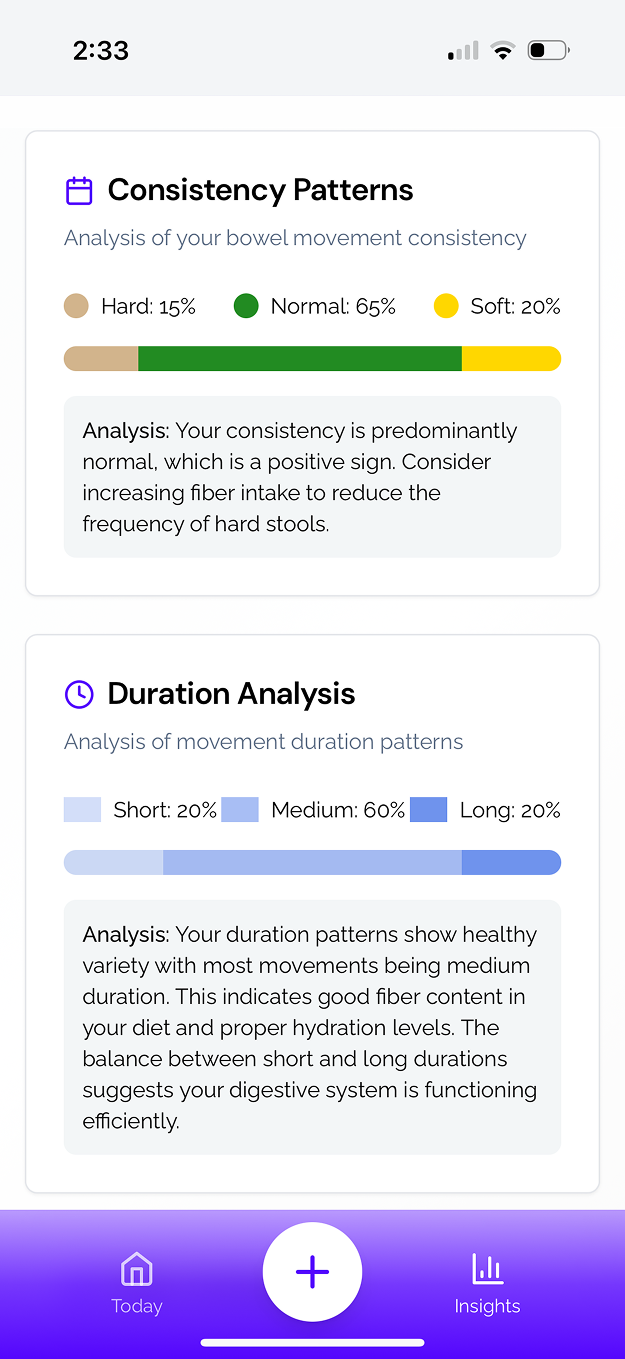
Passive at-home monitoring of the volatile organic compounds produced by gut microbial activity in stool can show how your patterns move over weeks. Because different bacteria produce different volatile profiles, sustained dietary change often registers as a shift in those patterns.
What that means practically: you can see whether your patterns are moving, which is useful when subjective change is slow. What it does not mean is confirmation that a particular product caused a particular effect, or any assessment of disease. Monitoring supports the conversation with your clinician; it does not replace it. For the wider framework this fits inside, see our guide to IBS-focused digestive wellness through naturopathic gut microbiome support.
If nothing has shifted after a couple of months of consistent use, the useful questions are whether the product quality is verifiable, whether the species suits your situation, and whether something else in the picture needs attention first. Escalating the amount on your own is not the answer, particularly with chaga.
Mushrooms as One Part of a Larger Foundation
Medicinal mushrooms work best as one element of a broader approach. They are prebiotics, and prebiotics cannot compensate for an otherwise poor diet.
The rest of the foundation matters just as much: overall dietary quality and plant variety, traditional fermented foods, seasonal eating, stress resilience and nervous system support, and adequate sleep.
That is the honest version. Not a cure for anything, but a genuinely interesting way to feed an ecosystem that has been feeding on fungi for a very long time.
References
- Cerletti C, Esposito S, Iacoviello L. Edible Mushrooms and Beta-Glucans: Impact on Human Health. Nutrients. 2021;13(7):2195. doi:10.3390/nu13072195
- Pallav K, Dowd SE, Villafuerte J, et al. Effects of polysaccharopeptide from Trametes versicolor and amoxicillin on the gut microbiome of healthy volunteers: a randomized clinical trial. Gut Microbes. 2014;5(4):458-467. doi:10.4161/gmic.29558
- Nowak R, Nowacka-Jechalke N, Juda M, Malm A. The preliminary study of prebiotic potential of Polish wild mushroom polysaccharides: the stimulation effect on Lactobacillus strains growth. European Journal of Nutrition. 2018;57(4):1511-1521. doi:10.1007/s00394-017-1436-9
- Qin X, Fang Z, Zhang J, Zhao W, Zheng N. Regulatory effect of Ganoderma lucidum and its active components on gut flora in diseases. Frontiers in Microbiology. 2024;15:1362479. doi:10.3389/fmicb.2024.1362479
- Windsor C, Kreynes AE, Chilton JS, Chioffi WA, Krishnamurthy A, Ishii M. Comparative Study of Chaga (Inonotus obliquus) Dietary Supplements Using Complementary Analytical Techniques. International Journal of Molecular Sciences. 2025;26(7):2970. doi:10.3390/ijms26072970
- Kikuchi Y, Seta K, Ogawa Y, et al. Chaga mushroom-induced oxalate nephropathy. Clinical Nephrology. 2014;81(6):440-444. doi:10.5414/CN107655
- Kwon O, Kim Y, Paek JH, et al. Chaga mushroom-induced oxalate nephropathy that clinically manifested as nephrotic syndrome: A case report. Medicine. 2022;101(10):e28997. doi:10.1097/MD.0000000000028997
- Aldwinckle J, Kristiansen B. A Quality-of-Life Study in Healthy Adults Supplemented with Lentinex Beta-Glucan of Shiitake Culinary-Medicinal Mushroom, Lentinus edodes (Agaricomycetes). International Journal of Medicinal Mushrooms. 2020;22(5):407-415. doi:10.1615/IntJMedMushrooms.2020034208
- Safarchi A, Al-Qadami G, Tran CD, Conlon M. Understanding dysbiosis and resilience in the human gut microbiome: biomarkers, interventions, and challenges. Frontiers in Microbiology. 2025;16:1559521. doi:10.3389/fmicb.2025.1559521
Frequently Asked Questions
Do medicinal mushrooms help gut health?
The most supported mechanism is prebiotic. Mushroom beta-glucans carry beta-1,3 and beta-1,6 linkages that human enzymes cannot break, so they reach the colon intact and are fermented into short-chain fatty acids. A randomized trial in 24 healthy volunteers found turkey tail polysaccharopeptide produced consistent prebiotic-type microbiome change over 8 weeks. This is support for the ecosystem, not treatment for any disease.
Are mushroom supplements regulated?
Not in the way medicines are. A 2025 analytical study using chromatography, mass spectrometry and NMR found that North American chaga supplements made from mycelium fermented on grain showed a starch-rich signature absent from authentic chaga canker. Look for fruiting body sourcing, documented beta-glucan content and a third-party certificate of analysis covering identity, potency, heavy metals and microbial safety.
What is the difference between fruiting body and mycelium mushroom supplements?
The fruiting body is the mushroom itself and contains substantially higher fungal beta-glucan content. Mycelium grown on grain carries starch from the growing medium, which analytical work has confirmed directly by iodine-starch assay. Since beta-glucans drive the prebiotic effect, that difference matters more than most product marketing suggests. Widely quoted percentage figures come from industry laboratories rather than peer-reviewed publications.
Can I take medicinal mushrooms with my medication?
Ask your clinician first. Reishi, chaga and to a lesser extent turkey tail contain compounds with anticoagulant-like activity, which matters if you take blood thinners or have surgery planned. Immune-active mushrooms, maitake in particular, warrant caution with immunosuppressant medication including transplant drugs and biologics, and in autoimmune conditions.
Which medicinal mushroom is best for gut microbiome support?
Turkey tail has the most direct human research. A randomized trial of 24 healthy volunteers, with seven stool samplings over 8 weeks, found polysaccharopeptide produced prebiotic-consistent change while amoxicillin produced disruption still present 42 days after the course ended. Reishi, chaga, maitake, lion's mane and shiitake each have different profiles, largely preclinical, and the right choice depends on your situation and a clinician's input.
Who should avoid medicinal mushroom supplements?
Anyone taking anticoagulants or immunosuppressants without clinician supervision, people with mushroom or mold allergies, those with histamine intolerance, and anyone pregnant or breastfeeding, since safety data in pregnancy is limited. Anyone with kidney disease or a history of kidney stones should avoid chaga specifically, because of its oxalate content and published cases of oxalate nephropathy.
Is chaga safe to take?
Chaga carries the clearest documented harm among these species. It is high in oxalate, and case reports describe oxalate nephropathy, including a 72-year-old woman who required haemodialysis after taking four to five teaspoons of chaga powder daily for six months, and a later case presenting as nephrotic syndrome. Anyone with kidney disease, reduced renal function or a stone history should avoid it entirely, and nobody should take it at those quantities.
SNIFR is designed to provide insights about gut health patterns, not to diagnose or treat medical conditions. Individual results may vary as gut health is influenced by numerous factors including diet, stress, sleep, and genetics. SNIFR is currently in development, and features described may evolve before commercial release.
Other Posts
Be first to try SNIFR. Beta coming soon.
Join our waitlist to get notified when the app launches. Start understanding your gut health sooner.