
Constitutional Medicine and Personalized Digestive Wellness
The published Ayurvedic prakriti and microbiome research, what it can and cannot support, and how constitutional frameworks inform personalized digestive wellness

Someone arrives with a three-ring binder of test results, several elimination diets behind them, and symptoms that never quite matched the textbook profile they were handed. What often shifts things is not another test. It is a different question: what kind of system are we actually working with here.
That is what constitutional medicine offers. Not a diagnosis, but a framework for the clinical reality that one person gut-healing plan can be another person digestive disaster. There is now a small but real body of published research testing whether that framework corresponds to anything measurable, and this article reports what it found along with how much weight it can bear.
What Constitutional Medicine Is, and Is Not
Ayurvedic medicine has described constitutional patterns for thousands of years. The concept of prakriti, usually translated as nature or constitution, refers to a person underlying physiological pattern. Traditional Chinese Medicine expressed similar ideas in different language. Western naturopathy in the late nineteenth and early twentieth centuries also emphasized constitutional assessment.
It is important to be precise about the status of this framework. Constitutional typing is historical and philosophical context. It is not a validated diagnostic system, its assessment tools are still being evaluated, and it does not replace medical diagnosis. A 2025 critical review in Frontiers in Medicine examined the prakriti assessment instruments themselves and concluded that questionnaire validity, inter-rater reliability and cross-population applicability all remain open problems (Venkatesh et al., 2025). That is the honest starting point.
What the Microbiome Research Actually Found
Several published studies have asked whether people classified into Ayurvedic constitutional types show differing gut microbial signatures. The answer, cautiously, is that some differences have been reported. The studies are small, they cluster in a single geography, and they have not been replicated by independent groups outside India, which is exactly the level of confidence they should be given.
In a study of 272 healthy individuals, buccal and faecal metagenomes were compared across predominant constitutional types. Gut samples were dominated by Prevotella, Bacteroides and Dialister across all groups, and a core microbiome was shared by everyone. Against that shared background the authors reported constitution-specific signatures, including preferential presence of Paraprevotella and Christensenellaceae in vata-classified individuals (Shalini et al., Journal of Biosciences, 2021).
An earlier study of a genetically homogeneous rural western Indian cohort profiled the gut microbiome within three predominant constitutional groups using 16S rRNA sequencing. Bacteroidetes and Firmicutes were the major components across all groups in broadly similar proportions, but multiple core species showed differential abundance between types, with some signature taxa that differed by gender (Chauhan et al., Frontiers in Microbiology, 2018).
A third study examined the association between gut, oral and skin microbiomes and constitutional classification (Chaudhari et al., Journal of Biosciences, 2019). A 2020 commentary in the Journal of Ayurveda and Integrative Medicine reviewing this literature framed constitutional phenotype as a possible stratifier of the gut microbiome and explicitly called it a new frontier rather than a settled finding, noting the scarcity of evidence linking constitution to disease manifestation (Jnana et al., 2020).
Take these together and the fair summary is this. The research exists, it is published in peer-reviewed journals, and it reports statistically detectable differences in specific taxa between constitutional groups. The sample sizes range from tens to a few hundred, the cohorts are geographically narrow, the classification instruments are themselves unvalidated, and no independent replication outside that setting has been published. It is a genuine research direction. It is not established biology, and it is nowhere near a clinical test.
What the framework genuinely provides in the meantime is a language for something every clinician observes: people respond differently to identical interventions. That observation has far stronger evidence behind it. In a landmark study, week-long continuous glucose monitoring in an 800-person cohort captured responses to 46,898 meals and found high variability in the response to identical meals. A machine-learning algorithm integrating blood parameters, dietary habits, anthropometrics, physical activity and gut microbiota predicted personalized postprandial glycemic responses accurately, was validated in an independent 100-person cohort, and a blinded randomized dietary intervention based on it produced significantly lower postprandial responses (Zeevi et al., Cell, 2015). Universal dietary recommendations have limited utility. Constitutional thinking is one way of organizing that reality into a usable starting hypothesis; the modern equivalent is nutrigenomic and microbiomic stratification (Lagoumintzis and Patrinos, Human Genomics, 2023).
The Nervous Pattern
Characteristics
Classically called vata, this pattern is associated with qualities of air and movement: dynamism, creativity, sensitivity, a lighter frame, cooler extremities and variability across bodily functions.
Digestive Signature
Unpredictability is the consistent feature. Bowel habits shift day to day. Bloating worsens with stress or sensory overload. Appetite is inconsistent. Constipation may alternate with looser stools. Gas and cramping often accompany meals eaten quickly or while distracted.
This system is exquisitely sensitive to context. The same meal can be digested comfortably at a relaxed dinner and produce significant bloating when eaten at a desk under deadline pressure.
What Tends to Help
- Warm, well-cooked foods rather than raw and cold
- Generous healthy fats
- Consistent meal timing, ideally three meals rather than frequent grazing
- Bone broths, root vegetables, well-cooked grains and legumes
- Warm rather than iced beverages
- Smaller portions eaten slowly, without screens
Traditional botanical pairings for this pattern include ginger, fennel, slippery elm and ashwagandha. Culinary use of ginger and fennel is straightforward. Ashwagandha is the one that needs care. It has been studied at 300 mg of a high-concentration full-spectrum root extract taken twice daily for 60 days in a randomized, double-blind, placebo-controlled trial of 64 adults with chronic stress, which reported significant reductions on all stress-assessment scales and substantially lower serum cortisol against placebo (Chandrasekhar, Kapoor and Anishetty, Indian Journal of Psychological Medicine, 2012). That is the dose the research used, under supervision. Ashwagandha also interacts with thyroid medication and sedatives, is avoided in pregnancy and lactation, may not suit autoimmune conditions, and has been the subject of published case reports of liver injury. Bring it to a licensed clinician rather than self-prescribing.
On lifestyle: consistent sleep schedule, gentle movement such as walking, yoga or tai chi, grounding practices such as warm oil massage, and calm eating environments. Stress regulation is not an add-on here. It is the central intervention.
The Inflammatory Pattern
Characteristics
Classically pitta, this pattern carries qualities of heat and intensity: strong metabolic capacity, competitive drive, sharp focus, naturally warm body temperature.
Digestive Signature
Digestion is potent but overheats easily. Strong appetite, generally efficient digestion when conditions are good, a tendency toward loose stools or urgency, heartburn or reflux, inflammatory skin responses to food, and burning sensations.
The challenge is not weakness but excess. Spicy food, rushed meals or intense emotional load can produce genuine inflammation despite otherwise excellent digestive capacity.
What Tends to Help
- Cooling foods: leafy greens, cucumber, zucchini, mung beans
- Moderate rather than excessive protein, in lighter preparations
- Cooling herbs such as cilantro and coriander
- Cool rather than iced beverages
- Less heat, spice, alcohol and caffeine
- Meals eaten unhurried rather than while activated
Traditional pairings include turmeric, deglycyrrhizinated licorice, aloe and marshmallow root. Each carries real considerations, and the licorice distinction is the clearest example of why form matters. Whole-root licorice supplies glycyrrhizin, which inhibits 11-beta-hydroxysteroid dehydrogenase and can produce pseudohyperaldosteronism: sodium and water retention, potassium loss and raised blood pressure. Deglycyrrhizinated licorice, or DGL, has that constituent largely removed and does not carry the same risk, which is why traditional practice for mucosal support in this pattern favours it.
Aloe taken internally has laxative effects through anthraquinones and is inappropriate in inflammatory bowel disease, bowel obstruction, pregnancy and for anyone on potassium-depleting drugs. Concentrated turmeric affects platelet function and should be reviewed by a clinician for anyone on warfarin, direct oral anticoagulants or antiplatelet agents, or with gallstone disease or scheduled surgery. In a small placebo-controlled pilot in 14 healthy adults, curcumin with piperine was associated with an average 69 percent increase in observed bacterial species while placebo fell 15 percent, a striking figure from a very small study that has not been replicated at scale (Peterson et al., Journal of Evidence-Based Integrative Medicine, 2018).
Lifestyle-wise: regular sleep, cooling breath practices, swimming or walking rather than competitive training, and deliberate reduction in intensity.
The Sluggish Pattern
Characteristics
Classically kapha, this pattern carries earth and water qualities: a more substantial frame, steady emotions, resistance to rapid change and genuine physical robustness. That same stability can tip into stagnation.
Digestive Signature
Slow, methodical, easily congested. Constipation without urgency, heaviness after eating, slow transit, low natural appetite signal, eating from habit rather than hunger, and a general sense of metabolic slowdown.
What Tends to Help
- Warm, light foods rather than heavy and cold
- Cooking methods that add less fat: steaming, baking, boiling
- Bitter, pungent and astringent flavors
- Warming spices: ginger, black pepper, cinnamon, mustard seed
- Leafy greens, cruciferous vegetables, lighter grains and legumes
- Eating only when genuinely hungry
Traditional pairings include ginger, black pepper, cinnamon, cayenne and triphala, a classical three-fruit Ayurvedic formula with the longest history of use for bowel regularity. Reviews of triphala describe its role in improving stool frequency and consistency in functional gastrointestinal complaints, though the controlled trial base is small and much of the mechanistic work is preclinical (Gurjar et al., Fitoterapia, 2025). Triphala is a therapeutic preparation with laxative action and interaction potential, not a food. Cayenne can aggravate reflux and gastritis. Fiber and prebiotic strategy has better evidence for this pattern: a 2025 network meta-analysis of functional foods in constipation-predominant IBS ranked fiber and prebiotic interventions among the more effective options while noting substantial heterogeneity between trials (Mou et al., Nutrition Reviews, 2025). Dose and suitability are clinician decisions.
Lifestyle here runs the other direction from the nervous pattern: more vigorous movement, earlier waking, dry brushing, heat therapy, and stimulating rather than purely calming stress practices.
| Pattern | Digestive signature | Dietary emphasis | Traditional botanicals | Safety notes on those botanicals |
|---|---|---|---|---|
| Nervous (vata) | Irregular habit, stress-linked bloating, alternating stool, cramping | Warm cooked food, generous fats, consistent timing | Ginger, fennel, slippery elm, ashwagandha | Ashwagandha studied at 300 mg twice daily for 60 days (n=64); interacts with thyroid medication and sedatives, avoided in pregnancy, hepatotoxicity case reports |
| Inflammatory (pitta) | Strong appetite, loose stool or urgency, reflux, burning | Cooling foods, moderate protein, less spice and alcohol | Turmeric, deglycyrrhizinated licorice, aloe, marshmallow root | Whole-root licorice causes pseudohyperaldosteronism via glycyrrhizin, DGL does not; aloe is an anthraquinone laxative; concentrated turmeric interacts with anticoagulants |
| Sluggish (kapha) | Slow transit, heaviness after eating, low appetite signal | Lighter warm food, bitter and pungent flavors, less fat | Ginger, black pepper, cinnamon, cayenne, triphala | Triphala has laxative action and interaction potential; cayenne aggravates reflux and gastritis |
The doses named in that table describe what supervised trial participants received. They are not instructions.
Mixed and Complex Patterns
In practice, pure single-type presentations are less common than mixed ones. Many people carry nervous plus inflammatory tendencies, or inflammatory plus sluggish, and some show all three simultaneously.
For mixed patterns, the useful questions are situational:
- When you are stressed, do symptoms lean irregular and crampy, or urgent and inflammatory?
- When digestion is going well, which pattern is your baseline?
- Which foods or circumstances reliably shift you from one pattern to another?
- Which changes produce the largest improvement?
Traditional practice also distinguishes baseline constitution from current state of imbalance and treats the current state first. Complex presentations generally benefit from a responsive approach: emphasizing grounding support during anxious periods, cooling measures during inflammatory stretches, and activation during sluggish phases. This is exactly where working with a qualified practitioner rather than a self-administered protocol pays off.
Where Monitoring Fits
This is the point where it is worth being unusually careful about claims.
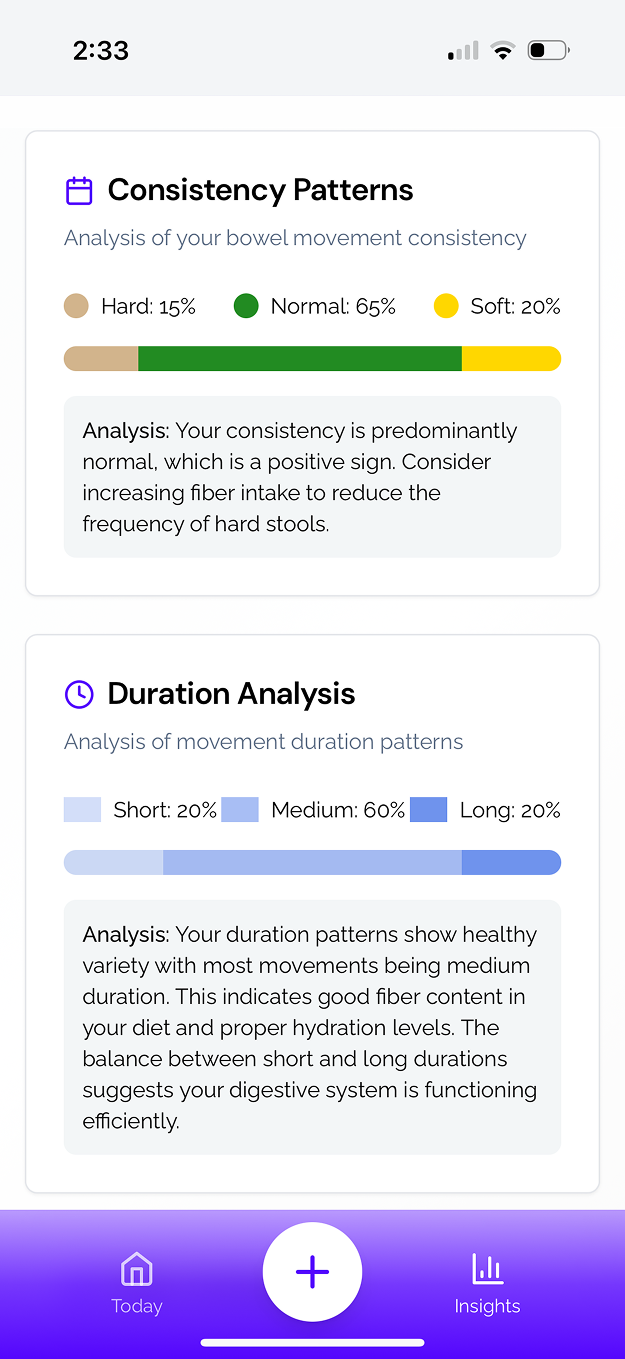
Passive at-home monitoring of the volatile organic compounds produced by gut microbial activity in stool provides one useful thing: a view of how your own patterns move over time. You can see whether a dietary change corresponds to a shift, whether a stressful period registers, whether things are trending in a consistent direction.
What it does not do is determine your constitutional type. SNIFR does not assign you to a category, does not diagnose any condition, and does not tell you which traditional framework you belong in. The published prakriti and microbiome studies report group-level differences in specific taxa across cohorts of dozens to a few hundred people, using classification made by trained practitioners. Nothing in that literature supports reading a constitution out of a sample, and any product claiming to do so is overstating what the technology can do.
Used honestly, monitoring is a feedback loop for the changes you and your clinician decide to make. That is genuinely valuable, and it is enough. For the wider naturopathic framework, see our guide to IBS-focused digestive wellness through naturopathic gut microbiome support.
How Personalization Works in Practice
The following is a constructed illustration and not a client. No outcome here is attributed to any product.
Hypothetical scenario. Imagine two people with the same physician-confirmed diagnosis of IBS. One has irregular bowel habit, cold hands, bloating that tracks precisely with deadline pressure, and does badly on raw salads. The other has a strong appetite, urgency, reflux and inflammatory skin reactions to food, and does badly on spice and alcohol.
Handed the same generic gut health advice, one of them will predictably do worse. The Zeevi data explains why in modern terms: across 800 people and 46,898 meals, responses to identical foods varied so widely that universal recommendations had limited utility, and the variation was predictable from individual data including microbiota composition.
Constitutional thinking gives a clinician a starting hypothesis for each: warm cooked food and rigid meal timing with stress regulation as the central lever for the first; cooling, less-spiced food with a reduction in intensity for the second. That hypothesis is then tested by observation over weeks, not confirmed by a test. If either wanted a botanical, the safety profile would decide as much as the pattern: ashwagandha would need a thyroid and medication review, and anything containing whole-root licorice would need a blood pressure check.
Exploring Your Own Pattern
Working with a practitioner trained in the tradition is ideal, but you can begin noticing your own tendencies.
Nervous indicators: irregular bowel habits, constipation with difficulty initiating, bloating and cramping with stress, cold hands and feet, sensitive digestion, irregular sleep, anxiety tendencies, lean frame.
Inflammatory indicators: strong appetite with irritability when hungry, loose stools, heartburn or burning, inflammatory skin reactions, warm body temperature and dislike of heat, intense focus, sharp critical thinking.
Sluggish indicators: slow bowel function without urgency, heaviness after eating, low appetite signal, tendency to gain weight, calm demeanor, difficulty waking, mucus in stool.
Most people recognize themselves across categories. Note which resonate most strongly and whether the pattern shifts seasonally or with circumstance.
When to Seek Professional Guidance
Self-assessment has limits. Seek professional support if you have severe or persistent digestive symptoms, which require evaluation to rule out structural or serious conditions; a complex medical history, multiple diagnoses or medications; uncertainty about whether symptoms reflect a functional imbalance or something requiring investigation; no meaningful improvement after eight to twelve weeks of self-directed change; pregnancy, nursing or pediatric concerns; or suspected food sensitivities or allergies.
Constitutional frameworks are a way of personalizing care. They are not a way of avoiding it.
The Value of Constitutional Awareness
What strikes me most in practice is the relief people feel when they understand their own pattern. The shame dissolves. The sense of personal failure recedes. An approach that previously felt like restriction starts to feel like alignment.
Constitutional medicine makes a simple argument: there is no single optimal diet, and no universal protocol. There is your particular system, your specific needs, and the ongoing work of figuring out what actually suits you. That argument is now supported by a large body of personalized nutrition research, whatever one concludes about the traditional typology itself.
That is not a mystical claim. It is the lived experience of paying close attention to one body, adjusting deliberately, and observing what changes.
References
- Shalini TV, Jnana A, Sriranjini SJ, Tanwar AS, Brand A. Exploring the signature gut and oral microbiome in individuals of specific Ayurveda prakriti. Journal of Biosciences. 2021;46(3):54. doi:10.1007/s12038-021-00182-2
- Chaudhari D, Dhotre D, Agarwal D, et al. Understanding the association between the human gut, oral and skin microbiome and the Ayurvedic concept of prakriti. Journal of Biosciences. 2019;44(5):112. doi:10.1007/s12038-019-9939-6
- Chauhan NS, Pandey R, Mondal AK, Gupta S, Verma MK, et al. Western Indian Rural Gut Microbial Diversity in Extreme Prakriti Endo-Phenotypes Reveals Signature Microbes. Frontiers in Microbiology. 2018;9:118. doi:10.3389/fmicb.2018.00118
- Jnana A, Murali TS, Guruprasad KP, Satyamoorthy K. Prakriti phenotypes as a stratifier of gut microbiome: A new frontier in personalized medicine? Journal of Ayurveda and Integrative Medicine. 2020;11(3):360-365. doi:10.1016/j.jaim.2020.05.013
- Venkatesh A, Johansson L, Sivanandan PV, Gopakumar SP, Sankaranarayanan K, Kessler C. Prakriti (constitutional typology) in Ayurveda: a critical review of Prakriti assessment tools and their scientific validity. Frontiers in Medicine. 2025;12:1656249. doi:10.3389/fmed.2025.1656249
- Zeevi D, Korem T, Zmora N, et al. Personalized Nutrition by Prediction of Glycemic Responses. Cell. 2015;163(5):1079-1094. doi:10.1016/j.cell.2015.11.001
- Lagoumintzis G, Patrinos GP. Triangulating nutrigenomics, metabolomics and microbiomics toward personalized nutrition and healthy living. Human Genomics. 2023;17(1):109. doi:10.1186/s40246-023-00561-w
- Chandrasekhar K, Kapoor J, Anishetty S. A Prospective, Randomized Double-Blind, Placebo-Controlled Study of Safety and Efficacy of a High-Concentration Full-Spectrum Extract of Ashwagandha Root in Reducing Stress and Anxiety in Adults. Indian Journal of Psychological Medicine. 2012;34(3):255-262. doi:10.4103/0253-7176.106022
- Peterson CT, Vaughn AR, Sharma V, et al. Effects of Turmeric and Curcumin Dietary Supplementation on Human Gut Microbiota: A Double-Blind, Randomized, Placebo-Controlled Pilot Study. Journal of Evidence-Based Integrative Medicine. 2018;23:2515690X18790725. doi:10.1177/2515690X18790725
- Gurjar S, Taliyan R, Kumari S, Kesharwani P. The interplay of triphala and its constituents with respect to metabolic disorders and gut-microbiome. Fitoterapia. 2025;184:106642. doi:10.1016/j.fitote.2025.106642
- Mou J, Xu L, Luo Y, et al. Assessing the Efficacy of Functional Food as Treatment for Irritable Bowel Syndrome with Constipation: A Systematic Review and Network Meta-Analysis. Nutrition Reviews. 2025;84(8):1590-1599. doi:10.1093/nutrit/nuaf204
- Cheng X, Ren C, Mei X, Jiang Y, Zhou Y. Gut microbiota and irritable bowel syndrome: status and prospect. Frontiers in Medicine. 2024;11:1429133. doi:10.3389/fmed.2024.1429133
Frequently Asked Questions
What is a constitutional approach to digestive health?
It is a traditional framework for describing individual variation, drawn largely from Ayurveda and older Western naturopathy. Rather than treating every digestive complaint the same way, it groups people by broad patterns such as nervous, inflammatory or sluggish, then tailors food and lifestyle accordingly. It is a personalization lens, not a diagnostic test.
Is Ayurvedic constitutional typing scientifically validated?
Not in the way a clinical diagnostic is. Several published studies, including one of 272 healthy individuals, have reported constitution-specific microbial signatures against a shared core microbiome, such as Paraprevotella and Christensenellaceae in vata-classified participants. Those cohorts are small, geographically narrow, and unreplicated by independent groups, and a 2025 review found the classification instruments themselves still unvalidated.
Can a gut test tell me my constitutional type?
No. No microbiome test, VOC analysis or at-home monitoring device determines a constitutional type, and any product claiming otherwise is overstating what the technology does. The published research reports group-level taxonomic differences between practitioner-classified cohorts; that is a very different thing from reading a constitution out of one person's sample.
How do I find out my constitutional type?
Through self-observation and, ideally, conversation with a practitioner trained in the tradition. Notice how your digestion behaves under stress, what temperatures and foods suit you, how your appetite and sleep run, and which patterns are consistent versus situational. Most people show a mix rather than one pure type.
What is constitutional eating for digestive wellness?
It means matching food qualities to your predominant pattern: warm cooked foods and consistent timing for nervous, irregular digestion; cooling, less spiced foods for inflammatory patterns; lighter, more stimulating foods for sluggish patterns. It is a starting hypothesis you refine by observing what actually helps.
Should I use herbs based on my constitutional type?
Only with a licensed clinician. Ashwagandha, studied at 300 mg twice daily for 60 days in a 64-person trial, interacts with thyroid medication and sedatives and has hepatotoxicity case reports. Whole-root licorice raises blood pressure through glycyrrhizin while the DGL form does not. Aloe is an anthraquinone laxative. A constitutional match does not make a botanical safe for your medications.
Is there real research linking constitution to the microbiome?
Yes, though it is preliminary. Peer-reviewed studies in the Journal of Biosciences and Frontiers in Microbiology have reported differential abundance of specific taxa between Ayurvedic constitutional groups, in cohorts of 272 and smaller. A 2020 review in the Journal of Ayurveda and Integrative Medicine described constitution as a possible microbiome stratifier and called it a frontier, not a finding. Replication outside India has not been published.
SNIFR is designed to provide insights about gut health patterns, not to diagnose or treat medical conditions. Individual results may vary as gut health is influenced by numerous factors including diet, stress, sleep, and genetics. SNIFR is currently in development, and features described may evolve before commercial release.
Other Posts



Be first to try SNIFR. Beta coming soon.
Join our waitlist to get notified when the app launches. Start understanding your gut health sooner.